Criterium Warm-Up Builder

Gabriel Ricce
Lamorinda MBO Racing · USA Cycling Coach Level 3
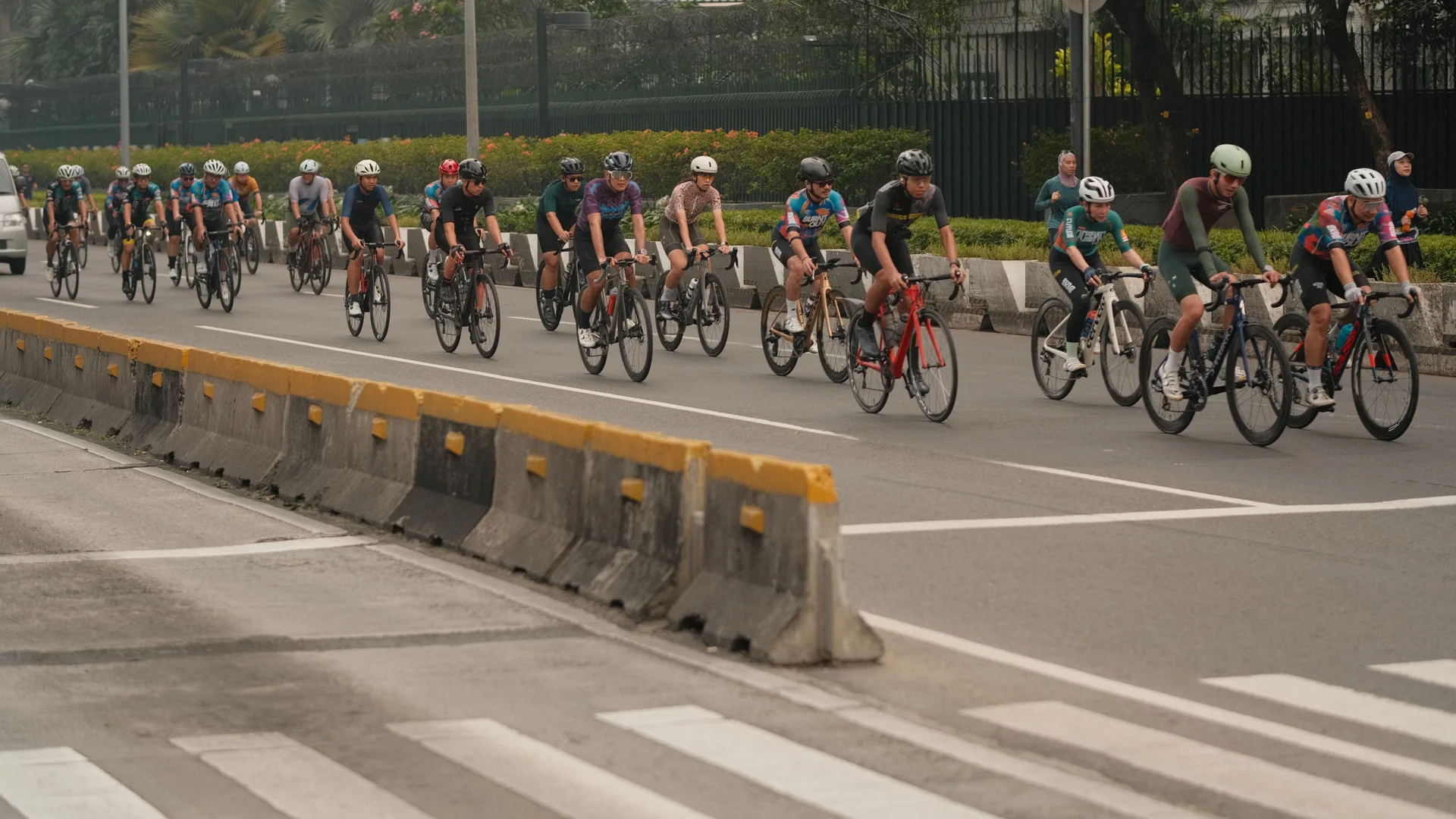
Hero photo by Haberdoedas Photography on Pexels · Pexels License.
A criterium warm-up should be 15–25 minutes total: an easy aerobic ramp (Block 1), one threshold prime near FTP (Block 2), and a few short anaerobic openers (Block 3), finishing 5–8 minutes before staging. Use the templates below to match your race length, weather, and course profile — then arrive at the line switched on for lap one.
Why criteriums demand a specific warm-up
Criteriums start fast, surge often, and punish hesitation. Unlike steady-state road races or TTs, the first lap can hit VO2max territory with repeated accelerations out of every corner. That means you need primed aerobic and anaerobic systems, elevated core temperature, and neuromuscular readiness before the whistle — not 10 minutes into the race.
A targeted warm-up drives oxygen delivery, increases muscle temperature, and ramps lactate processing so you can handle the on/off nature of crits. Short, progressive efforts prep fast-twitch recruitment for snapping out of corners, while controlled high-cadence work sharpens leg speed and coordination. Brief, above-threshold surges in the warm-up help reduce the shock when the pack accelerates, lowering perceived exertion in the opening laps.
Criteriums also stress handling and braking-into-accel patterns. Including a few on-bike drills — smooth gear changes, out-of-saddle sprints, and seated quick-cadence spins — activates the exact motor patterns you'll repeat hundreds of times. The goal isn't fatigue; it's switching on the systems you'll use most.
Environment matters. If it's cold, extend the ramp to protect muscles and keep layers on until the start. If it's hot, shorten the total time and include cooling strategies between priming efforts to avoid overheating. Arrive at the line with breathing under control, legs responsive, and heart rate elevated — but not spiked — so you can fight for position from the gun.
Free: the Cycling Race Fueling Checklist
Turn this into a race-week plan: carbs, bottles, sodium, caffeine and feed-zone prep in one free PDF you can print or keep on your phone.
Pre-warm-up readiness checklist (10 minutes out)
Set a timer for 10 minutes to go. This is your systems check before you roll into the structured warm-up. For a more detailed approach, reference this race-day checklist.
- Hydration: sip 4–8 oz water or sports drink. Confirm bottle is mixed and mounted. If it's hot, add electrolytes per your plan.
- Fuel: take a small carb bite (e.g., 15–25 g) if last intake was >45–60 min ago. Stash one extra gel in a reachable pocket.
- Tire pressure: quick squeeze or gauge check. Adjust for course surface and temperature. Spin wheels to ensure no rub.
- Brakes and drivetrain: squeeze levers, confirm bite. Shift across cassette; listen for skipping. Lube if chain is dry.
- Bike fit touchpoints: saddle height/tilt, bar angle, lever reach, cleat tightness. Nothing should feel new today.
- Clothing and numbers: layers set for current temp. Pin/attach number flat and visible. Secure chip/strap.
- Tech: pair head unit, sensors, and power meter. Select warm-up profile, auto-lap off if needed. Check battery levels.
- Course and lineup: note wind, first corners, and staging plan. Identify safe space for opening efforts.
- Mindset: 3 deep breaths. Rehearse first-lap plan: clip-in, surge, wheel to follow.
Hit the restroom if needed, remove bottle caps, and roll to your start spot on time.
The Criterium Warm-Up Builder: 3 plug-and-play blocks
Use these three modular blocks to build a warm-up that matches your race demands, the day's conditions, and your personal response to intensity. Mix and match based on start type (hard vs. controlled), course features (hill, wind, technical), and time available. Aim to finish 5–8 minutes before staging so you can hydrate, shed layers, and roll to the line settled — not stale.
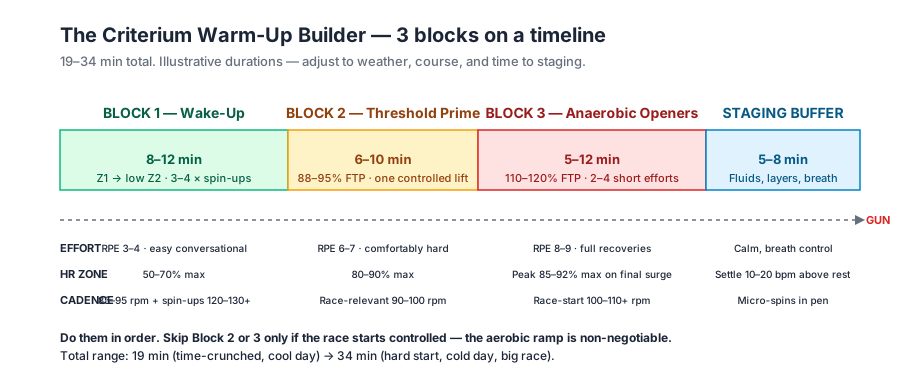
Block 1 — Wake-Up (8–12 min)
Purpose: raise core temperature, loosen hips and back, cue breathing. How: easy spin in Z1–low Z2, ramping gently. Include 3–4 brief neuromuscular activations.
Recipe:
- 6–8 min easy ramp: start very easy, add a gear or +5–10 W each minute.
- 3–4 × 6–8 sec high-cadence spin-ups (120–130+ rpm) with full control; 60–90 sec easy between.
- Optional: 30–45 sec high-cadence single-leg focus each side (on trainer) to clean up pedal stroke.
When to go heavy: cold days, first race of the weekend, or if you feel flat. Extend to 12 min.
Block 2 — Threshold Prime (6–10 min)
Purpose: open oxygen kinetics, elevate lactate slightly, and sharpen perceived effort without creating debt. How: one controlled lift near FTP or upper tempo, then settle.
Recipe options (choose one):
- Continuous: 6–8 min at 88–95% of FTP (comfortably hard), then 2–3 min easy.
- Steps: 2 min tempo → 2 min sweet spot → 1–2 min at FTP; 2–3 min easy.
- RPE guide: start at RPE 6/10, build to 7/10; resist surging. Breathing deep but steady.
When to go longer: if the race starts hard or the course opens straight into a climb. When to keep short: if heat is high or you're racing back-to-back — cap it 6–7 min.
Block 3 — Anaerobic/Openers (5–12 min)
Purpose: recruit fast-twitch, sharpen neuromuscular timing, and buffer the first-lap surge. How: short, punchy efforts with full recovery to avoid residual fatigue.
Menu (pick 2–4 efforts total):
- 2 × 30–45 sec at 110–120% FTP; 3–4 min easy.
- 2–3 × 12–20 sec sprint/standing surge (not max; 8–9/10) from rolling speed; 2–3 min easy.
- 1 × 60 sec seated over/unders: 10 sec hard (120%), 20 sec tempo, repeat; 3–4 min easy.
Cap: stop while you still feel snappy. If legs go wooden, you've done too much.
Putting it together
- Hard start: Block 1 (10–12 min) → Block 2 (8–10 min) → Block 3 (6–8 min). Finish 5–8 min before call-up.
- Controlled start / technical course: Block 1 (8–10 min) → Block 2 (6–8 min) → 2 short surges from Block 3.
- Time-crunched (10–12 min): 3 min easy ramp → 3 min sweet spot → 2 × 15 sec surge with 2 min easy → spin to start.
Final checks: sip fluids, one small carb bite if needed, confirm tire pressure and brakes, select a mid-cassette gear, and breathe — calm over hype.
How to adapt by weather, course, and time to start
Scan for your scenario, then adjust the block durations from the timeline above accordingly. Detailed prose per condition follows the table.
| Scenario | Aerobic ramp | Threshold prime | Openers | Total | Key adjustment |
|---|---|---|---|---|---|
| Cold (<50 °F / 10 °C) | 12–15 min | 3–4 min tempo lead-in + 4–6 min | 2–3 × 30–45 sec | 22–28 min | Keep layers on until 2–3 min to start; overdress and shed |
| Hot / humid (>80 °F / 27 °C) | 8–10 min | 4–6 min | 2–3 × 20–30 sec | 15–20 min | Pre-cool; sip chilled fluid; finish 8–10 min before staging |
| Fast/flat, early surges | 10–12 min | 4–6 min sweet spot | 3–4 × 15–20 sec spin-ups | 20–25 min | Bias neuromuscular primers over threshold volume |
| Technical, cornery | 8–10 min | 5 min low-cadence tempo (60–70 rpm) | 6–8 × 8–12 sec snap accelerations | 20–25 min | Rehearse smooth-torque exits from ~12–15 mph |
| Hilly / attritional | 8–10 min | 4–6 min + 2–3 over-unders | 2 × 30 sec | 20–28 min | Prep sustained efforts, don't over-spend matches |
| Time-crunched (<10 min) | 6–8 min continuous ramp | Skip / merge into ramp | 1–2 short openers only | ≤ 10 min | Micro-spins in the pen to stay warm |
| Long wait to start (>25 min) | Split: main set now + 5–7 min restart 10–12 min pre-gun | — | 1–2 openers on restart | Variable | Recover off-bike in shade between halves |
Weather
- Cold (below ~50 °F / 10 °C): extend the aerobic ramp to 12–15 min, add 2–3 short opener sets (30–45 sec at threshold, 60–90 sec easy), and include a 3–4 min tempo block to elevate core temp. Keep layers on until the final strides and start the race slightly overdressed so you can shed quickly.
- Hot/humid: shorten total warm-up to 15–20 min, bias intensity over volume. Use 2–3 crisp openers (20–30 sec at VO2-ish effort, full 2–3 min easy between). Pre-cool if possible (ice socks, shade, fans), sip chilled fluids with electrolytes, and finish the warm-up 8–10 min before staging to limit heat load. For precise hydration, use a hydration calculator to tailor your intake.
- Wind/rain: choose sheltered routes or a trainer. Emphasize progressive build with fewer all-out efforts to avoid muscular tension from fighting gusts. In rain, keep cadence high and gears light to spare neuromuscular pop for the start.
Course
- Fast/flat with early surges: favor more neuromuscular primers. After a 10–12 min ramp, do 3–4 openers of 15–20 sec high-cadence sprints (110–120+ rpm) from rolling speed, full recoveries, then 2 min sweet spot to lock in.
- Technical with frequent corners: add 6–8 snap accelerations of 8–12 sec from ~12–15 mph rolling, focusing on smooth torque and quick settling. Include 5 min of low-cadence force (60–70 rpm) at tempo if the course has punchy exits.
- Hilly/attritional: insert a 4–6 min threshold block and 2–3 over-unders (1 min just above threshold, 1 min just below) to prep for sustained efforts. Keep total volume moderate so you don't spend matches early.
Time to start
- <10 min: prioritize 6–8 min continuous ramp plus 1–2 brief openers. Stay moving in the pen with micro-spins.
- 10–25 min: ideal. Complete full plan, then easy pedaling and light cadence drills every 3–4 min.
- >25 min: split warm-up. Do main set, then recover off-bike in shade with light walking. Restart with 5–7 min easy plus 1–2 openers 10–12 min before the gun. Hydrate according to heat and personal sweat rate.
Fueling and hydration timing for crit warm-ups
Crits are short, spiky, and unforgiving. Your warm-up fueling shouldn't stuff you — it should top off fast energy, prime the gut, and keep you sipping so you hit lap one switched on. For dialing in your carb intake, use a carbs per hour calculator to personalize the numbers.
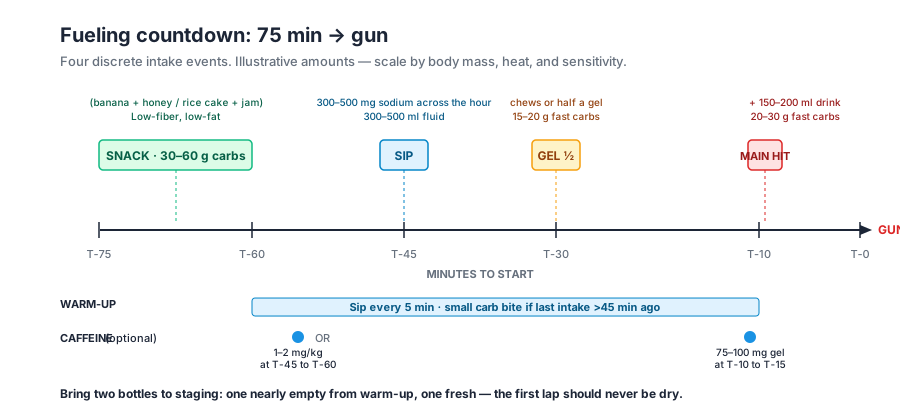
Detailed intake reference:
| Time to start | What to do | Amount |
|---|---|---|
| 60–75 min pre-start | Small low-fiber, low-fat carb snack (banana + honey, rice cake + jam, low-fiber cereal). Bias low end if you had a real meal 2–3 h earlier. | 30–60 g carbs |
| 45 min pre-start | Start sipping fluids with electrolytes. See fueling guide for full-plan context. | ~300–500 ml + 300–500 mg sodium across the hour |
| 30 min pre-start | Begin carb trickle — a few chews or half a gel with a few sips of fluid. Keeps blood glucose stable without an insulin dip. | 15–20 g fast carbs |
| 10–12 min pre-start | Main hit — gel or chews with an electrolyte-drink chaser. Times peak availability for the holeshot. | 20–30 g fast carbs + 150–200 ml drink |
| Optional caffeine | 1–2 mg/kg 45–60 min pre-start, OR 75–100 mg via caffeinated gel 10–15 min pre-start. Do not stack both if sensitive. | Per tolerance |
During the warm-up: sip, don't chug. Small, regular sips every 5 min. If sweating heavily, lean toward the higher end of fluids and sodium.
Right before the grid: one or two quick mouth rinses with sports drink can sharpen perceived effort without adding gut load.
Bring two bottles to staging: one nearly empty from warm-up, one fresh for the race start — so the first lap isn't dry.
Trainer vs road warm-up: choose and execute
Pick the option that matches your venue, nerves, and logistics — then commit. Both can deliver the same physiological goals: raise core temp, open the legs, and prime neuromuscular snap.
When to use a trainer
- Tight start corrals or sketchy streets.
- Cold, wet, or windy conditions.
- You need zero interruptions and precise timing.
Trainer protocol (20–25 min):
- 8–10 min easy spin, building cadence from 85 → 95+ rpm.
- 2 × 2 min at sweet spot (high Z3 / low Z4), 2 min easy between.
- 3 × 30–45 sec high-cadence openers (110–120 rpm) at ~VO2 feel, 90 sec easy between.
- 2 × 6–8 sec standing sprints, full recovery.
- 3–5 min easy spin. Roll to staging within 5–10 min of finish.
When to warm up on the road
- Safe access to a quiet loop or out-and-back.
- Warmer temps and enough space to open the legs.
- You benefit from course recon and variable terrain.
Road protocol (20–25 min):
- 8–10 min easy, use small ring or light gear; cadence 90–95 rpm.
- 2 × 2 min at sweet spot on a gentle rise or into the wind; soft-pedal 2 min.
- 3 × 30–45 sec openers near VO2 on flat/false flat; 90 sec easy.
- 2 × 6–8 sec rolling sprints; full stop if traffic intrudes.
- 3–5 min easy, return to start with 5–10 min buffer.
Tips:
- Dress one layer warmer on trainer; unzip before staging.
- If staging delays exceed 10 min, add 2 × 10–15 sec rev-ups in the queue.
- Hydrate lightly; a few sips and a small carb bite (15–20 g) 10–15 min pre-start.
Know you're ready: cues and metrics
Your warm-up did its job when your body and brain both signal "go." Use these cues and numbers to decide if you're ready to clip in and hit lap 1 on the gas.
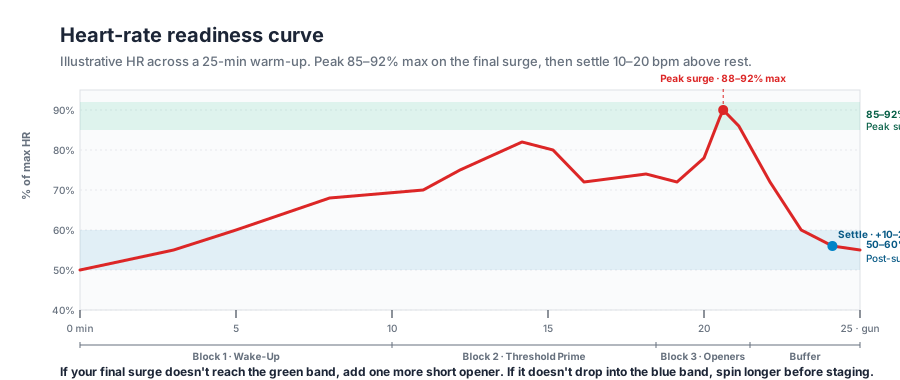
- Heart rate: by the end of priming efforts, HR should rise smoothly to 85–92% of recent max on the final 30–60 sec surge, then settle 10–20 bpm above resting during easy spins. Erratic spikes or failure to elevate mean extend the ramp or add one more short effort.
- Breathing: controlled but assertive. You should recover to short conversational phrases within 60–90 sec after a surge. Still gasping past two minutes? Shorten the next effort. Breathing stays too easy? Add a 20–30 sec high-cadence pop.
- Leg sensation: warm, springy, no heaviness. A mild burn at the end of the last effort that clears quickly is ideal. Persistent dead legs? Insert a 2–3 min easy spin and one more 15–30 sec opener.
- Cadence and torque: you can hit race-start cadence (100–110+ rpm) without bouncing, and produce clean, snappy torque out of the saddle. Any choppiness — do a 10–15 sec form sprint.
- Neuromuscular readiness: reaction feels sharp — bike tracks clean lines, out-of-corner accelerations snap. If timing feels dull, add two standing starts at ~6–8 pedal strokes.
- Mindset: calm focus, low jitters, clear first-lap plan. If nerves spike, add 2–3 min of easy spinning and 4–6 box breaths.
Ready-made templates by race length and start timing
Pick the template that matches your race duration and likely start intensity. Each includes total time, target RPE (1–10), and power/HR intent. Adjust reps to fit your course recon and staging realities. If you have limited space, compress the easy spin blocks — protect the priming and opener sets.
| Race length | Start intensity | Total warm-up | Priming target | Peak opener | Peak RPE | Goal |
|---|---|---|---|---|---|---|
| Short crit (20–30 min) | Fast, likely holeshot | 15–18 min | 2 min sweet spot | 3 × 20 sec @ 120% FTP | 8–9 | Switched on without burning matches |
| Standard crit (35–50 min) | Punchy | 20–25 min | 2 × 2 min @ threshold | 3 × 30 sec @ 130% FTP | 9 | Prime anaerobic + lactate clearance |
| Long crit (55–75 min) | Volatile first laps | 25–30 min | 3 min tempo | 3 × 45 sec @ 120–130% FTP | 9 | Durable high-end with controlled heat load |
| Time-crunched (any length) | Any | ≤ 12 min | Skip formal block | 2 × 15 sec surge | 8 | Preserve openers, drop easy spin |
Short crit (20–30 min), fast start expected
Total: 15–18 min · Goal: arrive switched on without burning matches
- 6 min easy spin (RPE 3–4), include 3 × 10 sec high-cadence spin-ups (110–120 rpm), 50 sec easy between.
- 3 × 20 sec at 120% FTP or hard HR surge (RPE 8–9), 1:40 easy between.
- 2 min sweet spot (RPE 6–7), 1 min easy.
- 2 × 8–10 sec standing starts (big gear, 60–70 rpm), 90 sec easy.
- Roll to grid with light pedaling.
Standard crit (35–50 min), punchy start
Total: 20–25 min · Goal: prime anaerobic system and lactate clearance
- 8 min easy (RPE 3–4) with 3 × 15 sec spin-ups, 45 sec easy.
- 2 × 2 min at threshold (RPE 7–8), 2 min easy.
- 3 × 30 sec at 130% FTP or near-max seated (RPE 9), 2 min easy.
- 3 × 8–10 sec standing starts, 90 sec easy.
- 2–3 min easy to staging.
Long crit (55–75 min), volatile first laps
Total: 25–30 min · Goal: durable high-end with controlled heat load
- 10 min easy (RPE 3–4) with 4 × 15 sec spin-ups.
- 3 min at tempo (RPE 5–6), 2 min easy.
- 3 × 45 sec at 120–130% FTP (RPE 9), 3 min easy.
- 2 × 10 sec standing starts, 90 sec easy.
- 2–3 min easy to grid.
Conditional adjustments
- Long staging (10–15 min hold): after final opener, add 30–60 sec at tempo every 4–5 min while rolling in the pen to keep HR responsive. If static, do 2–3 quick 6–8 sec isometric stomps against the brake every 5–6 min.
- Delayed start (5–10 min extra): insert 2 min easy + 20–30 sec at threshold, then 1 min easy. Repeat once as needed.
- Cold (<50 °F / 10 °C): extend the first easy block by 3–5 min and add one extra 30-sec surge. Keep legs covered until 2–3 min to start.
- Hot (>80 °F / 27 °C): shorten total by ~10%, cut one surge, sip chilled fluid, and use cooling (ice sock/ice towel) between blocks.
Avoid these warm-up pitfalls
The three most common race-day errors: (1) skipping the aerobic ramp and jumping straight into openers, (2) doing 30–40 minutes of intervals that leave you flat by lap 3, and (3) missing the 10–12 minute pre-start carb+fluid hit. Any one of these will show up in the first two laps. All three together = a scratched race.
- Skipping the build. Jumping straight from zero to race pace spikes lactate and heart rate without priming your aerobic system. Always include a progressive ramp before any hard efforts.
- Going too hard, too long. A 30–40 min burner can leave you flat for the first laps. Target 15–25 min total with 2–3 short openers — enough to wake the legs, not drain them.
- No cadence variety. Spinning only at one gear neglects neuromuscular prep. Mix high-cadence spin-ups with a few low-cadence torque efforts to cover race demands.
- Static stretching cold. Long static holds can reduce acute power. If you need mobility, use dynamic ranges and activation drills, then stretch long after racing.
- Forgetting recovery between openers. Stack intervals without easy pedaling and you'll overheat and blunt output. Insert relaxed spinning to bring HR down and preserve glycogen.
- Poor timing. Finishing too early or too late kills the effect. Aim to roll off the trainer 5–10 min before staging so heat and activation carry into the start.
- Fuel and fluid neglect. Arriving under-fueled or dry blunts response. Sip electrolytes and take a small carb hit 15–20 min pre-start.
Turn your warm-up into a repeatable plan
Nailing crit warm-ups on race day is easier when the rest of your week is also structured. FuelQ Pro turns your race calendar, fitness history, and constraints into a week-by-week plan that includes race-day fueling and warm-up cues.
Build a personalized race-day fueling plan →
Your 5-minute checklist before staging
- Top off: 4–6 oz of water or sports drink — primed, not sloshy. Quick gel or small bite only if you're >45 min post last fuel.
- Tires: quick spin and pinch. Confirm pressure matches course conditions. Remove debris; align valve stems for fast checks.
- Brakes & drivetrain: spin wheels for rub. Squeeze levers — firm, centered. Shift across cassette and chainrings; wipe chain if gritty.
- Contact points: saddle height/tilt unchanged. Bar/stem tight. Shoe buckles/BOA set to "start" tension you can tighten mid-race.
- Number & transponder: pinned flat, not blocking pockets. Sensor mounted and awake. Head unit paired, GPS locked, course/auto-lap off.
- Warmth: layer check — unzip/remove gilet or knee warmers before call-up; stash with soigneur or bag.
- Focus: one tactical cue (wind, corner count, sprint line). One personal cue (hold wheels, float upwind side).
- Safety: final glance at start/finish flow, pit location, and lap cards. Confirm neutral-support rules.
- Mindset: 3 deep breaths. First 60 seconds: clip clean, hold position, elbows quiet.
This content is educational and doesn't replace individualized medical, nutrition, or coaching guidance.
Image credits. Hero: Photo by Haberdoedas Photography on Pexels · Pexels License. Charts (3-block timeline, fueling countdown, HR readiness curve): original FuelQ Pro illustrations · CC BY 4.0.
Frequently asked questions
How long should a criterium warm-up be?
For most riders, 15–25 minutes total works: an 8–12 min easy aerobic ramp, a 6–10 min threshold prime near FTP, and 5–12 min of short anaerobic openers. Finish 5–8 minutes before staging so heat and activation carry into lap one.
Should I warm up on a trainer or on the road for a criterium?
Both work. Use a trainer when the venue is tight, weather is cold or wet, or you need precise timing. Warm up on the road when you have a safe quiet loop, warmer temperatures, or want to add course recon. The physiological goals are identical.
How much should I eat before a criterium?
60–75 min before the start, take a 30–60 g low-fiber, low-fat carb snack. Add a 15–20 g carb trickle around 30 min out, then a 20–30 g gel or chews with a small drink 10–12 min pre-start to time peak availability for the holeshot.
When should I finish my warm-up?
Aim to finish 5–8 minutes before staging. Any earlier and heat and activation dissipate; any later and you're rolling to the grid still recovering. If the staging delay is long, add short tempo surges every 4–5 minutes to keep the response.
What's the biggest criterium warm-up mistake?
Going too hard, too long. A 30–40 minute burner with too many all-out efforts leaves you flat when the pack surges from the gun. Target 15–25 min total with 2–4 short openers — enough to wake the legs, not drain them.
Do I need caffeine before a criterium?
Optional and personal. If you tolerate it, 1–2 mg/kg 45–60 min pre-start or 75–100 mg via a caffeinated gel 10–15 min pre-start works. Avoid stacking both if you're caffeine-sensitive, and never test caffeine timing on race day.
Turn this strategy into a real plan.
FuelQ Pro builds personalized fueling for your training weeks, long rides and races — plan, execute, review, improve.