Nutrition Strategies for Long Rides, Explained

Gabriel Ricce
Lamorinda MBO Racing · USA Cycling Coach Level 3
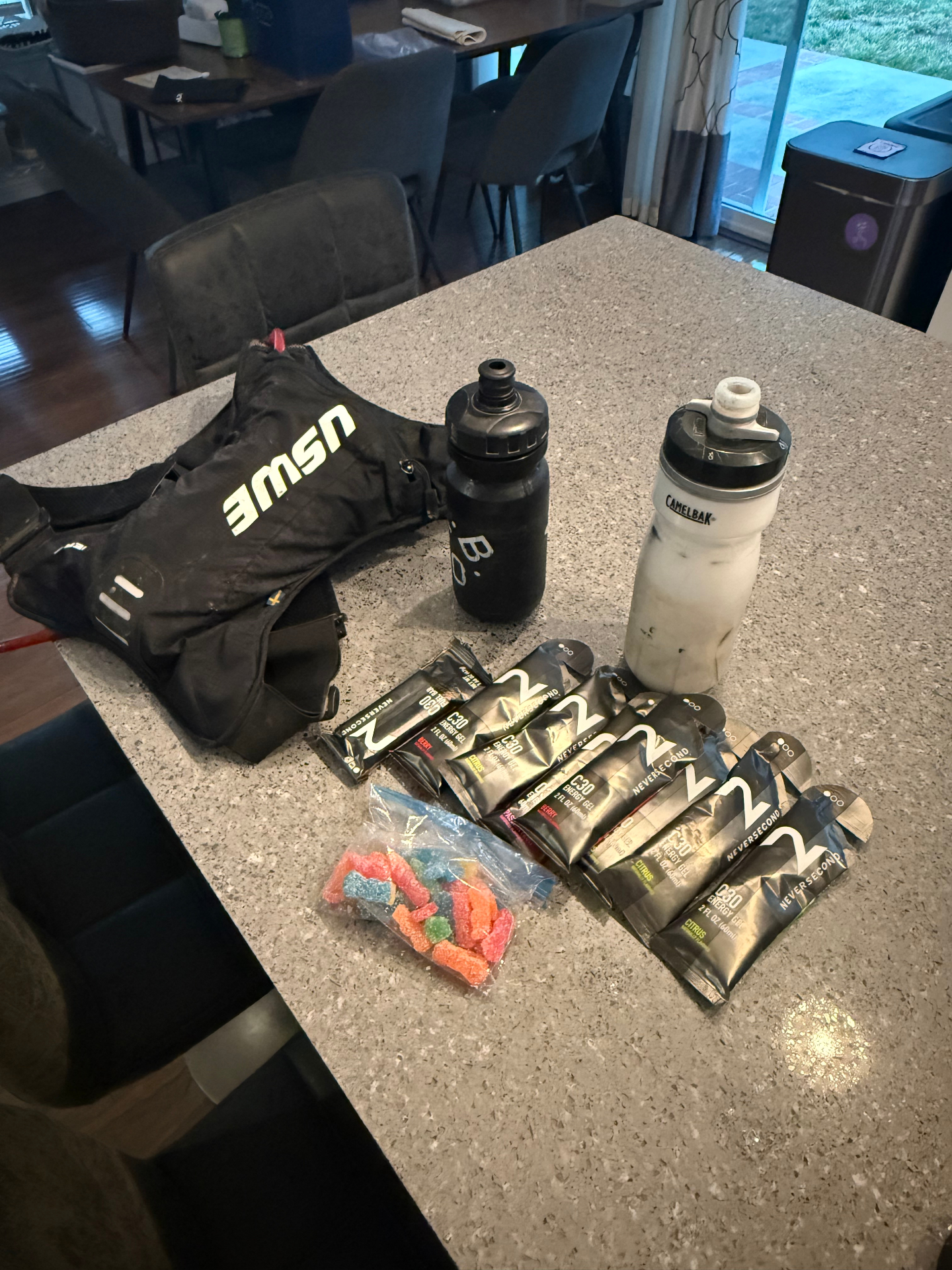
Nutrition strategies for long rides
Nutrition strategies for long rides match carbohydrate, fluid, and sodium to the hours and the intensity, then put a normal meal back on the table afterward. A steady one-to-two-hour ride often needs about 30–60 g of carbohydrate per hour, 500–750 ml of fluid, and 300–600 mg of sodium. A hard ride of two to four hours moves toward 60–90 g of carbohydrate, 600–900 ml, and 500–800 mg of sodium per hour. Past four hours, some riders tolerate about 90 g or more per hour, with 700–1,000 ml of fluid and 600–1,000 mg of sodium, once the gut has practiced it. Heat, sweat rate, and body size change the bottle. These ranges are a starting point, not one plan for every rider. The hour-by-hour version is in How to Fuel Long Bike Rides. The meals around the ride sit in the Cycling Nutrition Plan.
Use five steps. The same session can still need a different bottle on a hot day than on a cool one.
- Plan the duration and the intensity before you pack food.
- Prime the ride 2–3 hours out with familiar food, about 1–1.5 g of carbohydrate per kg of body weight.
- Fuel on the bike at about 0.6–1.0 g of carbohydrate per kg per hour, with fluid and sodium you already tolerate.
- Finish within 30–60 minutes: about 1.0–1.2 g of carbohydrate per kg plus 0.25–0.4 g of protein per kg. That is near a 3:1 to 4:1 carbohydrate-to-protein ratio.
- Recover by replacing a portion of the sweat loss, then eat ordinary meals for the rest of the day. The plate after a hard day is the same idea as What to Eat After a Bike Race.
| Duration and intensity | Carbs (g/hr) | Fluids (ml/hr) | Sodium (mg/hr) | Examples |
|---|---|---|---|---|
| Moderate, 1–2 hr | 30–60 | 500–750 | 300–600 | Gel, chews, a banana, drink mix |
| Hard, 2–4 hr | 60–90 | 600–900 | 500–800 | Drink mix, rice bar, gels |
| Very hard, over 4 hr | Up to ~90, as tolerated | 700–1,000 | 600–1,000 | Gels, chews, a small sandwich |
Start the carbohydrate early. A late gel does not replace the hour you skipped. Glucose plus fructose is the mix most riders use when the hourly target climbs toward 90 g, because a single sugar type oxidizes more slowly. Drink to thirst and to a practiced sweat rate, and try to keep body-mass loss under about 2%. Do not force a number your gut has never held in training. A wider cycling fueling strategy covers how intensity changes that plan from one ride to the next.
Free: the Race Fueling Checklist
Turn this into a race-week plan: carbs, fluids, sodium, caffeine and aid-station prep in one free PDF you can print or keep on your phone.
Common mistakes on a long ride
The ranges above fail in the same four ways.
- Waiting until you are hungry. At 60–90 g of carbohydrate per hour, the first gel belongs in the first 20–30 minutes, not at minute 70. A late gel does not refill the hour you skipped.
- Copying 90 g per hour on a ride that has never held it. The ACSM range for a hard two-to-four-hour effort is 60–90 g. The top of that range is a practiced ceiling, not the first attempt.
- One sodium number for every temperature. 300–600 mg per hour is the moderate-ride start. A hot ride and a cool ride should not share the bottle. Weigh yourself before and after a steady hour if you do not know your sweat rate.
- Treating the ride fuel as the whole day. The plate the night before and the meal two to three hours before still carry most of the carbohydrate. On the bike you are topping up, not eating dinner.
A worked week around the long ride
The long ride is one day. The meals on the other days change with the session that is already on the calendar. This sketch is for a rider near 70 kg. It is a starting point from the same ACSM and ISSN ranges, not a menu for every athlete.
| Day | Session already planned | Meals and fuel |
|---|---|---|
| Mon | Rest | Ordinary meals. Protein still in the day, about 1.6–2.2 g per kg across the day. Carbohydrate lower than a ride day. |
| Tue | 60 min easy | Breakfast 2–3 hours before. Little or no gel if the hour stays easy. Drink to thirst. |
| Wed | Intervals, 75 min | More carbohydrate at breakfast and at the meal after. 30–60 g per hour on the bike only if the gut already knows that rate. |
| Thu | Strength, 45 min | A normal plate. Protein at the meal after. No gel stack for a short gym session. |
| Sat | Long ride, 3 h | Breakfast 2–3 hours out, about 1–1.5 g carbohydrate per kg. On the bike, 60–90 g per hour once practiced, 600–900 ml fluid, 500–800 mg sodium per hour. |
| Sun | Easy spin or rest | The meal after Saturday still matters more than a new product on Sunday. |
These ranges are not for riders under 18, for pregnancy, or for anyone whose clinician set a different carbohydrate, fluid, or sodium target. They are also a poor fit on the first week of a gut problem. Practice the rate in training before you take it to a race.
Price and the rest of this campaign
FuelQ Pro is $9 a month. It writes the weekly meal plans around the training you already have, then the fueling for this long ride, a race-prep plan per event, and the recovery plate after the session. It does not write the workout.
The short offer page is weekly meal plans. The race week is unlimited race-prep plans. The plate after the ride is recovery guidance.
Frequently asked questions
Do you have a quick table that maps ride duration and intensity to carbs, fluids, sodium, and example on-bike foods?
Yes. A moderate ride of 1–2 hours is about 30–60 g carbohydrate, 500–750 ml fluid, and 300–600 mg sodium per hour. A hard ride of 2–4 hours is about 60–90 g carbohydrate, 600–900 ml, and 500–800 mg sodium per hour. A very hard ride past 4 hours can reach about 90 g carbohydrate or more per hour if tolerated, with 700–1,000 ml fluid and 600–1,000 mg sodium. Example foods are gels, chews, a banana, a rice bar, drink mix, and a small sandwich. Adjust for sweat rate, heat, and gut comfort. These ranges are not a personal prescription.
What’s a simple framework to plan nutrition for long rides?
Plan, prime, fuel, finish, recover. Plan the duration and intensity. Prime 2–3 hours before the ride with familiar food, about 1–1.5 g carbohydrate per kg. Fuel during the ride at about 0.6–1.0 g carbohydrate per kg per hour, plus fluid and sodium you tolerate. Finish within 30–60 minutes with about 1.0–1.2 g carbohydrate per kg and 0.25–0.4 g protein per kg. Recover by replacing a portion of sweat loss, then return to balanced meals for the rest of the day.
What evidence-based carb and hydration targets should I use for long rides?
Most endurance guidelines recommend 30–60 g of carbohydrate per hour for rides up to about 2–3 hours, and up to about 90 g per hour for longer, higher-intensity sessions. Multiple transportable carbohydrates, glucose plus fructose, raise oxidation and are easier on the gut at the higher rate (Jeukendrup 2011; Burke 2015). Start hydrated and try to limit body-mass loss to under 2% by replacing a portion of sweat loss. Set sodium from sweat rate and duration, not from a single number for every rider (ACSM Position Stand 2016; Sawka et al., Medicine & Science in Sports & Exercise, 2007).
Turn this strategy into a real plan.
FuelQ Pro builds personalized fueling for your training weeks, long sessions and races — plan, execute, review, improve.