How to Fuel Long Bike Rides That Perform
Gabriel Ricce
Lamorinda MBO Racing · USA Cycling Coach Level 3
Learn how to fuel long bike rides with a cycling-specific plan for carbs, fluids, sodium, and recovery to ride stronger and avoid bonking.
The difference between a strong final hour and a steady fade usually is not fitness. It is fueling. If you want to know how to fuel long bike rides, stop treating nutrition as something you improvise at mile 40 and start treating it like pacing or interval targets — planned, executed, and reviewed.
Long rides expose every weak point in your system. Start too light at breakfast, miss an early bottle, or wait until you feel hungry, and the cost shows up later as rising heart rate, reduced power, poor decision-making, and the kind of fatigue that training alone does not fix. Good fueling is not generic. It depends on duration, intensity, terrain, temperature, and how much carbohydrate your gut can actually process while riding.
How to fuel long bike rides starts before rollout
Most long-ride fueling mistakes happen before the first pedal stroke. Riders focus on what to carry during the ride but ignore glycogen status from the previous day, pre-ride meal timing, and the first 60 minutes on the bike.
For most endurance cyclists, the goal is simple: start with full glycogen stores, stable blood glucose, and a plan you can execute under load. That usually means eating a carbohydrate-rich meal 2 to 4 hours before the ride. The exact amount depends on body size and ride demand, but a useful range is 1 to 3 grams of carbohydrate per kilogram of body weight. If the ride starts early and a full meal is not realistic, a smaller carb-focused intake 30 to 60 minutes before start can still help.
Keep fat, fiber, and excessive protein under control before harder long rides. Those nutrients are not bad, but they can slow digestion and increase GI risk when intensity rises. A big omelet and avocado toast might look balanced, but for a hard gravel session or race simulation, it is often the wrong tool.
Hydration starts here too. You do not need to flood your system, but starting slightly dehydrated forces early compensation. Drink enough in the hours before the ride to begin normally hydrated, and if conditions are hot or the ride begins with climbing, include sodium as part of that prep.
Free: the Cycling Race Fueling Checklist
Turn this into a race-week plan: carbs, bottles, sodium, caffeine and feed-zone prep in one free PDF you can print or keep on your phone.
Set carb targets by ride demand, not habit
The biggest shift for many cyclists is moving from casual snacking to hourly carbohydrate targets. Long rides are not fueled effectively by vibes. They are fueled by matching intake to workload.
For easier endurance rides up to about 2.5 hours, many riders can perform well on 30 to 45 grams of carbohydrate per hour. Once rides get longer, intensity rises, or terrain becomes stochastic, that number usually needs to move higher. For rides over 3 hours, 60 to 90 grams per hour is a practical performance range for trained athletes. During racing, hard group rides, or long gravel events, some cyclists can benefit from going above 90 grams per hour, but only if they have trained their gut to handle it.
This is where context matters. A steady Zone 2 road ride and a punchy mountain bike ride may have the same duration but very different fueling requirements. Repeated surges increase carbohydrate demand and make missed intake more expensive. Technical riding also reduces feeding opportunities, which means your plan has to account for when you can realistically eat.
If you consistently finish long rides cracked, the issue is often not one catastrophic miss. It is being 15 to 25 grams short each hour for several hours. That deficit compounds.
Use a simple execution system on the bike
The best fueling plan is the one you can follow when heart rate is elevated and the course is not cooperating. Complexity fails first.
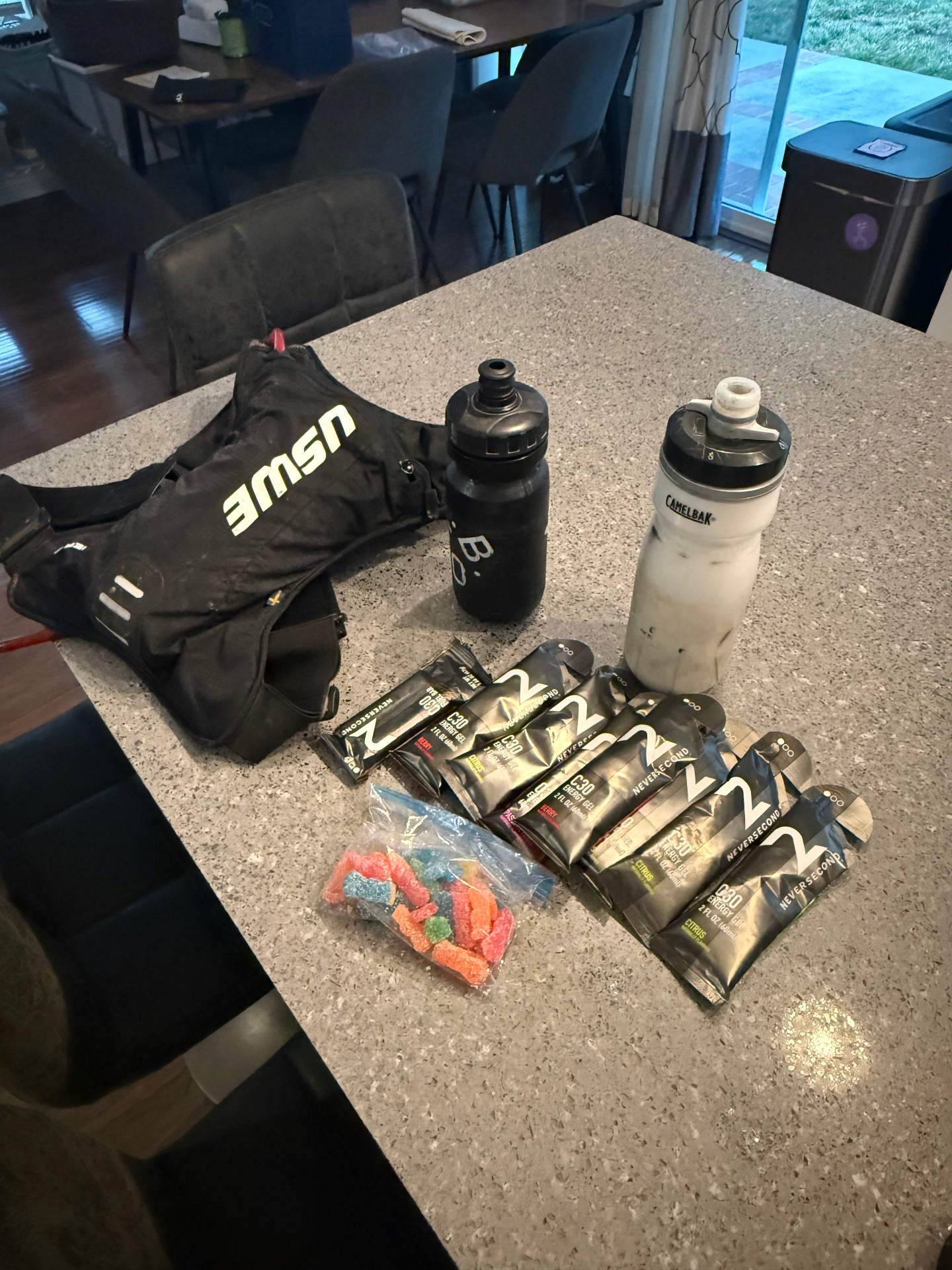
Build your ride around hourly carbohydrate, fluid, and sodium targets. Then decide how those targets will be delivered across bottles, gels, chews, bars, or other foods you tolerate well. Some riders prefer most of their carbohydrate in bottles because it reduces chewing and simplifies tracking. Others need a mix of liquid and solid intake, especially on longer rides where palate fatigue matters.
What matters is precision. If your target is 75 grams of carbs per hour, know exactly what is in each bottle and each pocket item. Do not guess. Do not assume you will remember. Break intake into smaller actions every 15 to 20 minutes rather than trying to consume a large amount once an hour. Smaller, more frequent intake is usually easier on the gut and easier to execute consistently.
Start early. Waiting until hunger appears is a common error because hunger is a poor performance signal during exercise. By the time energy feels low, you are already correcting a deficit. On most long rides, the first carbohydrates should go in during the first 20 to 30 minutes, not after the first hour.
Fluids and sodium are performance variables
Cyclists often talk about fueling as if it only means carbs. On long rides, that is incomplete. Fluid and sodium intake strongly affect how well your carbohydrate plan works.
Fluid needs vary widely with sweat rate, temperature, humidity, clothing, and ride intensity. Some riders do well at 16 to 20 ounces per hour in mild conditions. Others may need significantly more in summer heat. The goal is not to replace every drop of sweat. The goal is to avoid meaningful dehydration without overdrinking.
Sodium matters because sweat losses are real, especially for salty sweaters and long events in hot conditions. A general range of 300 to 800 milligrams per hour works for many cyclists, but the right number can be higher depending on sweat sodium losses and environment. Too little sodium can contribute to declining performance and increase the risk of cramping in some athletes. Too much without adequate fluid can create its own GI issues. Again, this is not generic advice territory. It depends.
One useful rule: if your carb intake is dialed but you still see late-ride power drop, rising perceived exertion, headaches, or excessive thirst, evaluate fluid and sodium before assuming the answer is more sugar.
Train the gut like you train the legs
A strong fueling strategy is not just a spreadsheet target. It is a practiced skill. If you want to race well on 90 grams of carbs per hour, you need repeated sessions that teach your gut to absorb and tolerate that intake under cycling-specific stress.
Gut training works best when it is progressive. Increase hourly carbohydrate in stages across long rides and key workouts. Practice with the exact products, bottle concentrations, and feeding intervals you plan to use in events. Test under realistic intensity, not just easy endurance pace. The setup that feels fine cruising at low power may fail when you are climbing, cornering, and trying to hold threshold.
This is also where product choice matters. Mixed carbohydrate sources often support higher intake rates than glucose alone. Texture matters too. What works on smooth pavement may be impossible to manage on technical singletrack. A good plan respects the discipline.
Review outcomes, not just whether you finished
Many cyclists grade fueling too generously. They finish the ride, so they assume the plan worked. That standard is too low if performance is the goal.
Review the ride against measurable signals. Did you hit your hourly carb target or drift below it? Did you finish strong or simply survive? Was recovery normal the next day? Did your power fade relative to cardiovascular strain? Did GI discomfort appear after a specific bottle concentration or product combination? These are useful data points, not random bad luck.
This is where a system becomes valuable. Fueling improves faster when plan, execution, and ride file context live together. A platform like FuelQ Pro helps turn those variables into something repeatable rather than anecdotal. That matters because long-ride nutrition is rarely solved by one perfect day. It improves through iteration.
Common errors that cost performance
Most long-ride fueling failures come from a short list of predictable mistakes. Riders underfuel early because the pace feels easy. They choose foods that are hard to eat at speed. They carry enough carbs for the planned route, but not for extra duration from weather, mechanicals, or a harder-than-expected group pace. Or they copy a pro-level carb target without testing tolerance first.
Another common error is separating fueling from training intent. If the ride is a low-intensity endurance day with a specific metabolic goal, fueling may be more restrained. If it is a race simulation, high-intensity gravel day, or long interval session, underfueling is usually counterproductive. The right plan should match the purpose of the ride.
How to improve your long-ride fueling fast
Start with one change: assign actual numbers to your next long ride. Set an hourly carbohydrate target, a fluid target based on conditions, and a sodium target based on your sweat profile. Build the ride around those numbers. Then review what happened, especially in the final third of the session.
That process is where consistency comes from. Strong fueling is not about finding one magical gel or breakfast. It is about building a repeatable system that fits your body, your discipline, and the demands of the ride.
The riders who finish long days with control are rarely guessing. They have a plan simple enough to follow and specific enough to trust. Build that, and your fitness has a much better chance to show up when the ride gets long.
Turn this strategy into a real plan.
FuelQ Pro builds personalized fueling for your training weeks, long rides and races — plan, execute, review, improve.