Cycling Fueling Strategy That Holds Up
Gabriel Ricce
Lamorinda MBO Racing · USA Cycling Coach Level 3
Build a cycling fueling strategy that matches ride duration, intensity, and terrain so you can fuel consistently, recover faster, and race better.
You usually know your ride is in trouble before the numbers fully collapse. Power starts drifting. RPE climbs too early. You stop making clean decisions about pacing, lines, or positioning. In most cases, that is not a fitness problem alone. It is a cycling fueling strategy problem — one that started before the first hour and compounded with every missed intake target.
Serious cyclists rarely fail because they do not know they should eat on the bike. They fail because their fueling plan is too generic for the demands of the session. A three-hour endurance ride, a punchy Gravel race, and a hard MTB race may all last similar amounts of time, but they do not place the same demands on carbohydrate intake, timing, gut tolerance, or execution. If you want predictable performance, your fueling has to match the ride you are actually doing.
What a cycling fueling strategy really does
A good cycling fueling strategy is not just a calorie estimate. It is an execution system that connects the demands of the ride to what you consume before, during, and after it. The goal is simple: maintain usable energy, reduce avoidable fatigue, protect session quality, and recover well enough to train again.
That sounds straightforward, but the details matter. Fueling is affected by duration, intensity, terrain, temperature, opportunities to eat, and your own gastrointestinal tolerance. A steady road ride gives you far more chances to eat consistently than a technical singletrack race or a gravel event with repeated surges. The right plan accounts for those constraints instead of assuming every hour of riding is nutritionally interchangeable.
This is where many athletes underperform. They use one default routine for everything, then wonder why one ride feels great and the next turns into a late-session fade. Consistency in training comes from repeatable systems, not good intentions.
Free: the Cycling Race Fueling Checklist
Turn this into a race-week plan: carbs, bottles, sodium, caffeine and feed-zone prep in one free PDF you can print or keep on your phone.
Start with ride demand, not product preference
The first step in building a cycling fueling strategy is to classify the ride correctly. Most athletes start with what foods or drink mixes they like. That is backward. Start with demand.
A low-intensity endurance ride creates a different carbohydrate requirement than threshold intervals or race simulation work. Long climbs, repeated attacks, technical descending, and heat all increase the cost of poor execution. Even if average power looks manageable afterward, the ride may still include enough stochastic load to require more aggressive fueling during the work blocks.
Duration is the easiest variable to understand, but it is not enough on its own. A two-hour workout with sustained intensity can demand more precise fueling than an easy three-hour spin. Terrain also changes intake practicality. On smooth road terrain, you can drink and eat on schedule. In MTB and rough gravel, missed feeding windows are common, so you often need more concentrated planning before key sections and cleaner packaging choices during the ride.
When athletes say they "bonked unexpectedly," the cause is usually not unexpected at all. The ride demanded more carbohydrate than the plan supplied, or the athlete waited too long to start.
Before the ride: set up the session correctly
Pre-ride fueling is where a large share of race-day and workout-day problems begin. If glycogen availability is already low and the ride starts hard, you are solving a deficit from the first hour.
For shorter and easier sessions, the pre-ride requirement can be modest. For longer rides, races, or high-intensity sessions, pre-ride intake should be deliberate. That usually means entering the ride fed, hydrated, and with enough carbohydrate available that you are not relying on early emergency fueling to stabilize performance.
Timing depends on schedule and gut tolerance. Some athletes handle a larger meal a few hours before a ride and then only need a small top-off near the start. Others do better with a lighter meal and more carbohydrate closer to rollout. The right answer depends on how soon the session gets hard and how well you digest food under pressure.
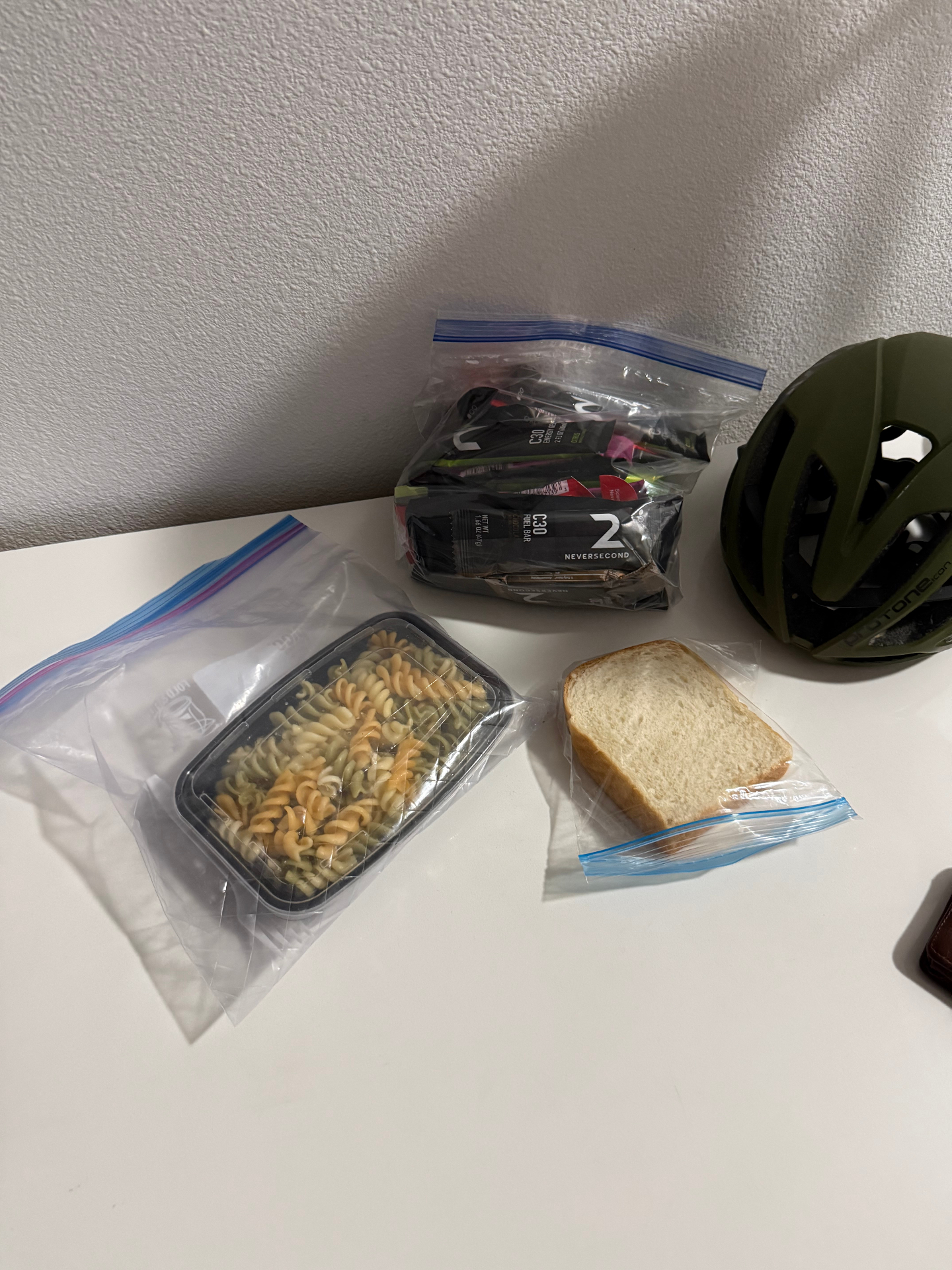
On race day, the pre-ride meal becomes even more deliberate. Two hours before a long gravel event, this might look like 200 grams of pasta and 130 grams of bread — enough to top off glycogen without leaving you heavy. Everything you will need on the bike, from gels to bars, should already be packed and staged so execution is automatic, not improvised.
What matters most is avoiding the common mistake of starting underfueled because the ride "is only two hours." If those two hours include threshold work, race pace, or repeated VO2 efforts, the cost of a weak pre-ride setup shows up quickly.
During the ride: fuel early enough to protect output
During-ride fueling is where strategy becomes execution. The main objective is not to rescue a bad patch late in the session. It is to prevent the bad patch from arriving.
For rides extending beyond easy short-duration work, carbohydrate intake generally needs to begin early, not after the first signs of fatigue. Once power starts falling because glycogen availability is compromised, catching back up is harder than most athletes expect. You can reduce the decline, but you often cannot fully restore the original quality of the session.
The exact hourly target depends on ride intensity, duration, and your tolerance. Lower-intensity endurance work may allow a moderate intake target. Harder and longer rides typically justify more aggressive carbohydrate delivery, especially when preserving power, decision-making, and finishing speed matters. But higher targets only work if they are practiced. Ambitious numbers on paper do not help if they lead to gut shutdown halfway through the event.
This is why timing and format matter as much as total grams. Fluids, gels, chews, bars, and more concentrated bottles all create different trade-offs. Liquids are easier to consume under pressure, but overreliance on drink mix can complicate hydration in hot conditions if concentration gets too high. Solids can improve satiety on long steady rides, but they may be impractical during technical or high-intensity sections. Most effective plans use a mix, adjusted to the ride context.
Why intensity changes everything
Athletes often underestimate how strongly intensity affects fueling accuracy. At low intensity, small errors may be tolerable. At high intensity, the margin narrows fast.
As the ride gets harder, carbohydrate demand rises, and your opportunities to eat cleanly often shrink. Breathing is elevated, the pace is less forgiving, and technical focus matters more. That means your fueling strategy cannot rely on ad hoc decisions. You need predefined timing points and practical intake forms that match the terrain and race dynamics.
A useful rule is to fuel for the hardest predictable part of the ride, not the easiest average. If a gravel race includes repeated one-minute surges, steep climbs, and limited safe moments to reach for food, your plan should reflect those constraints. If you only look at average intensity, you will likely underfuel the moments that decide the outcome.
Review matters more than most riders think
A fueling plan is only as good as the feedback loop behind it. Many cyclists assess rides only by whether they finished. That is too low a standard for athletes who care about repeatable performance.
The right questions are more specific. Did your power hold late? Did perceived exertion rise in line with workload, or faster than expected? Did you miss intake windows because of terrain, pacing, or bottle access? Did your gut tolerate the plan? Did recovery feel normal over the next 24 hours, or did the session leave an avoidable energy deficit?
This is where a structured system creates an advantage. When fueling is planned against ride demands, then reviewed against execution and outcome, you can identify patterns instead of guessing. FuelQ Pro is built around that exact workflow: plan, execute, review, and improve based on the actual demands of cycling, not generic nutrition rules.
Common mistakes that break a cycling fueling strategy
Most failures come from a small set of recurring errors. The first is starting too late. The second is underestimating ride intensity because the event is "not that long." The third is choosing foods that are fine at endurance pace but unrealistic at race pace or on technical terrain.
Another common problem is treating hydration and carbohydrate as the same decision. They interact, but they are not identical. In hot conditions, fluid needs may rise sharply, which can either help or complicate carbohydrate delivery depending on bottle concentration. In cooler conditions, relying only on drink mix may leave total carb intake too low if you are simply not drinking enough. Good planning separates the variables, then reconnects them in a way that is practical.
Finally, many riders test nothing before race day. That is not a strategy. It is a gamble. Gut training, packaging choices, bottle setup, and intake timing all need rehearsal under real riding conditions.
Build a system, not a one-off plan
The strongest athletes do not just have a race nutrition plan. They have a repeatable operating system for fueling across easy days, hard workouts, long rides, and priority events. That system evolves as fitness, body mass, climate, and event demands change.
If you want more reliable performance, think in terms of workflows. Classify the ride. Set a pre-ride target. Define during-ride carbohydrate timing and format. Review execution against outcome. Adjust one variable at a time. That is how fueling becomes measurable instead of emotional.
A strong cycling fueling strategy will not replace training, but it will let your training show up when it counts. And for endurance cyclists, that is often the difference between having fitness and actually using it.
Turn this strategy into a real plan.
FuelQ Pro builds personalized fueling for your training weeks, long rides and races — plan, execute, review, improve.