Carb Loading for Cycling: How Much to Eat Before a Race

Gabriel Ricce
Lamorinda MBO Racing · USA Cycling Coach Level 3
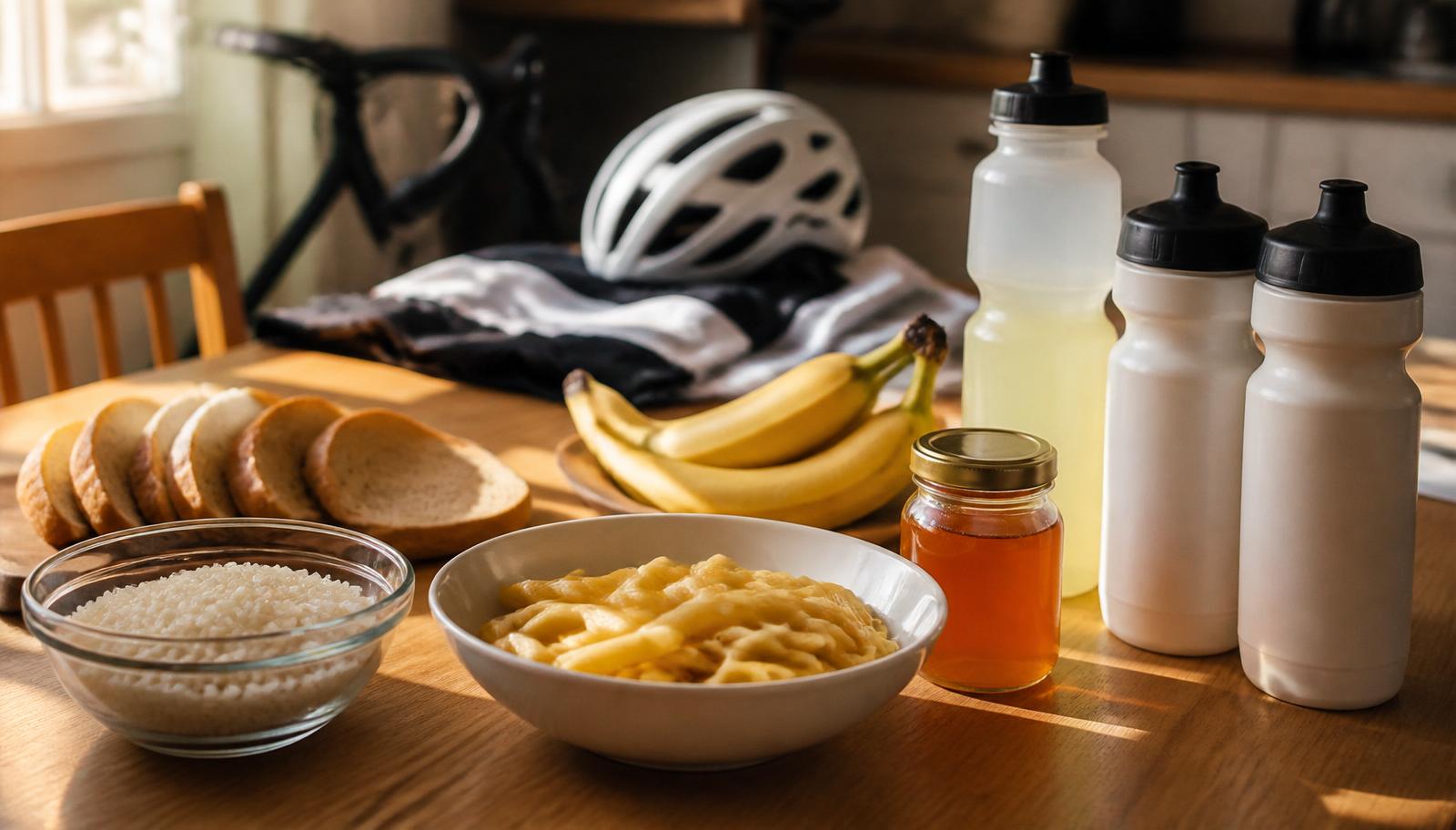
Carb loading for cycling means increasing carbohydrate intake while reducing training volume in the final 24–48 hours before a demanding endurance event. For races longer than about 90 minutes — long road races, gravel events, gran fondos, marathon MTB, and stage races — a practical target is approximately 8–12 g of carbohydrate per kilogram of body weight per day. The exact number depends on race duration, body size, training load, and gut tolerance. It is not one giant pasta dinner.
You can nail the training block, execute a clean taper, and still start a race underfueled. It happens because training volume dropped, appetite dropped with it, and the fridge quietly won the week. A huge breakfast on race morning cannot fully compensate for two or three days of inadequate carbohydrate intake before a long event.
This guide walks through what carb loading for cycling actually is, when it matters, how many carbs to eat, what to eat, and how to avoid the mistakes that turn a good plan into a bloated start line.
What Is Carb Loading for Cycling?
Carbohydrates are stored mainly as muscle glycogen and liver glycogen. Muscle glycogen powers repeated and prolonged cycling efforts. Liver glycogen helps keep blood glucose stable, which matters for pacing, cognition, and technical execution.
When you reduce training volume in the days before a race, glycogen use drops. When you increase carbohydrate intake at the same time, glycogen stores can rise above normal levels. That improved starting point is what "carb loading" is really about.
It does not create unlimited energy. It does not replace fueling during the race. It raises the ceiling, so you start the event with more available fuel than a normal week would provide.
Free: the Cycling Race Fueling Checklist
Turn this into a race-week plan: carbs, bottles, sodium, caffeine and feed-zone prep in one free PDF you can print or keep on your phone.
Do Cyclists Really Need to Carb Load?
Not always. Whether carb loading helps depends on the demands of the ride.
Events under about 60–90 minutes
Aggressive carb loading is usually unnecessary for shorter races if you are already eating enough day to day. Examples include short criteriums, short cross-country MTB races, short time trials, and brief cyclocross-style events. Adequate carbohydrate availability still matters, but a full loading protocol is overkill.
Events lasting 90 minutes to 3 hours
Carb loading may help when intensity is high, the course includes repeated attacks or climbs, or you may struggle to eat enough during the race. This covers most road races, fast gravel events, marathon-style MTB races, gran fondos, and longer XC events.
Events lasting more than 3 hours
This is where carb loading for cycling becomes clearly useful — long gravel races, gran fondos, marathon MTB, endurance road races, 100-mile MTB events, stage races, and ultra-endurance rides. You still need to fuel during the event; loading is not a substitute for on-bike intake.
How Many Carbs Should a Cyclist Eat Before a Race?
Use daily targets as a planning frame, then check what that means in grams for your body weight.
| Preparation level | Daily carbohydrate target |
|---|---|
| Normal or moderate training | 5–7 g/kg/day |
| Heavy endurance training | 7–10 g/kg/day |
| Carb-loading phase | 8–12 g/kg/day for 24–48 hours |
Translated to real body weights:
| Body weight | 8 g/kg | 10 g/kg | 12 g/kg |
|---|---|---|---|
| 60 kg / 132 lb | 480 g | 600 g | 720 g |
| 70 kg / 154 lb | 560 g | 700 g | 840 g |
| 80 kg / 176 lb | 640 g | 800 g | 960 g |
| 90 kg / 198 lb | 720 g | 900 g | 1,080 g |
These are carbohydrate targets, not the total weight of food.
Twelve grams per kilogram is difficult, and often unnecessary. The correct target is the highest practical intake you can execute comfortably without causing gastrointestinal problems. For many amateur cyclists, that lands closer to 8–10 g/kg, which is still a meaningful increase over normal intake.
How Long Before a Cycling Race Should You Carb Load?
48 hours before the race
Best for very long events, stage races, larger athletes, and riders who cannot tolerate an extremely high intake in a single day. A two-day window spreads the load and reduces gut stress.
24 hours before the race
Often enough when you already ate well during race week, tapered properly, and the event is not extremely long. Distributing intake across the day is more comfortable than trying to cram it into two meals.
Race morning
Breakfast completes the preparation — it is not the entire strategy. A practical pre-exercise range is roughly:
- 1–4 g/kg of carbohydrate
- Consumed 1–4 hours before the start
- Adjusted for digestion time, appetite, body size, and previous testing
Bigger, higher-carb breakfasts sit further from the start. Smaller, lower-fiber meals sit closer. Rehearse the version you plan to use.
A Practical 48-Hour Carb-Loading Timeline
Two days before
- Reduce training volume as planned.
- Increase carbohydrate intake gradually.
- Keep meals familiar.
- Avoid excessive fiber.
- Hydrate normally.
- Avoid new supplements and unfamiliar foods.
Day before
- Distribute carbohydrates across 5–7 meals and snacks.
- Choose carbohydrate-dense foods.
- Reduce very high-fat meals.
- Skip oversized salads and excessive whole grains.
- Eat dinner early enough to digest comfortably.
- Prepare breakfast, bottles, and race fuel the night before.
Race morning
- Eat the rehearsed pre-race meal.
- Use easy-to-digest carbohydrates.
- Avoid an unnecessarily huge breakfast.
- Add a small snack or carbohydrate drink if already practiced.
- Start fueling early during the race.
Best Foods for Carb Loading Before a Cycling Race
Lower-fiber carbohydrate options
White rice, pasta, white bread, bagels, pancakes, low-fiber cereal, potatoes, rice cakes, pretzels, tortillas, applesauce, ripe bananas, fruit juice, sports drinks, jam, honey, and maple syrup.
Foods that add carbs without excessive volume
Carbohydrate drink mixes, juice, tested smoothies, low-fiber cereal, honey or jam on bread, rice-based snacks, and sports drinks sipped between meals.
Foods to use more carefully
Very large salads, beans and lentils, high-fiber cereals, excessive whole grains, fried foods, high-fat restaurant meals, large amounts of cheese, unfamiliar sports products, sugar alcohols, and very spicy foods.
Protein, fat, fruits, vegetables, and micronutrients should not disappear from the plate. This is a temporary adjustment in meal proportions, not a nutritional overhaul.
Sample Carb-Loading Day for a Cyclist
Portions depend on body weight, target intake, and preferences.
Breakfast — pancakes or oatmeal, banana, maple syrup or honey, juice, and yogurt if tolerated.
Morning snack — bagel with jam and a sports drink.
Lunch — white rice, lean chicken or fish, a moderate serving of cooked vegetables, and bread or fruit.
Afternoon snack — low-fiber cereal with milk, pretzels, and applesauce.
Dinner — pasta with a light sauce, lean protein, bread, and a small serving of cooked vegetables.
Evening snack — rice cakes with honey, cereal, banana, or a carbohydrate drink if needed to hit the day's target.
Should You Reduce Fiber, Fat, and Protein?
- Fiber is healthy but may increase intestinal volume before a race. Trim it in the final 24–48 hours.
- Fat slows gastric emptying and makes meals feel heavier. Keep it moderate.
- Protein stays important, but very large portions can displace carbohydrate. A normal serving with each meal is enough.
Carb loading is not a license to abandon a balanced diet. It is a short, event-specific adjustment that prioritizes carbohydrate while controlling foods that make the plan harder to digest.
Athletes with known gastrointestinal issues should be more conservative and rely on foods they have already tested.
Why Does Your Weight Increase During Carb Loading?
A higher scale reading during carb loading is expected. Contributing factors include:
- Glycogen is stored with water.
- More food remains in the digestive tract.
- Sodium and fluid intake often shift upward.
This is not sudden fat gain. Do not react to it by restricting food the day before the race — that is the fastest way to undo the strategy.
Carb Loading Does Not Replace Race Fueling
Glycogen stores are finite, and higher intensity burns them faster. Long races still require carbohydrate intake during the event. Starting with full stores does not justify waiting until you feel hungry to eat on the bike.
Practical during-race starting points:
| Event duration | Carbohydrate starting point |
|---|---|
| Around 1–2 hours | 30–60 g per hour |
| Around 2–4 hours | 60–90 g per hour |
| More than 4 hours | 80–100+ g per hour for trained athletes |
Higher carbohydrate intakes require gut training and should be tested during representative training sessions. Do not introduce an aggressive fueling target for the first time on race day.
See Carbs Per Hour Cycling and What to Eat During a Bike Race for how to build the on-bike side of the plan.
Common Carb-Loading Mistakes
One enormous pasta dinner
Carb loading is a 24–48 hour strategy, not a single meal. A huge dinner overloads the gut without meaningfully changing multi-day glycogen availability.
Adding carbs without changing food composition
Stacking carbohydrate on top of normal high-fat, high-fiber meals creates volume and discomfort. Trade some fiber and fat for more carbohydrate instead of piling on.
Too much fiber
A big salad, whole-grain everything, and legumes look healthy but can leave you bloated on the start line.
Restricting food because training dropped
Volume is down on purpose. Do not respond to lower training load by cutting carbs — that defeats the taper.
Trying unfamiliar foods
Race week is not the time for a new restaurant, recipe, supplement, or sports product.
Forgetting the race breakfast
The strategy continues through race morning. Skipping or under-eating breakfast wastes the previous 48 hours.
Ignoring during-race fueling
Carb loading and race fueling are complementary. Neither replaces the other.
Copying professional cyclists
Professional-level intakes are highly practiced. Amateur athletes should start conservatively and build tolerance over time.
How Carb Loading Changes by Cycling Discipline
Road racing
Focus on supporting repeated accelerations, climbs, attacks, and high-intensity sections. Familiar meals matter — you may be eating in a hotel or team environment.
Gravel racing
Long duration, rough terrain, and limited aid-station access make loading especially useful. Fueling while riding technical sections is hard; a strong start reduces the cost of missed intake windows.
Marathon MTB
Prioritize digestibility. Technical terrain and sustained climbing raise carbohydrate demand and make on-bike execution harder.
Cross-country MTB
A full aggressive load is often unnecessary for shorter races, but adequate carbohydrate availability still matters. Focus on a well-fueled day before and a rehearsed breakfast.
Gran fondo
Long duration, climbing, and variable pace make carb loading a good fit. Plan around aid stations and what you can carry.
Stage racing
Loading before stage one is only the beginning. Rapid post-stage refueling and consistent daily carbohydrate intake matter more over a multi-day event.
Carb-Loading Checklist for Cyclists
- Confirm the estimated race duration.
- Decide whether the event justifies carb loading.
- Choose a realistic g/kg target you can execute.
- Start 24–48 hours before the event.
- Reduce training volume as planned.
- Spread carbohydrates across meals and snacks.
- Use familiar, lower-fiber foods.
- Keep fat and very large protein portions moderate.
- Prepare the race-morning meal in advance.
- Organize race fuel, bottles, and aid-station supplies.
- Expect some temporary weight increase.
- Start race fueling early on the bike.
Prepare Your Full Race Fueling Plan
Carb loading is only one part of race preparation. Use the free Cycling Race Fueling Checklist to organize your carbohydrates, breakfast, hydration, sodium, caffeine, aid stations, and race-day supplies.
Get the Free Cycling Race Fueling Checklist →
Need event-specific targets? Build a personalized race fueling plan around your race duration, intensity, weather, hydration needs, aid stations, and what you can realistically carry.
Build My Personalized Race Fueling Plan →
For the broader context around race-week nutrition, see Cycling Fueling Strategy, What to Eat Before a Bike Race, and Cycling Nutrition Plan.
The Bottom Line
Carb loading for cycling works best as a controlled race-preparation strategy, not as an oversized pasta dinner. For long or demanding events, increasing carbohydrate intake during the final 24–48 hours can help maximize glycogen availability. Keep the plan familiar, digestible, and connected to your race breakfast and during-race fueling strategy — that is where a well-loaded rider actually turns into a well-fueled one.
Athletes with diabetes, gastrointestinal disease, food allergies, or other relevant medical conditions should seek individualized guidance from a qualified professional before applying these targets.
Frequently asked questions
How many days should cyclists carb load?
For most cyclists, 24–48 hours is enough when combined with a proper taper. Longer protocols are usually unnecessary for amateur athletes and can increase gastrointestinal discomfort. Stage racers and ultra-endurance riders may extend the window slightly, but the core idea remains: a short, focused increase in carbohydrate intake alongside reduced training volume.
How many carbs should I eat when carb loading?
A practical target is approximately 8–12 grams of carbohydrate per kilogram of body weight per day during the final 24–48 hours before a demanding event. The exact number depends on race duration, body size, training load, and gut tolerance. Many amateur cyclists do well toward the lower end of that range while still executing the strategy correctly.
Should I carb load for a two-hour bike race?
It can help, especially if the race is intense with repeated attacks or climbs, but a maximal loading protocol is not always necessary. For a two-hour event, ensuring adequate carbohydrate intake in the day before and a well-executed race breakfast is often enough. Aggressive 12 g/kg loading is generally overkill for this duration.
Is pasta good for carb loading?
Pasta is a useful carb loading food because it is carbohydrate-dense, familiar, and easy to prepare. But it is not mandatory. Rice, potatoes, bread, bagels, pancakes, and low-fiber cereals work equally well. The best foods are the ones you tolerate, digest comfortably, and can execute across multiple meals — not one single hero food.
Why do I gain weight when I carb load?
Glycogen is stored together with water, so higher glycogen stores naturally increase body mass. Additional food in the digestive tract and shifts in sodium and fluid intake also contribute. This temporary weight gain is not fat gain and should not trigger food restriction on race day.
Should I carb load and still eat during the race?
Yes. Carb loading fills glycogen stores before the race, but those stores are limited and higher intensities burn them fast. During-race fueling supplies exogenous carbohydrate that spares glycogen, stabilizes blood glucose, and supports late-race performance. The two strategies solve different problems and work best together.
Turn this strategy into a real plan.
FuelQ Pro builds personalized fueling for your training weeks, long rides and races — plan, execute, review, improve.