What to Eat During a Bike Race
Gabriel Ricce
Lamorinda MBO Racing · USA Cycling Coach Level 3
The best race food is not simply the option with the most carbohydrates. It is the food you can access, eat, digest, and repeat while racing.
During most bike races, prioritize easily digested carbohydrates that you can consume consistently while riding. Gels, chews, carbohydrate drinks, soft bars, bananas, rice cakes, waffles, and small low-fat sandwiches can all work. The best choice depends on race duration, intensity, terrain, weather, and what you have already tolerated in training.
There is no single universal "best food" for a bike race. What to eat during a bike race is a decision that changes with the event in front of you — and what the athlete eats during the race cannot completely correct an underfueled start. Review the pre-race strategy in What to Eat Before a Bike Race before you finalize your race-day menu.
What to eat during a bike race
The table below is a starting point, not a universal prescription. It gives a defensible menu you can build from, then adapt to your gut, your kit, and the specific course.
| Race situation | Practical food options |
|---|---|
| Short, intense race | Gel, chews, carbohydrate drink |
| Road race with variable intensity | Drink mix, gels, chews, compact soft bar |
| Gravel race | Drink mix, gels, chews, rice cakes, soft bars |
| Marathon MTB | Gels, drink mix, soft chews, easy-to-open foods |
| Gran fondo | Bars, bananas, sandwiches, gels, drink mix |
| Ultra-endurance event | Sports nutrition plus simple real food |
Use it to shortlist options. Confirm each one in training before you race with it.
Free: the Cycling Race Fueling Checklist
Turn this into a race-week plan: carbs, bottles, sodium, caffeine and feed-zone prep in one free PDF you can print or keep on your phone.
Carbohydrates should provide most of your race fuel
Carbohydrate is the primary race-fueling priority. Protein and fat have limited immediate value while racing, and high-fat, high-fiber, or protein-heavy foods can slow digestion at exactly the moment you need it to be quiet.
Think in grams of carbohydrate per hour, not calories per hour. Calories flatten the differences between fuel sources; grams of carbohydrate map directly to what your working muscles can actually use. The exact target depends on duration, intensity, gut tolerance, and how much you have trained your fueling — see Carbs Per Hour Cycling: What Actually Works for how those numbers scale, and Cycling Fueling Strategy That Holds Up for how they sit inside a full plan.
Choose food based on race intensity
High-intensity races
Criteriums, XCO, short road races, fast gravel races, and the decisive final hour of longer events all share one problem: breathing is heavy, hands are busy, and attention is on the wheel in front of you. Solid food becomes hard to chew and swallow.
Lean on gels, carbohydrate drinks, small chews, and any soft, compact food you can open with one hand. Anything that requires unwrapping, chewing for more than a few seconds, or careful timing will be missed at the worst moment.
Moderate-intensity and longer races
When intensity drops into a rhythm you can sustain, solid food becomes a real option. Rice cakes, bananas, soft bars, waffles, small sandwiches, boiled potatoes, chews, and drink mix all work. The variety matters — flavor fatigue is a real reason athletes stop eating on time, and sweet-only menus start to fail after a few hours.
Very long endurance races
In events that stretch past four hours, most successful plans combine sports nutrition during intense sections with simple real food during calmer ones. Rotate sweet and savory. Favor low-fat, low-fiber, easy-to-chew options. Only use aid-station foods you have already tested in training — a race is not the day to discover that a certain brand of bar sits badly at threshold.
Best foods to eat during a bike race
Energy gels
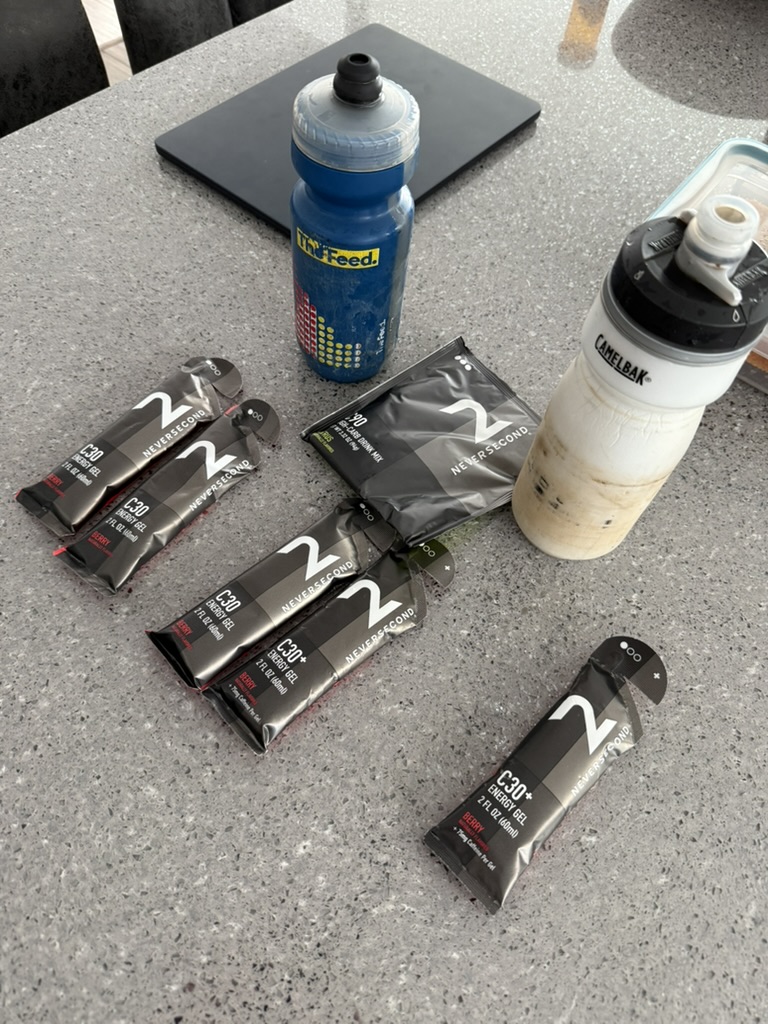
Gels are portable, deliver a predictable dose of carbohydrate, and work well at high intensity when chewing is hard. Most gels need to be paired with water, and the exact amount depends on the product — the more concentrated the gel, the more water it needs to clear the stomach comfortably. Flavor fatigue is common, so rotate flavors and test both timing and concentration before race day.
Carbohydrate drink mix
Drink mix delivers carbohydrate gradually and doubles as hydration. That makes it one of the most efficient tools in a race plan, but it needs to be managed. Concentration matters: bottles that are too strong can slow gastric emptying and cause discomfort, especially in the heat. Always count the carbohydrate in your bottles toward your hourly total, and set your electrolyte and fluid strategy around them — the Cycling Hydration Calculator is a good starting point.
Energy chews
Chews portion easily, take small doses frequently, and store well in a jersey pocket or top-tube bag. Their main limitation is chewing effort — in cold weather or at very high intensity, they can become surprisingly difficult to work through. Pre-open packaging when possible.
Energy bars
Bars are useful in longer races when you can back off intensity for a moment to chew. Choose soft, low-fat, low-fiber bars, and avoid anything dry, crumbly, or hard to open. A bar you cannot get out of the wrapper is not fuel.
Rice cakes and waffles
Homemade or packaged rice cakes and waffles pack a lot of carbohydrate into a small, familiar package. They come in sweet and savory versions, digest well for most athletes, and are easy to pre-portion. The trade-off is packaging — foil-wrapped items travel better on rough terrain than loose paper.
Bananas
Bananas are a familiar carbohydrate source, and most aid stations have them. They are less portable than sports nutrition, they bruise in a jersey pocket, and portion size varies. They are still worth including in a longer-race menu, especially when combined with sports nutrition for precision.
Small sandwiches and potatoes
For gran fondos, gravel events, stage races, long MTB marathons, and ultra-endurance races, a small sandwich or a few boiled, salted potatoes can be exactly what an over-sweetened stomach needs. Keep fillings simple — jam, honey, a little cheese, plain ham — and keep portions small. Avoid high-fat, high-fiber, or difficult-to-chew versions.
How much should you eat during a bike race?
| Race duration | Carbohydrate starting point |
|---|---|
| Around 1–2 hours | 30–60 g per hour |
| Around 2–4 hours | 60–90 g per hour |
| More than 4 hours | 80–100+ g per hour for trained athletes |
These are starting points, not universal prescriptions. Higher intakes — especially above roughly 90 g per hour — require deliberate gut training. Race day is not the moment to test your ceiling. The best target for you is the amount you can repeat consistently, hour after hour, without compromising comfort, hydration, or race execution. For a deeper look at how these ranges work in practice, see Carbs Per Hour Cycling: What Actually Works.
A practical hourly race-food example
The example below is for a four-hour race with a target of roughly 75–85 grams of carbohydrate per hour. Treat it as an operational example, not an individual prescription.
Hour 1
- 30 g from drink mix
- 25 g from one gel
- 20–25 g from half a soft bar or rice cake
Hour 2
- 30 g from drink mix
- 30 g from chews
- 20–25 g from one gel
Hour 3
- 30 g from drink mix
- 25 g from one gel
- 25 g from a rice cake or waffle
Hour 4
- 30 g from drink mix
- 25 g from one gel
- 20–25 g from chews
Notice how the drink mix carries a consistent baseline and the solids and gels rotate around it. That structure keeps hourly totals predictable even if a single feed goes wrong.
Eat early instead of waiting for hunger
Hunger is a late signal. By the time it shows up during a race, energy availability is usually already dropping. In longer races, fueling should start within the first 20–30 minutes, before the body has a reason to complain.
Smaller, frequent doses are almost always easier than large feeds. Tie your intake to time, course segments, or planned reminders — a watch alert, a specific climb, a known aid station — instead of memory or hunger. This kind of discipline is what separates riders who fade late from riders who finish strong, and it is a central theme in How to Fuel Long Bike Rides That Perform.
Match your food to the course
Climbs
Avoid opening packaging or chewing during maximal climbing efforts. Breathing rate alone makes it hard to swallow safely. Eat before the climb starts, or during the calmer sections between climbs.
Descents
Safety comes first. Do not depend on technical descents for eating. Two hands on the bars, eyes on the line — save the intake for the runout.
Technical MTB
Plan for one-handed access. Pre-open packaging where possible. Lean on gels, drink mix, and soft chews. Avoid anything that needs sustained chewing, and fuel before you enter a technical section rather than during it.
Gravel and road races
Identify the calm sections of the course and use them. Eat before attacks, sectors, or major climbs, not during them. Use course landmarks and aid stations as anchors in your plan, and always protect a small reserve of emergency calories in case a section takes longer than expected.
Real food versus sports nutrition
The honest position is that both belong in most race plans. Sports nutrition offers precision, portability, and easier consumption at intensity. Real food offers variety, taste, texture, and — often — a stomach that stays willing to eat.
You do not need to exclude either. As intensity rises, the advantage tips toward gels, chews, and drinks. As duration rises, the value of variety and savory food goes up. Race food is not a moral question about "clean" versus "processed." It is a question of execution, tolerance, accessibility, and what the race actually demands.
Foods to avoid during a bike race
There are no absolute bans, but some categories cause problems often enough to be worth flagging:
- Very high-fat foods, which slow digestion.
- Large amounts of fiber, which increase GI distress risk.
- Large protein portions, which sit heavily under intensity.
- Dry or crumbly foods that are hard to chew and swallow.
- Anything unfamiliar you have not tested in training.
- Packaging that is hard to open with cold, sweaty, or gloved hands.
- Foods that melt in the heat or spoil in a jersey pocket.
- Excessive caffeine, especially stacked with pre-race doses.
- Relying only on plain water during long or hot events without accounting for carbohydrate and sodium.
Common race-fueling mistakes
- Waiting until hungry to start eating.
- Carrying less food than the plan actually requires.
- Using a single flavor for many hours.
- Making every bottle excessively concentrated.
- Eating solid food during attacks or technical sections.
- Depending entirely on aid stations that may run out or be delayed.
- Forgetting a small reserve of backup calories.
- Copying professional carbohydrate targets without gut training.
- Failing to count drink mix carbohydrates toward the hourly total.
- Trying new food on race day.
Practice your race food in training
Gut training is not optional if you want to push your hourly carbohydrate intake higher, and it is not something you can improvise on race day. In training, deliberately test:
- Total carbohydrate quantity per hour.
- Intake frequency inside each hour.
- Drink concentration.
- Combinations of solids and liquids.
- Flavor rotation across a full session.
- Packaging and one-handed access.
- Heat and humidity.
- Race intensity, not just endurance pace.
- Similar terrain to your target event.
- Sessions of similar duration to the race.
Food that sits fine at rest, or during an easy ride, may not survive the same intensity you will race at. The only reliable test is a session that looks like the race.
Final race-food checklist
- Hourly carbohydrate target defined.
- Food assigned to each hour or course segment.
- Drink mix carbohydrates counted in the total.
- Every product tested in training.
- Packaging organized and, where possible, pre-opened.
- Aid stations confirmed and their contents known.
- Refill gaps between aid stations identified.
- Backup calories accessible without stopping.
- Caffeine separated from regular fuel and dosed deliberately.
- Weather adjustments planned for heat, cold, and rain.
Build a fueling plan you can actually execute
Knowing what to eat is only one part of race fueling. Your plan also needs to account for event duration, intensity, weather, hydration, sodium, caffeine, aid stations, and what you can realistically carry on the bike. The Free Cycling Race Fueling Checklist is a good next step if you want a printable version of the framework in this article.
For a personalized, event-specific plan built around your body, course, and expected conditions, use FuelQ Pro's Race Fueling Plan.
Frequently asked questions
What is the best food to eat during a bike race?
The best race foods are easily digested carbohydrate sources such as gels, chews, carbohydrate drinks, soft bars, rice cakes, bananas, waffles, and small low-fat sandwiches. The right choice depends on race duration, intensity, terrain, weather, and what you've already tolerated in training.
How often should I eat during a bike race?
Small amounts consumed regularly work better than waiting for hunger. Many riders use a 15–30 minute rhythm inside a defined hourly carbohydrate target instead of eating one or two large feeds.
Are bananas good during a bike race?
Bananas are a familiar, carbohydrate-rich option and appear at many aid stations. They're less compact and less precise than sports nutrition, but they're often well tolerated and a useful part of a longer race menu.
Should I eat solid food during a bike race?
Solid foods can work well during longer or lower-intensity sections. During hard efforts, technical terrain, or the finale of a race, gels, chews, and carbohydrate drinks are usually easier to consume and digest.
Can I fuel a bike race using only gels?
You can, especially in shorter events. In longer races most athletes benefit from combining gels with carbohydrate drinks, chews, or small solids to reduce flavor fatigue and improve overall tolerance.
When should I start eating during a bike race?
In longer races, fueling should generally begin within the first 20–30 minutes, well before hunger or fatigue appear. Hunger is a late signal and a poor trigger for race fueling.
Turn this strategy into a real plan.
FuelQ Pro builds personalized fueling for your training weeks, long rides and races — plan, execute, review, improve.