Carbs Per Hour Cycling: What Actually Works

Gabriel Ricce
Lamorinda MBO Racing · USA Cycling Coach Level 3
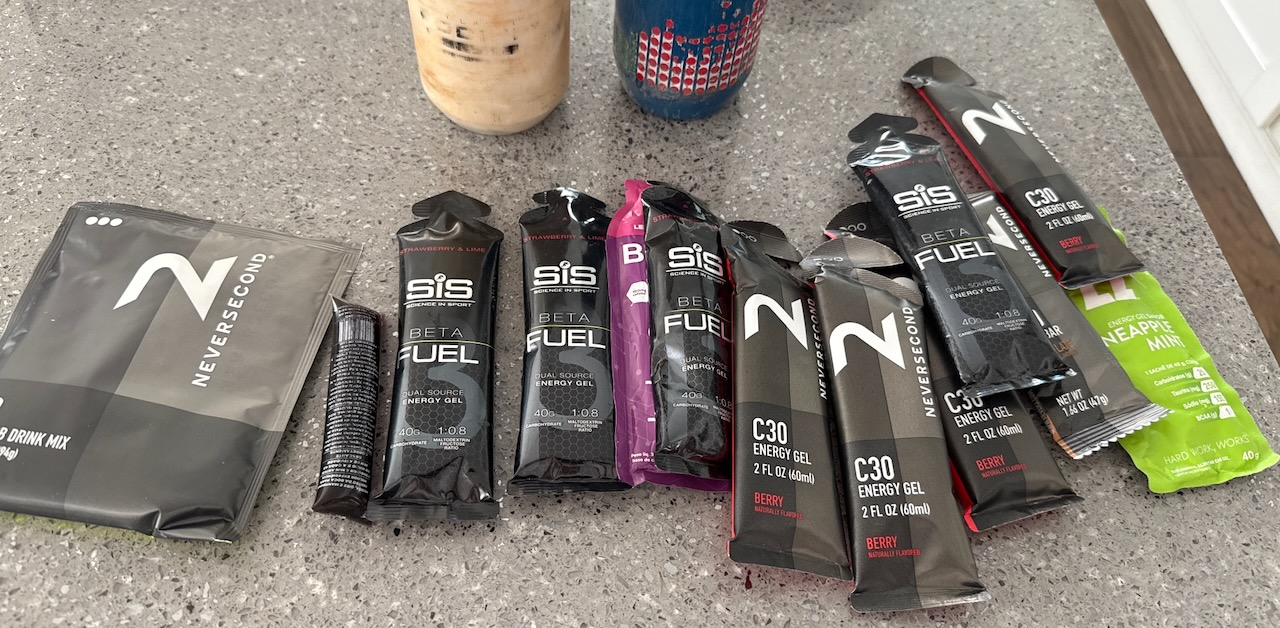
If you have ever finished a hard ride with good legs but fading power, poor decision-making, or that hollow late-ride feeling, your pacing may not have been the main problem. In many cases, the limiter is carbs per hour cycling, not fitness. The difference between a strong final hour and a survival shuffle often comes down to whether your intake matched the actual demands of the ride.
That sounds simple, but it rarely is. Generic advice like "take a gel every 45 minutes" breaks down fast when you compare a steady Zone 2 road ride, a punchy XC race, and a gravel event with repeated climbs and variable intensity. Carbohydrate needs change with duration, power demands, terrain, heat, and what your gut can realistically absorb while riding.
For serious cyclists, the right question is not "How many carbs should I eat?" It is "How many grams per hour can I execute consistently for this specific session?" That framing matters because good fueling is a system — plan, execute, review, improve.
Carbs per hour cycling depends on the ride
There is no single correct number for every athlete or every session. Still, there are useful ranges.
For rides under 60 minutes, many athletes do not need significant on-bike carbohydrate if they start well fueled. That changes if the session is very intense, done fasted, or stacked on accumulated fatigue. In those cases, even a small intake can improve quality.
For rides around 60 to 120 minutes, 30 to 60 grams per hour is often enough, especially for endurance rides and controlled interval sessions. This is where many cyclists underfuel without realizing it. They assume two hours is "not that long," then watch power drop in the final third of the ride or struggle to hit later intervals.
For rides beyond two to three hours, and especially race-like efforts, 60 to 90 grams per hour becomes a more practical target. On higher-intensity days, some athletes can push above that, but only if they have trained their gut and built a carbohydrate strategy around multiple transportable carbs such as glucose and fructose.
For long gravel races, road races, marathon MTB events, or hard training rides over four hours, the conversation often moves to 90 grams per hour and sometimes more. But this is where context matters most. A target that looks good on paper means nothing if it causes sloshing, missed feed timing, or late-race nausea.
Free: the Cycling Race Fueling Checklist
Turn this into a race-week plan: carbs, bottles, sodium, caffeine and feed-zone prep in one free PDF you can print or keep on your phone.
Why the old numbers are often too low
A lot of cyclists still use outdated intake targets built around convenience rather than performance. One bottle and one gel per hour may sound organized, but it can leave a strong rider well short of what they are burning.
At moderate to high intensities, carbohydrate oxidation rates can be substantial. You are not replacing every gram you burn during the ride, but you are trying to slow glycogen depletion, preserve repeatable power, and reduce the gap between energy demand and fuel delivery. The harder and longer the effort, the more costly underfueling becomes.
That cost does not always show up as an obvious bonk. Sometimes it looks like reduced top-end response, poor pacing choices, fading cadence on climbs, or a recovery hole that carries into the next two days. Cyclists who care about consistency should think beyond "Did I crack?" and look at whether fueling preserved the session objective.
Intensity changes the equation
Duration gets most of the attention, but intensity often decides how aggressive your carbohydrate plan needs to be.
A steady three-hour endurance ride may go well at 50 to 70 grams per hour for one athlete. A two-and-a-half-hour race simulation with repeated threshold efforts may demand 80 to 100 grams per hour from the same rider. That is because harder efforts shift substrate use toward carbohydrate and create more urgency around delivery timing.
This is where many cyclists make avoidable mistakes. They use the same fueling script for every ride, then wonder why race-day numbers fall apart. If your ride includes repeated surges, technical MTB sections that disrupt eating, or long climbs where it is harder to chew and drink, your carb target has to account for those execution constraints.
In practice, that means front-loading early, choosing easier-to-consume formats, and building a plan around the sections where fueling is realistic. The best plan is not the most ambitious one. It is the one you can actually carry out at speed.
Gut tolerance is trainable, but not unlimited
The ceiling for carbs per hour cycling is not set by motivation. It is set by absorption, product choice, and gut training.
If you usually ride on water and one bar, jumping straight to 100 grams per hour is a good way to create GI distress. Your gut adapts to higher carbohydrate loads over time, especially when you practice during training. That adaptation is a performance skill, just like threshold work or pacing discipline.
The source of carbs matters too. Single-source intake can become limiting at higher doses, while mixed carbohydrate strategies can improve tolerance and absorption. Fluid concentration also matters. A heavily loaded bottle may work in cool weather at endurance pace, then become a problem in the heat when fluid demand rises and the drink mix gets too concentrated.
This is why precision beats rules of thumb. Two athletes targeting 90 grams per hour may need completely different setups based on sweat rate, preferred products, and event format.
A practical way to set your target
Start with the ride, not the product.
Look at duration first. Then layer in intensity, terrain, temperature, and feed opportunity. A flat road ride with predictable bottle access is very different from technical singletrack or unsupported gravel. Once you understand the ride demands, choose a carbohydrate range you can execute without guesswork.
For many cyclists, a smart progression looks like this: 30 to 45 grams per hour for shorter or easier sessions, 50 to 70 grams per hour for moderate long rides, and 70 to 90 grams per hour for longer or harder work. If your event demands more and your gut can handle it, build toward that deliberately in training.
Then test it. Do not judge a strategy on one perfect-weather ride. Review whether you hit the target, when intake drifted, how power held up, whether GI symptoms appeared, and how recovery felt later that day and the next morning.
That review step is where progress accelerates. FuelQ Pro is built around that exact loop: plan the ride-specific target, execute it in context, then assess what actually happened against the demands of the session.
Common mistakes that distort carb intake
The biggest mistake is waiting too long to start. If you delay your first intake until you feel flat, you are already behind. Early feeding keeps delivery more stable and usually improves tolerance because you are not trying to catch up late.
Another common issue is averaging intake across the whole ride instead of looking at actual timing. Two hours with 120 total grams can be excellent if evenly distributed. It can be poor if 80 of those grams came in the final 30 minutes.
Cyclists also tend to overestimate how much they consumed. One half-finished bottle, one dropped gel, and one missed feed zone can pull your real intake far below the planned number. If you want reliable improvement, track what you actually took in, not what you packed.
Finally, avoid separating fueling from pacing and logistics. A carb target that requires opening wrappers during a rocky descent is not a real strategy. Match intake format to terrain and handling demands.
Race fueling is not just a bigger training ride
Many riders can get through training on a loose approach because intensity is controlled and the cost of minor underfueling is manageable. Racing is less forgiving.
Carb demands rise, opportunities to eat shrink, and mistakes compound faster. That means your race target should come from tested training data, not ambition. If you have never held 90 grams per hour in hard sessions, race day is not the time to invent a new ceiling.
The goal is not to maximize grams at all costs. The goal is to find the highest repeatable intake that supports power, decision-making, and finish-line durability. Sometimes that is 60 grams per hour done perfectly. Sometimes it is 100. The right number is the one that fits the event and survives real-world execution.
A disciplined cyclist treats fueling the same way they treat intervals or equipment setup. It is not background detail. It is part of performance. Get your carbs per hour cycling strategy right, and you stop relying on hope in the final hour. You give your fitness a better chance to show up when the ride gets selective.
Turn this strategy into a real plan.
FuelQ Pro builds personalized fueling for your training weeks, long rides and races — plan, execute, review, improve.