How Much Water Should You Drink While Cycling?

Gabriel Ricce
Lamorinda MBO Racing · USA Cycling Coach Level 3
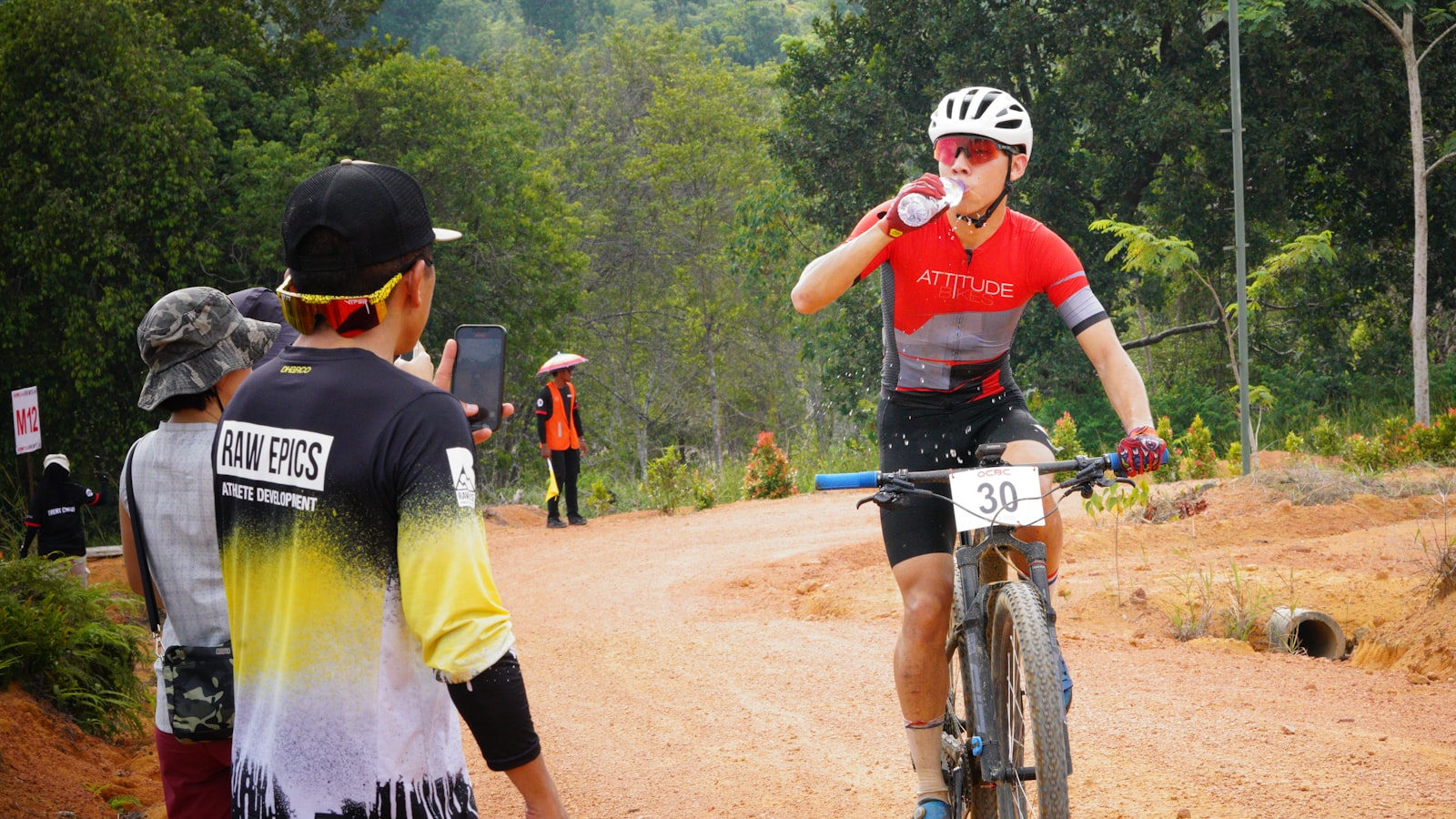
Most cyclists can use approximately 400–800 ml (14–27 fl oz) per hour as a practical starting range, but the right amount depends on sweat rate, temperature, ride intensity, duration, body size, and how much fluid you can realistically carry or collect during the ride.
There is no single correct answer to how much water you should drink while cycling. A 60 kg (132 lb) rider spinning easy in cool weather has very different needs from an 85 kg (187 lb) rider racing gravel in the heat. Bottle-per-hour rules are convenient, but they hide the variables that actually decide whether you finish strong or crack in the last hour.
Hydration affects power, heart rate, thermoregulation, gut comfort, and decision-making. Getting it roughly right is more valuable than getting it perfectly wrong with a rigid formula. This guide gives you a practical starting range, then shows you how to personalize it.
How Much Water to Drink While Cycling: The Practical Answer
Use these ranges as a starting point, not a universal prescription. They assume steady endurance riding on a well-fueled cyclist of average body size.
| Riding Conditions | Practical Starting Point |
|---|---|
| Cool weather (under 15 °C / 59 °F) | 300–500 ml/h (10–17 fl oz/h) |
| Mild weather (15–22 °C / 59–72 °F) | 400–700 ml/h (14–24 fl oz/h) |
| Warm weather (22–28 °C / 72–82 °F) | 600–900 ml/h (20–30 fl oz/h) |
| Hot conditions / high sweat rate (>28 °C / 82 °F) | 750–1,000+ ml/h (25–34+ fl oz/h) |
These are practical starting points to plan around. Refine them once you measure your own sweat rate.
Free: the Cycling Race Fueling Checklist
Turn this into a race-week plan: carbs, bottles, sodium, caffeine and feed-zone prep in one free PDF you can print or keep on your phone.
Why There Is No Universal Bottle-per-Hour Rule
Hydration needs change with:
- Sweat rate — genetically variable and trainable, ranging from about 0.4 to over 2.0 L/h.
- Temperature and humidity — humidity limits evaporative cooling, driving sweat higher.
- Ride intensity — harder efforts produce more heat and more sweat.
- Duration — a two-hour ride tolerates a small deficit; a six-hour ride does not.
- Body size — larger riders generally sweat more.
- Clothing and kit — dark kit, wind vests, and hydration packs change heat load.
- Wind and airflow — headwinds cool you; tailwinds and climbs reduce airflow.
- Sun exposure — direct sun dramatically increases fluid needs.
- Acclimatization — heat-adapted riders sweat earlier and more efficiently.
- Refill opportunities — a self-supported route limits what you can plan.
A "one bottle per hour" rule ignores every one of these. Two riders on the same course can need double or half the fluid.
Calculate Your Sweat Rate
The most useful hydration test costs nothing and takes one ride.
Sweat rate (L/h) = (pre-ride weight − post-ride weight + fluid consumed − urine produced) ÷ ride duration
One kilogram of body weight lost equals roughly one liter of water (1 lb ≈ 16 fl oz).
Worked example
- Pre-ride weight: 75.0 kg (165.3 lb)
- Post-ride weight: 73.8 kg (162.7 lb)
- Fluid consumed during ride: 1.0 L (34 fl oz)
- Urine produced: 0 L
- Duration: 2 hours
Weight lost: 1.2 kg → 1.2 L of sweat. Total sweat: 1.2 L + 1.0 L consumed = 2.2 L over 2 hours. Sweat rate ≈ 1.1 L/h (37 fl oz/h).
Repeat this test in different conditions — cool, warm, hot, humid, hard, easy. One test gives you a data point. Three or four give you a personal range you can plan around.
Should You Replace Every Drop of Sweat?
Not necessarily. Replacing 100% of sweat losses in real time is often impractical, uncomfortable, and unnecessary for most rides.
A more realistic goal is to limit body weight loss to roughly 2–3% of body weight by the end of the ride, while avoiding stomach sloshing and overhydration. For a 75 kg (165 lb) rider, that is about 1.5–2.3 kg (3.3–5.1 lb) of tolerated loss on a long, hot day.
Overdrinking has its own cost: bloating, nausea, and, in extreme cases, low blood sodium. Comfort, gut tolerance, and steady sipping matter as much as the number on paper.
How Much Water Should You Drink on Different Types of Rides?
Short rides (<1 hour)
For most short rides, one bottle is enough. In cool weather, some riders finish an easy hour with almost no fluid. In heat, sip regularly and start with a full 500–750 ml (17–25 fl oz) bottle.
1–3 hour rides
Plan for 500–800 ml/h (17–27 fl oz/h) in typical conditions. This is where consistent sipping matters — a rhythm of a few swallows every 10–15 minutes usually works better than large occasional gulps.
Long rides (>3 hours)
Long rides are where hydration errors compound. Aim for a steady hourly target, plan refill points before you leave, and combine water with electrolytes and carbohydrate. For a deeper look, see our guide on how to fuel long bike rides.
Hot-weather rides
In heat, fluid needs can double. Pre-hydrate the day before, start with cold bottles, use electrolytes from the first sip, and reduce intensity if fluid access is limited. Never treat a hot ride as a normal ride with extra water.
Water vs Electrolytes vs Sports Drinks
Water covers only fluid replacement. Longer or harder rides need more.
- Plain water — short easy rides, cool weather, and short high-intensity efforts.
- Electrolyte drinks — rides over about 60–90 minutes, hot conditions, high sweat rates, or salty sweaters. Sodium is the priority electrolyte.
- Carbohydrate drinks — rides over 90 minutes, high-intensity workouts, and races, where fluid also carries fuel. See how many carbs per hour cyclists should target.
For long rides, hydration cannot be planned separately from sodium and carbohydrate. They travel together in the same bottles and the same stomach.
How Bottle Size Changes the Plan
Hourly targets only matter if you can carry the fluid. Match your bottles to your goal.
- 500 ml (17 fl oz) bottle — one per hour covers roughly 500 ml/h. In heat at 900 ml/h, you need close to two per hour.
- 750 ml (25 fl oz) bottle — one per hour covers most warm-weather riding for average-size riders.
- Hydration pack (1.5–2 L / 50–68 fl oz) — useful for MTB, gravel, and self-supported rides where stops are limited.
Example. A 3-hour warm ride at 700 ml/h needs about 2.1 L (71 fl oz). Two bottles are not enough — plan a refill or start with a pack.
Always know where your next refill is before you leave. The best hydration plan on paper fails the moment you run dry 40 km from home.
Signs You May Not Be Drinking Enough
- Thirst that will not settle
- Dry mouth and sticky saliva
- Rising heart rate at the same power
- Fatigue disproportionate to effort
- Headache or dizziness
- Reduced power output late in the ride
One symptom in isolation is not a diagnosis. A cluster of them, in a hot or long ride, usually is.
Signs You May Be Drinking Too Much
- Sloshing sensation in the stomach
- Bloating or nausea
- Frequent urination during the ride
- Feeling heavier as the ride progresses
- Unexpected weight gain post-ride
In extreme cases, drinking large volumes of plain water without sodium during very long events can contribute to exercise-associated hyponatremia. This is uncommon, but a reason not to force fluids far beyond thirst and sweat losses.
Common Cycling Hydration Mistakes
- Waiting until you feel thirsty to start drinking
- Using the same hydration plan in every season
- Ignoring sweat rate entirely
- Relying only on water for long or hot rides
- Not planning bottle refills
- Testing new drink mixes on race day
- Drinking more than the stomach can absorb
- Ignoring sodium during heavy sweat losses
Most of these are logistics problems, not physiology problems. Fixing them takes preparation, not more fitness.
A Simple Cycling Hydration Plan
- Estimate ride duration. Total time on the bike, plus any expected delays.
- Start with a practical fluid range. Use the table above based on expected temperature and intensity.
- Measure sweat rate. Run the weigh-in / weigh-out test in typical training conditions.
- Convert fluid goals into bottles. Match the target to bottle size, cages, hydration pack, and refill points.
- Test and refine. Adjust week by week based on how you feel, how you finish, and how post-ride weight tracks.
A plan like this is boring on paper and reliable on the road. That is the point.
How FuelQ Pro Helps Build a Smarter Hydration Strategy
Hydration works best when it is not planned in isolation. FuelQ Pro is built to consider ride duration, expected weather, intensity, sweat rate, bottle capacity, refill opportunities, and how hydration interacts with sodium and carbohydrate targets. For race days, it can also factor aid station spacing and course logistics into a strategy you can actually execute.
You can also start with our free cycling hydration calculator or download the race fueling checklist to prepare for your next event.
Build Your Personalized Cycling Hydration Plan
Generic recommendations are useful starting points, but every cyclist responds differently to heat, sweat loss, ride duration, and fueling needs.
FuelQ Pro helps you estimate hydration, carbohydrate, sodium, and race fueling strategies based on your event and riding conditions.
Get personalized hydration targets in FuelQ Pro →
For a broader look at how hydration fits into race-day execution, see our cycling fueling strategy guide.
Frequently asked questions
How much water should I drink per hour while cycling?
Most cyclists can use approximately 400–800 ml (14–27 fl oz) per hour as a practical starting range. The right amount depends on sweat rate, temperature, humidity, intensity, ride duration, body size, and how many bottles you can realistically carry or refill.
Is one bottle per hour enough?
One 500 ml (17 fl oz) bottle per hour is a common starting point in mild weather, but it is often not enough in hot or humid conditions, at high intensity, or for larger riders with high sweat rates. In heat, many cyclists need one to two 750 ml bottles per hour.
How much water should I drink on a two-hour bike ride?
On a two-hour ride, most cyclists do well with roughly 800–1,600 ml (27–54 fl oz) of total fluid, depending on temperature and intensity. In hot weather this can go higher; in cool conditions it can be less. Sipping steadily is more effective than drinking large amounts at once.
Should I drink water or electrolytes while cycling?
Short easy rides in cool weather can usually be handled with plain water. Longer rides, hot weather, and high sweat losses benefit from electrolyte drinks, especially those containing sodium. Rides longer than about 90 minutes also benefit from carbohydrate drinks to support fueling.
Can you drink too much water while cycling?
Yes. Drinking well beyond sweat losses, especially plain water without sodium, can dilute blood sodium and in extreme cases lead to exercise-associated hyponatremia. For most cyclists, matching intake to thirst, sweat rate, and conditions — rather than forcing very large volumes — is safer and more effective.
How do I calculate my cycling sweat rate?
Weigh yourself nude before and after a ride. Add the fluid you consumed and subtract any urine produced. Divide the total by ride duration in hours. One kilogram of body weight lost equals about one liter of sweat. Repeat under different temperatures to get a realistic range.
Turn this strategy into a real plan.
FuelQ Pro builds personalized fueling for your training weeks, long rides and races — plan, execute, review, improve.