Electrolytes for Cycling: What You Actually Need

Gabriel Ricce
Lamorinda MBO Racing · USA Cycling Coach Level 3
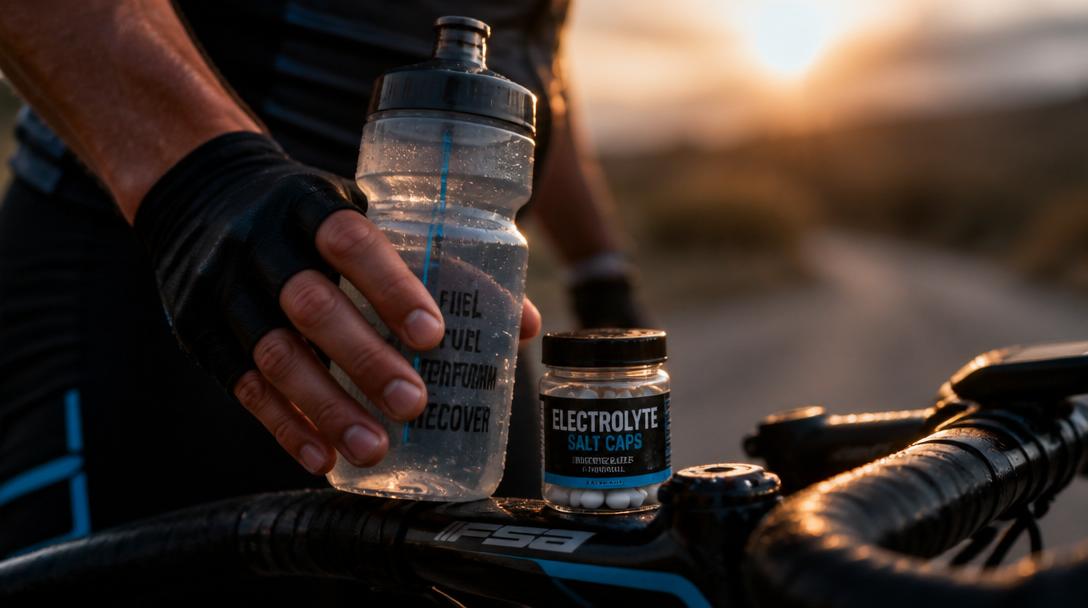
Sodium is the electrolyte cyclists actually need to plan around. Potassium, magnesium, and calcium matter, but sweat sodium losses are what most often derail long or hot rides. Not every ride needs electrolytes — a one-hour spin in mild weather rarely does — and more is not automatically better.
The word "electrolytes" gets used as if it means one product on a shelf. In practice, cyclists mostly need to think about sodium, and how sodium interacts with fluid intake and carbohydrate intake during a ride. The rest is supporting cast.
This guide walks through what electrolytes actually do, when they matter for cycling, how to estimate your own needs, and how to build a hydration strategy that holds up in real training and racing conditions.
What Are Electrolytes?
Electrolytes are minerals that carry an electrical charge in body fluids. They control fluid balance, nerve signaling, and muscle contraction. The main ones for endurance athletes are:
- Sodium — the dominant electrolyte in sweat and blood plasma. Regulates fluid balance and drives thirst.
- Chloride — travels with sodium and helps maintain fluid balance and acid-base status.
- Potassium — mostly inside cells; important for muscle contraction and nerve signals. Lost in small amounts in sweat.
- Magnesium — involved in energy metabolism and muscle function. Sweat losses are minor.
- Calcium — critical for muscle contraction, but tightly regulated by bone stores; not a real target during rides.
For cycling, this list collapses fast: sodium is the one you plan around. The others rarely become the limiting factor of a ride if your overall diet is reasonable.
Free: the Cycling Race Fueling Checklist
Turn this into a race-week plan: carbs, bottles, sodium, caffeine and feed-zone prep in one free PDF you can print or keep on your phone.
Which Electrolyte Matters Most for Cycling?
Sodium, by a wide margin.
Sodium losses in sweat are much larger than any other electrolyte. Sweat sodium concentration typically ranges from about 300 to 1,500 mg per liter, and cyclists can easily lose 0.5 to over 2 liters of sweat per hour. That combination adds up quickly on a hot ride or a long day out.
Sodium matters because it:
- Helps maintain plasma volume, which supports cardiac output and heat dissipation.
- Drives the thirst response, keeping voluntary fluid intake aligned with losses.
- Improves fluid retention, so more of what you drink actually stays in circulation.
- Can support perceived effort and performance in long or hot events.
Potassium, magnesium, and calcium do useful work, but you are not going to solve a fueling problem on the bike by loading them.
Do You Need Electrolytes on Every Ride?
No. Electrolyte need scales with duration, intensity, temperature, and sweat rate. Use this as a practical starting frame:
| Ride Type | Electrolyte Priority | Typical Approach |
|---|---|---|
| Under 60 min, mild weather | Low | Water is usually enough |
| 60–90 min, mild weather | Low to moderate | Water; optional light electrolyte drink |
| 90–180 min | Moderate | Add sodium via sports drink, tablets, or salty foods |
| 3+ hours | High | Structured sodium plan alongside carbohydrate and fluid |
| Hot weather (any duration over ~60 min) | High | Prioritize sodium and higher fluid volume |
| Endurance races (gravel, MTB marathon, road) | High | Sodium plan tested in training, adjusted for conditions |
This is a planning tool, not a prescription. A heavy sweater riding hard for 75 minutes in the heat may need electrolytes; a light sweater doing an easy 2-hour endurance spin in cool weather may not.
How Much Sodium Do Cyclists Need?
There is no universal sodium recommendation, and any number that sounds definitive is oversimplified.
The most common trap is confusing different units:
- Sodium per serving — the label number on a scoop or tablet.
- Sodium per bottle — depends on how many servings you actually mix into that bottle.
- Sodium per liter — a concentration, useful for comparing products.
- Sodium per hour — what actually matters for planning.
You cannot plan hourly sodium intake without knowing how much sodium is going into your bottle and how quickly you are drinking that bottle. A "500 mg sodium" drink mix at half strength in a 500 ml bottle you drink over 90 minutes is not 500 mg per hour.
Practical hourly sodium ranges for cyclists span from roughly 300 mg/h on the low end (light sweaters, mild weather, moderate duration) to 1,000 mg/h or more on the high end (heavy sweaters, hot conditions, long events). The right target is a personal answer, not a marketing number.
Estimate Your Sodium Needs
You can get a rough estimate with a simple formula:
Estimated Sodium Loss (mg/h) = Sweat Rate (L/h) × Sweat Sodium Concentration (mg/L)
Sweat rate comes from a pre/post ride weigh-in. Sweat sodium concentration can be estimated from lab or patch testing, or approximated using indirect signs (see next section).
Worked example. A rider with:
- Sweat rate: 1.2 L/h
- Sweat sodium concentration: 900 mg/L (moderately salty)
Estimated sodium loss ≈ 1,080 mg per hour.
That does not mean you must replace 1,080 mg every hour. Replacing 100% of losses is usually unnecessary, and forcing very high sodium intake can cause GI issues. A common practical target is to replace roughly 30–70% of losses on long or hot rides, adjusted by feel, gut tolerance, and total ride duration.
Signs You May Need More Sodium
You do not need a lab to notice patterns. Consider dialing sodium up if you consistently see:
- Visible white salt marks on kit, helmet straps, or forehead after rides.
- Salty-tasting sweat on your lips or in your eyes.
- High sweat volume — going through more fluid than teammates in similar conditions.
- Struggling in hot weather even when your fueling and pacing are on point.
- Fading in the last hour of long rides despite meeting carbohydrate targets.
These are signals to test a higher sodium plan in training, not diagnoses. Persistent symptoms outside training deserve a conversation with a qualified professional.
Electrolytes and Muscle Cramps
Cramps are one of the most misunderstood topics in cycling. Marketing often suggests electrolytes prevent cramps. The evidence is more nuanced.
- Cramps are multifactorial — fatigue, neuromuscular overload, pacing errors, muscle damage, and dehydration all contribute.
- Fatigue is the strongest single predictor in most studies.
- Electrolytes may help in some athletes, particularly heavy sweaters in hot events, but they are not a universal fix.
- Training specificity, pacing, and preparation for the actual demands of the ride typically matter more than any capsule.
Treat sodium as one tool in a broader strategy, not a cramp switch.
Electrolyte Drinks vs Tablets vs Salt Capsules
Different formats fit different rides. None is universally better.
| Format | Pros | Cons | Best For |
|---|---|---|---|
| Sports drinks (mix) | Fluid + carbs + sodium in one bottle, easy to sip | Fixed carb-to-sodium ratio, adds volume | Most training rides and races |
| Electrolyte tablets | Low or zero calories, adjustable dose, easy to travel with | Requires separate carb plan | Long hot rides, low-intensity endurance, riders on high-carb gels |
| Salt capsules | Precise sodium dosing, no flavor | Easy to overuse, not paired with fluid | Extra top-up in extreme heat or ultra events |
| Salty foods | Real food, familiar, sustainable | Hard to quantify sodium, GI-dependent | Long endurance rides, café stops, bikepacking |
Most cyclists do well with a sports drink or drink mix as the base, plus occasional tablets, capsules, or salty foods when duration and heat push demands higher.
How to Read an Electrolyte Label
Product labels are designed to sound impressive. Read them like a planner, not a consumer.
Check:
- Sodium per serving — the raw number.
- Serving size — how many grams or tablets per serving.
- Bottle volume — how much fluid you will mix it into.
- Carbohydrate content — grams per serving, and per bottle.
- Concentration — sodium per liter and carbs per 100 ml.
Then translate that into what your ride actually needs:
- How many bottles per hour will you drink?
- What is the sodium and carb intake per hour at that pace?
- Does it match your target range for this ride?
A drink with a big sodium number per serving but a small serving size can end up delivering less sodium per hour than a "milder" product used at full strength.
Hydration + Sodium + Carbohydrates
Electrolytes are not a standalone plan. They only make sense next to fluid intake and carbohydrate intake, because those three variables interact.
- Water without sodium in high volumes on long rides can dilute plasma sodium.
- Sodium without fluid provides little benefit and may cause GI discomfort.
- Carbohydrate without fluid slows gastric emptying and increases GI risk.
- All three together, dialed to the ride, is what actually supports performance.
Use these guides to build the surrounding plan:
- Cycling Hydration Calculator
- Carbs Per Hour Cycling
- Cycling Fueling Strategy
- How to Fuel Long Bike Rides
Can You Take Too Many Electrolytes?
Yes. More is not automatically better.
- Excessive sodium with limited fluid can cause nausea, bloating, and GI upset.
- Excessive water without sodium in very long events can contribute to exercise-associated hyponatremia.
- Over-reliance on salt capsules can lead to overdosing sodium while under-drinking, or vice versa.
- Stacking products (drink mix + capsules + gels with electrolytes) can push totals well beyond need.
Track what you are actually taking in per hour, not just what feels reassuring in the moment.
A Practical Electrolyte Strategy
Use this five-step process to build a plan you can actually execute:
- Estimate your sweat rate. Weigh yourself pre and post ride under typical training conditions.
- Review expected weather. Temperature and humidity change everything.
- Choose products that fit the ride. Drink mix, tablets, capsules, or salty foods — matched to duration and gut tolerance.
- Calculate sodium intake per hour. Map servings to bottles to hours. Do the math before the ride.
- Practice in training. Never test a new sodium plan on race day. Refine over multiple long or hot rides.
Boring on paper, reliable in execution. That is the point.
Common Electrolyte Mistakes
- Taking electrolytes on every ride, including short easy ones that do not need them.
- Confusing sodium per bottle with sodium per hour.
- Relying only on capsules and forgetting to actually drink.
- Testing new products or higher doses on race day.
- Drinking excessive plain water in long events without sodium.
- Ignoring gut tolerance — a plan you cannot digest is not a plan.
Most electrolyte problems are logistics problems, not physiology problems.
How FuelQ Pro Helps You Get Electrolytes Right
Electrolyte planning works best when it sits inside a broader hydration and fueling strategy. FuelQ Pro is built to align sodium, fluid, and carbohydrate intake around ride duration, expected weather, sweat rate, bottle capacity, and refill points — for both training rides and race day. Instead of a static number, you get a plan tuned to the ride you are actually doing.
You can also start with our free cycling hydration calculator or download the race fueling checklist to prepare for your next event.
Build a Personalized Hydration and Sodium Plan
Generic electrolyte advice is a starting point. Every cyclist responds differently to heat, sweat sodium losses, ride duration, and fueling demands.
FuelQ Pro estimates hydration, carbohydrate, sodium, and race-day fueling strategies based on your event, sweat profile, and expected conditions.
Get personalized hydration targets in FuelQ Pro →
Prefer a lightweight starting point? Download the Free Cycling Race Fueling Checklist → — it helps you plan hydration, sodium, carbohydrate intake, bottles, aid stations, and race-week preparation.
For a broader view of how hydration and sodium fit into race-day execution, see our cycling fueling strategy guide and what to eat before a bike race.
Frequently asked questions
What are the best electrolytes for cycling?
Sodium is the most important electrolyte for cycling because it is lost in the largest amounts through sweat and directly affects fluid balance, thirst, and performance. Potassium, magnesium, and calcium play supporting roles but are rarely the limiting factor during a ride. The best electrolyte product is one that delivers a meaningful dose of sodium per bottle, sits well in your gut, and fits the format (drink mix, tablet, or capsule) you can actually execute.
Do I need electrolytes for a one-hour ride?
For most cyclists, a one-hour ride in mild weather does not require electrolytes. Plain water is usually enough. Electrolytes become more useful as duration increases beyond 60–90 minutes, in hot weather, at high intensity, or when you sweat heavily.
How much sodium per hour do cyclists need?
There is no universal number. Practical hourly sodium intakes range widely, from about 300 mg for light sweaters in mild weather to 1,000 mg or more for heavy sweaters in the heat. The right target depends on your sweat rate, sweat sodium concentration, ride duration, and fluid intake — not on a fixed rule.
Do electrolytes prevent cramps?
No, not reliably. Muscle cramps are multifactorial — fatigue, neuromuscular overload, pacing errors, and dehydration all contribute. Electrolytes may help in some cases, especially for heavy sweaters, but they do not guarantee cramp prevention. Training specificity and pacing usually matter more.
Are electrolyte tablets better than sports drinks?
Neither is universally better. Sports drinks combine fluid, carbohydrate, and sodium in one bottle, which is efficient for many rides. Tablets and capsules separate sodium from carbohydrate, useful when you want to control each independently or already meet carb needs through gels. The right choice is the one that fits your ride, your gut, and the format you will actually use.
Is magnesium important while cycling?
Magnesium supports muscle function and energy metabolism, but sweat losses are small compared to sodium. For most cyclists, meeting magnesium needs through a balanced diet is enough, and high in-ride magnesium doses do not clearly improve performance. It is not a priority to chase on the bike.
Turn this strategy into a real plan.
FuelQ Pro builds personalized fueling for your training weeks, long rides and races — plan, execute, review, improve.