MTB Between-Lap Fueling: What to Eat & Drink
Gabriel Ricce
Lamorinda MBO Racing · USA Cycling Coach Level 3
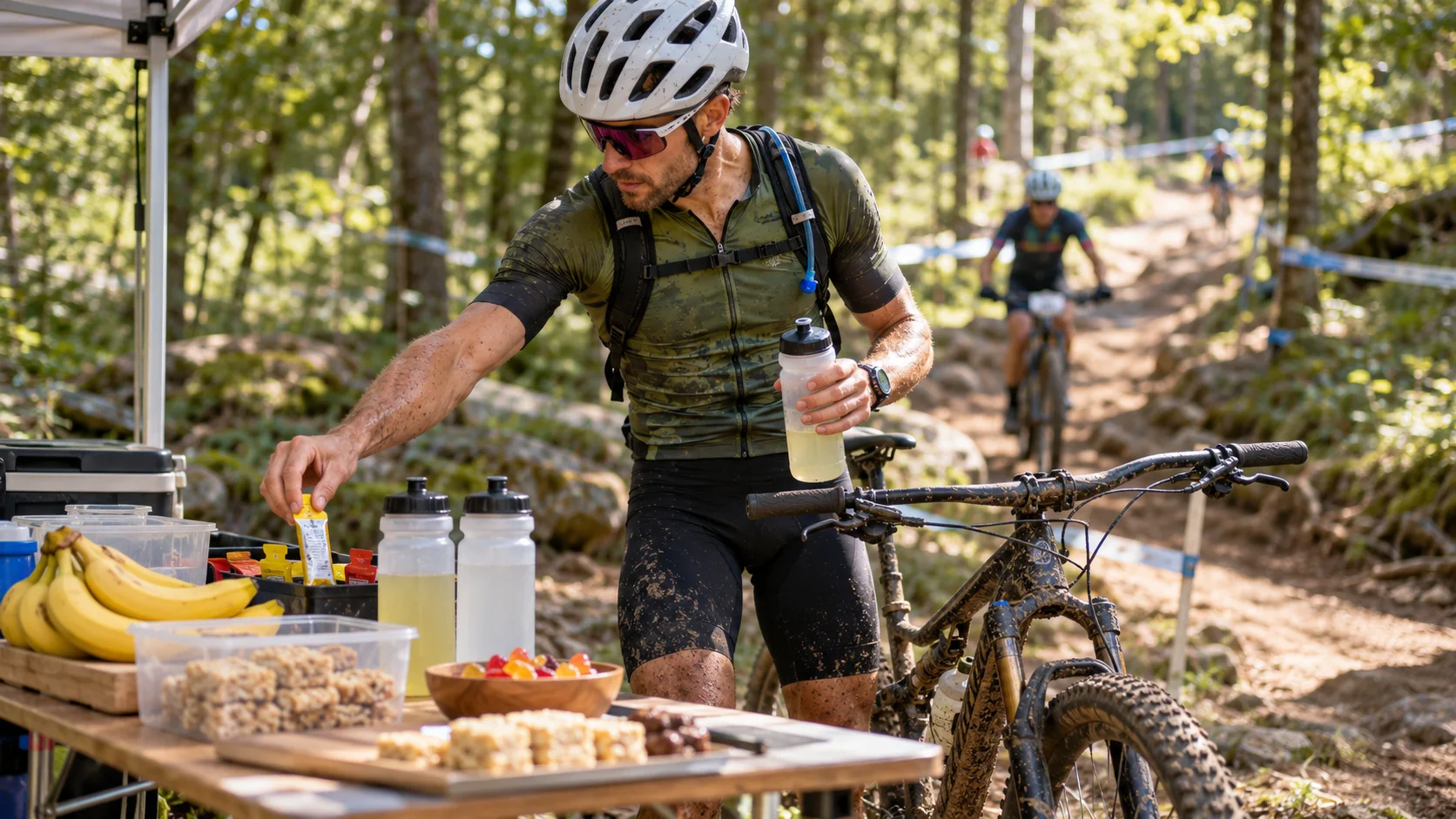
Between MTB heats or laps, prioritize fast carbohydrates, fluid, and sodium. With 10 minutes or less, take 20–30 g of carbs from a gel, chews, or sports drink. With 20–45 minutes, target 40–60 g of carbs and 250–500 ml (8–17 fl oz) of fluid. Keep fiber and fat low, finish solid food about 20 minutes before the next start, and use only products you have practiced in training.
MTB race formats: why between-lap fueling is different
MTB's stop-start nature changes how you top up. In XC Olympic or short track, intensity spikes above threshold, then you hit a feed/tech zone or a brief lap transition—windows are short, gut blood flow is low, and tolerance for heavy intake is limited. In enduro or downhill, timed runs are separated by lifts or transfers; the gaps are longer, but nerves and heat can still slow gastric emptying. That means your between-lap fueling must be faster to absorb, lower in fiber/fat, and precisely timed to avoid sloshing when you punch up the next climb or drop in. For a breakdown of these challenges and real-world strategies, check out the Little Sugar MTB Fueling Guide.
Unlike road or trail ultras with continuous pacing, MTB courses punish mistimed carbs: rough terrain, jumps, and braking chatter amplify GI discomfort and make bottle or pack access harder. You also sweat more during punchy efforts at low airflow in the woods, so sodium and fluids swing quickly. Plan for what you can actually consume in 1–5 minutes: quick carbs (gels, chews, drink mix), measured sodium, and sips, not chugs. Keep tools and bike checks in mind—your hands and focus are busy, so fueling must be grab-and-go.
Timing windows: how many minutes you really have
MTB heats and lap races compress fueling into tight windows. Use these rules of thumb to match the clock—timing and type of intake matter, as detailed in the Carbs, Hydration, Sodium & Caffeine guide.
| Time until start | Carb target | Best approach |
|---|---|---|
| 0–10 minutes | 20–30 g | Use fast-absorbing carbs only: a gel, chews, or a small swig of 6–8% carb drink. Sip water to clear the mouth. |
| 10–25 minutes | 30–45 g | Add sips of electrolyte drink if your gut is trained. Keep fat and fiber low. Finish intake by the 10-minute mark to settle. |
| 25–45 minutes | 40–60 g | Choose a small, simple snack such as a white rice ball with salt, a low-fiber bar, or a banana plus drink mix. Stop solid food about 20 minutes before the start. |
| 45–90 minutes | 60–90 g | Eat a light mini-meal early in the break with 5–10 g protein if tolerated, plus electrolytes. Taper to liquids by 25 minutes to go. |
| Over 90 minutes | 1–1.2 g/kg | Treat it like a proper refuel: spread carbs out, replace fluids and sodium, then revert to the shorter-window guidance as the next start approaches. |
Carb targets between laps
Aim for fast, repeatable carbs that support blood glucose and begin replenishing muscle glycogen without gut overload. A practical target is 0.6–1.0 g/kg of body mass between laps when you have 20–40 minutes; shorten or stretch slightly based on gap length and intensity. Example: 70 kg rider = 40–70 g of carbs. These numbers align with recommendations in the Carbs, Hydration, Sodium & Caffeine guide.
Go mostly glucose–maltodextrin with a smaller dose of fructose (glucose:fructose ~1–1.2:0.8) to use both transport pathways and keep absorption high. That typically means a 30–60 g bottle of mix plus a small gel, or two gels if fluids are covered elsewhere.
If the lap gap is tight (≤15 minutes), bias liquids and gels: 30–45 g as a quick hit you can tolerate at high heart rate. With longer gaps (30–60 minutes), step up to 60–90 g split into two small intakes to reduce GI strain.
Anchor choices to what you've trained: same drink concentration, same gel types. Pair carbs with 250–500 ml (8–17 fl oz) of fluid and a pinch of sodium if it's hot or you're a salty sweater, but don't let fluid displace the carb target.
Red flags: heavy bars, high fiber/fat, or new products mid-event—these slow gastric emptying and risk gut revolt in the next heat.
Hydration and sodium between efforts
Aim to start each lap or heat topped up—not bloated. Sip 6–10 fl oz (180–300 ml) of fluid in the first few minutes after finishing a run, then continue small sips every 5–10 minutes until your next start. Prioritize a sports drink with 300–700 mg sodium per 16 fl oz (500 ml) to replace what you sweat out and to aid fluid absorption. For personalized estimates, use the Cycling Hydration Calculator.
Hot, humid, or high-intensity conditions? Push toward the higher end of sodium and fluid; cool conditions allow lighter sipping. If you're a salty sweater (visible salt on kit, stinging eyes, cramping history), consider adding a salt tab or using a mix with 700–1000 mg sodium per 16 fl oz (500 ml) between efforts, but test this in training.
Signs you're falling behind: lightheadedness, “cotton mouth,” dark urine, or a sudden drop in power/output. If this happens and you have 15–20 minutes, take 12–16 fl oz (350–475 ml) of sports drink and reassess. For tighter turnarounds (5–10 minutes), take 6–8 fl oz (180–240 ml) plus a few quick sips before staging.
Avoid repeatedly replacing sweat losses with plain water alone because it can dilute sodium. Pair fluids with electrolytes and small carbs when possible. Keep bottles labeled: one higher-sodium mix, one standard mix. Pre-open caps, stash where you exit the course, and set a simple rule you'll remember: finish 1/3–1/2 bottle after each effort, then top off as time allows.
Best fast-digesting foods for MTB pits
In the pit, speed and stomach-friendliness matter. Aim for simple carbs with low fiber and moderate sodium to top up glycogen without GI drama. Keep portions small, chew well, and chase with a few sips of fluid. The Little Sugar MTB Fueling Guide offers real-world food examples and practical tips.
Top picks to grab fast:
- Low-fiber white rice balls with a pinch of salt or soy (easy to swallow, sits light).
- Applesauce pouches or mashed banana (gentle, quick glucose, minimal chewing).
- White bread or mini bagels with honey or jam (straightforward carbs, low fat).
- Rice cakes with a thin layer of jam (crispy, low residue).
- Soft pretzels or salted crackers (carbs + sodium for fluid balance).
- Chewy fruit snacks or gels you've used in training (predictable, portable).
- Low-fat yogurt drink or kefir if dairy sits well (carbs + a touch of protein).
- Instant oatmeal cup made thin (warm, easy on the gut; add honey).
- Boiled potatoes or potato bites with salt (neutral flavor, steady energy).
- Dates or dried mango in small pieces (compact sugars; sip water alongside).
Skip high-fat, high-fiber, and spicy foods between laps—save the burritos for the finish. If you have 10–20 minutes, target 20–40 g of carbs from the list above; if you've got less than 10 minutes, go for a gel, fruit purée, or a few bites of white bread with honey, plus fluids.
Protein and fat: small amounts at the right time
Between MTB heats or laps, prioritize carbs first, then layer in small, strategic doses of protein and fat to support steadier energy without slowing digestion. For more on timing and portioning, the Carbs, Hydration, Sodium & Caffeine guide details how to balance macros between efforts.
Quick turnarounds (≤30 minutes): Skip fat and keep protein minimal (5–10 g) from fast-digesting sources—whey isolate shot, a small yogurt drink, or a few sips of a ready-to-drink shake. Pair with 25–40 g of carbs. Fat here risks GI distress and delays carb availability.
Moderate gaps (30–60 minutes): Add 10–15 g protein to curb muscle breakdown and stabilize appetite. Keep fat very light (3–6 g total). Examples: half a turkey wrap (light spread), rice cake with a thin peanut butter layer plus honey, or a small kefir with a banana. Aim for 30–60 g carbs total.
Longer breaks (60–120 minutes): You can include 15–20 g protein and a modest 8–12 g fat, while centering 60–90 g carbs. Options: rice bowl with egg and a little avocado, lean chicken with potatoes and a drizzle of olive oil, or a yogurt + granola + fruit cup. Finish protein/fat at least 45 minutes before the next effort to protect gut comfort.
Avoid GI distress on technical terrain
Technical laps magnify any stomach issue. Keep your gut calm by timing and choosing fuel you've practiced. Finish substantial eating 20–30 minutes before the next heat so the gut isn't competing with your core for blood on punchy climbs and descents. For checklist-based execution, see the Race-Day Checklist.
Stick to low-fiber, low-fat carbs between laps: white rice bites, white bread with a thin smear of jam, bananas, or simple rice cakes. If you need quicker energy close to go-time, use a sports drink or gels you've tolerated in training—aim for small, steady sips or half-gels rather than a single big hit.
Hydration matters: target steady intake with electrolytes to match sweat rate, not just water. Over-dilution can bloat; under-hydration can cramp. Keep carbonation, dairy, and high-acid foods (e.g., orange juice) off the list pre-heat.
Avoid NSAIDs pre-ride unless medically directed; they can irritate the gut. Caffeine can help, but keep doses modest (e.g., a small coffee or caffeinated gel you've tested) and stop 20–30 minutes before the start to avoid jitters.
Finally, match drink temperature to your tolerance. Very cold fluids bother some riders, while cool drinks can help in the heat. Practice this plan in training so race day is familiar, not experimental.
Pit setup and flow for fast transitions
Build a pit that makes decisions automatic. Lay out a left-to-right (or front-to-back) flow: bike rack → hand wipe/towel → bottle table → food box → tools/CO₂ → spare gloves/vest → trash. Tape arrows on the table so helpers follow the same sequence under pressure. For a full breakdown of pit execution, review the Race-Day Checklist.
Hydration: Pre-label bottles by lap or time (e.g., L2, L3). Use two formats—one plain water/electrolytes, one higher-carb drink—color-coded caps. Keep them in an insulated tote with ice packs if it's hot, or wrapped to prevent freezing in cold.
Fuel: Portion single-serve carbs (gels, chews, rice cakes) into a shallow bin with dividers: 20–25 g, 30–40 g, 45–60 g. Top layer is the next grab. Open gel tabs slightly for gloved hands. Add a “backup” salty option and a caffeine lane clearly marked for late heats.
Execution: As you roll in, a helper stabilizes the bike at the rack. You wipe hands, swap bottle, grab one fuel item, then go. Aim for sub-20 seconds if you're not stopping to fix anything. If seated, use a high stool—no deep squats.
Info board: Whiteboard with clock time, lap count, last intake (carb g/kg/hr target), next cue. Helpers tick boxes so you don't think.
Safety/cleanliness: Trash bucket at exit, hand sanitizer on a carabiner, spare chain lube and a rag mid-flow, not buried.
Adjustments for heat, humidity, and altitude
Heat ramps glycogen use and gut strain. Between laps, prioritize quick carbs plus cooling. Aim for 20–35 g fast carbs (chews, gels, drink mix) and sip 12–20 fl oz (350–600 ml) of cool fluid as tolerated. Use ice down the jersey or a cold towel on neck/forearms to lower perceived effort. Keep solids small and low-fiber to reduce gut load. For more on adapting fueling and hydration, see the Little Sugar MTB Fueling Guide.
Humidity limits sweat evaporation, so sodium matters. Add 500–800 mg sodium per 16–24 fl oz (500–750 ml) bottle if you're a salty sweater or see sweat salt marks. Rotate in a carb-electrolyte drink to replace both fluid and sodium. If you feel sloshy, take smaller, more frequent sips and lean on gels for carbs.
Altitude increases breathing rate and fluid loss. Expect lower appetite; choose easy-to-digest carbs (soft bars, gels, rice bites) and warm up gently. Hydrate early: begin sipping as soon as you finish a lap. Consider 200–400 mg sodium per bottle at moderate altitude, higher if heat is also present.
Watch cues: rising heart rate, dizziness, hand tingling, or headaches signal under-fueling or dehydration. Adjust sip size, sodium concentration, and carb form accordingly. Consult a qualified professional for personalized guidance.
Between-lap checklist you can tape to your top tube
- Finish line → breathe: 6 deep nose breaths, soft shoulders.
- Time check: ____ min until next lap/heat.
- Fluids: 12–20 oz (350–600 ml) with electrolytes. If hot/humid, aim higher end.
- Carbs now: 30–60 g fast carbs (gel/chews/drink). If >30 min, 60–90 g total across window.
- Salt: 300–600 mg sodium (sweat salty? push higher end).
- Quick bites (choose 1): 1 gel + few sips, or 2–3 chews, or half bottle of mix.
- Rinse mouth if gut tight; sip, don't chug.
- Light protein if long gap (>45 min): 10–15 g (yogurt, recovery sip). Skip if start <20 min.
- Mini scan: legs (2/10–6/10), hands, back, vision clear.
- Bike check: tires pinch, quick releases, chain lube spot, brakes rub? yes/no.
- Cooling: shade, pour water on neck/forearms if hot; jacket if cold.
- Bathroom? yes/no.
- Next-lap plan: sip every 10–15 min; 20–30 g carbs per 15–20 min.
- Gel/chews staged and open? Bottle swapped?
- Roll to start with 2–3 priming breaths.
For a printable version, see the Race-Day Checklist.
Important note
This guidance supports, not replaces, advice from a qualified sports dietitian or physician. Everyone absorbs and tolerates fuel differently—especially under heat, altitude, and race stress—so test your between-heat strategy in training. If you have GI issues, a history of cramping, or medical conditions (e.g., diabetes, GI disorders, or you're using GLP-1 medications), seek professional guidance to tailor carb, electrolyte, and fluid targets. Avoid trying new products on race day. Monitor how you feel, adjust portions and timing, and prioritize safety over squeezing in extra calories. When in doubt, conservative fueling and steady hydration win.
Next steps and internal links
Put it into practice at your next training day: simulate heats or laps and test your between-heat snack, fluids, and timing. Log what you ate, total carbs, fluid volume, and how you felt at the start of the next effort.
Dial in hydration next. Use sweat-rate testing to estimate your fluid and electrolyte needs and avoid under- or over-drinking. Calculate your hydration and create a personalized plan.
Build a repeatable fueling template. Use carb targets per hour and pack-ready options that survive heat, mud, and pockets. Then translate it to race day with a lap-by-lap plan. A fitness nutrition app can help log intake and compare what worked across sessions without replacing professional guidance.
Go deeper with these resources:
- Hydration: Smart Hydration + Race Fueling Plan
- Race prep: Race Competition Planning for MTB
- Nutrition: AI Meal Planning for training weeks
- Performance: Tracking to spot what works across intervals
When in doubt or if you have medical considerations, consult a qualified sports dietitian.
Frequently asked questions
How much time do I need to digest between heats or laps?
Aim for 20–30 minutes for simple carbs such as gels, chews, or sports drink. For small solid snacks such as bananas or rice cakes, allow 30–45 minutes. If you have less time, use liquids or gels.
What should I eat if I only have 10 minutes?
Choose fast carbs and fluids: 20–30 g from a gel or 8–12 fl oz (240–350 ml) of sports drink, plus a few sips of water. Skip fiber, fat, and heavy protein.
How many carbs should I target between efforts?
Most riders do well with 20–40 g of carbs per break, scaled by intensity and duration. In very short gaps, prioritize fluids with electrolytes.
Do I need protein between laps?
A small amount, about 5–10 g, can help curb hunger during long formats, but carbs and sodium are the priority. Save larger protein intake for post-event recovery.
What about caffeine?
If you use it, time 1–3 mg/kg total across the event. For late boosts, 25–75 mg between laps can help, but avoid new doses if you're already jittery. Consult a professional if you have sensitivity or medical concerns.
How much should I drink?
Sip 6–12 oz (180–350 ml) between laps, more in heat. Include 300–600 mg sodium per hour from drink or chews, then adjust to your sweat rate.
Any gut tips?
Test foods in training, keep flavors simple, and rinse your mouth if you feel sloshy. Then resume with small, steady sips.
What are evidence-based carb and sodium targets between MTB laps, and where can I read the primary sources?
Most athletes do well targeting about 30–60 g carbohydrate per hour in short, high-intensity formats, and up to about 90 g/h with multiple transportable carbohydrates when the gut is trained. Hydration and sodium should match individual losses. Primary evidence includes IOC and ACSM position statements; reviews by Jeukendrup (2014) and Burke et al. (2011, 2015); hydration guidance by Sawka et al. (2007, 2011); and Coyle (2004).
Turn this strategy into a real plan.
FuelQ Pro builds personalized fueling for your training weeks, long rides and races — plan, execute, review, improve.