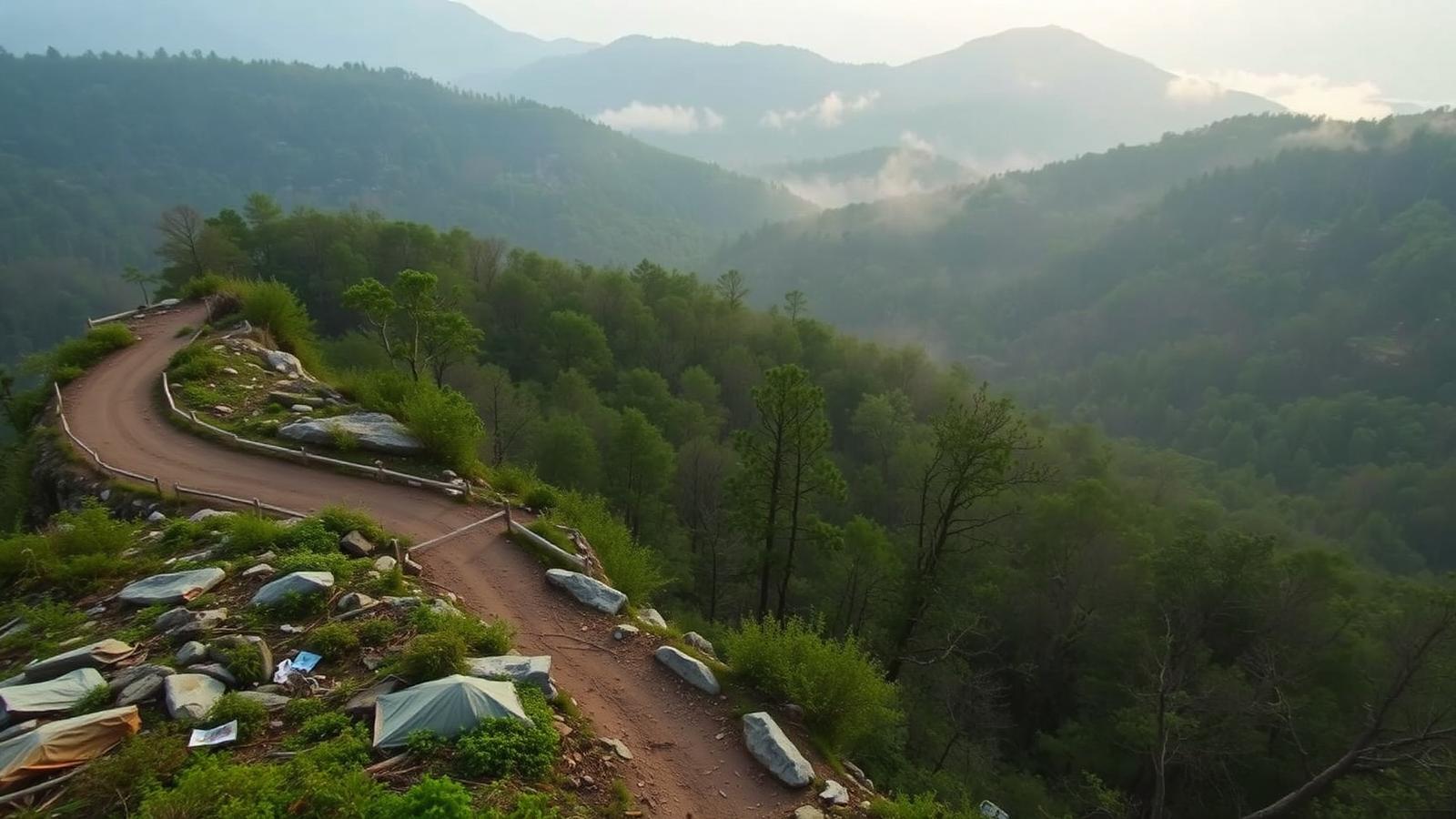
Little Sugar MTB is the mountain-bike companion to Big Sugar Gravel, run the weekend before Big Sugar across Bentonville's world-class singletrack network — Coler, Slaughter Pen, Blowing Springs and the Back 40. Fast, flowing and relentlessly punchy, it rewards riders who fuel through short, hard efforts rather than steady tempo miles. Multiple distances share the same trail system, aid layout and festival, making it a rare 'ride-with-the-pros' MTB experience with a chill Bentonville race-village vibe.
Distance
≈ 50 miles full course; 30 mi and 15 mi options
Elevation
≈ 5,000 – 7,000 ft of climbing on the 50
Typical duration
4 – 7 hours on the 50 for most amateur finishers
Location
Bentonville, Arkansas, USA
Time of year
Late October (weekend before Big Sugar Gravel)
Terrain
Flowy machine-built and hand-cut singletrack, punchy climbs, occasional rocky and rooty features
Course map & elevation profile
The official Little Sugar course, elevation profile, and route reference. Use this to plan your pacing, aid-station strategy, and fueling touchpoints.
Route reference is a recent Little Sugar MTB course on RideWithGPS. The official course varies year to year across the Bentonville trail systems (Coler, Slaughter Pen, Blowing Springs, Back 40) — confirm the current-year official route, aid map and distances in the Athlete Guide published by Big Sugar / OZ Trails before race day.
Download the Printable Little Sugar MTB Race Guide
Get a practical planning document with the course breakdown, aid-station strategy, fueling and hydration worksheets, race-morning timeline, equipment checklist, crew notes, and space for your own plan.
Flowy singletrack disguises how many short VO₂ efforts you produce per hour. Muscle glycogen drops faster than a road-pace ride of the same duration. Expect 60–90 above-threshold spikes per hour on the punchy climbs of Coler and the Back 40.
Limited fueling windows
Continuous singletrack leaves few safe hands-off moments. Every rock garden, berm sequence and rooted climb is a section where you cannot chew, drink or unwrap a gel. You must fuel opportunistically on the short doubletrack connectors.
Temperature swing
Bentonville in late October: 40–50 °F starts into 65–75 °F afternoons. Cold-hour under-hydration shows up as cramping mid-race. Humidity can be surprisingly high when a warm front pushes north.
Aid spacing on singletrack
Aid can be 60+ minutes apart for mid-pack riders because the trail dictates the layout, not the miles. Plan bottle and pack capacity for time on-trail, not distance.
Cognitive load
Constant trail decisions — line choice, brake points, passing etiquette on shared singletrack — leave little bandwidth for fueling. Automation (15-min alarm, pre-set bottle volumes, pre-opened gels in the top tube bag) beats intuition.
Back-to-back weekend
Many riders line up for Little Sugar and Big Sugar Gravel the following weekend. Under-recovery from Little Sugar is the top predictor of a poor Big Sugar. Recovery nutrition on Saturday afternoon starts the next week's race.
Course profile — segment by segment
A tactical breakdown of the Little Sugar course. Use this to plan pacing, fueling touchpoints and where to conserve versus commit.
Segment
Mile
Elevation
Note
Coler start → Slaughter Pen
0 – 8
≈ 500 ft rolling
Neutral rollout then straight into flowy Coler singletrack. Cap heart rate — the front will sprint. Sip early even if not thirsty.Surface: Flowy machine-built singletrack
Slaughter Pen loops
8 – 18
≈ 1,200 ft rolling
Continuous singletrack. Fuel on every doubletrack connector; do not try to chew in the berm sequences. First aid falls in this block for most riders.Surface: Mixed flow + hand-cut singletrack
Blowing Springs connector
18 – 26
≈ 1,000 ft gain
Punchier climbs and rockier lines. Front-load calories before each climb; sip on the recovery descents.Surface: Rooted singletrack, some rock
Back 40 outer loop
26 – 40
≈ 2,200 ft rolling
The heart of the 50-mile. Aid + drop-bag zone typically sits here. Full reset: fresh bottles, calorie load for the final block, second caffeine dose.Surface: Longer flow + technical singletrack
Back 40 to Coler return
40 – 48
≈ 1,200 ft gain
Where the race is won or lost. Under-fueled riders unravel here. Take the last aid fully, force one gel, commit to the final descents.Surface: Mixed singletrack, punchy climbs
Coler finish loop
48 – 50
Net descent
Recover, sip, ride within your skills. Finish festival is on the Coler plaza.Surface: Flowy machine-built singletrack
Aid stations & crew strategy
Every aid station along the Little Sugar course, with crew access, drop-bag rules and the fueling action to execute at each stop.
Aid 1 — early Slaughter Pen
Mile ≈ 15
Neutral aid: water, electrolyte, basic snacks. Swap one bottle, take one gel, keep moving. You are still fresh — target < 30 seconds.
Aid 2 — mid-course / Back 40
Mile ≈ 30CrewDrop bag
The most important stop. Refill both bottles / hydration pack, top up carbs for the next 90 minutes, take second caffeine dose, remove any morning layers. Target < 3 minutes.
Aid 3 — pre-final block
Mile ≈ 42Crew
Force one full bottle and 60 g of carbs here even if you feel fine. This is where the race is won or lost. Third caffeine dose if your plan calls for it.
Finish — Coler festival
Mile ≈ 50Crew
Recovery drink within 30 minutes, real meal within 60. Shade, chair, elevated legs at the festival. Critical if racing Big Sugar the following weekend.
Fueling challenges & strategy
General, evidence-based guidance. Numbers should always be personalized to sweat rate, body mass, fitness and weather.
Carbohydrate strategy
60–90 g/hr for most trained riders on the 50-mile, delivered mostly as liquid carbohydrate and gel. Use a 1:0.8 glucose-to-fructose blend to unlock the upper end without GI distress. Train the gut to 90 g/hr on your long rides in the 6 weeks before race day.
Hydration
17–34 fl oz/hr (17–34 fl oz/hr), adjusted for temperature and humidity, biased slightly higher for cold-start riders who under-drink early. A quick sweat test in Bentonville-similar weather 2–4 weeks out dials the number in.
Sodium
400–1000 mg per liter (34 fl oz) of fluid, tuned to sweat sodium concentration. Salty sweaters (visible white marks on kit) trend higher; the humid Ozark air amplifies sodium loss even at moderate temperatures.
Caffeine
3–6 mg/kg body mass, split across the race with a meaningful dose held for the final 90 minutes. On a 5-hour Little Sugar: 100–200 mg pre-start, 100 mg at mid-course aid, 100–200 mg at the last aid before the final Back 40 climbs.
Aid station strategy
Bottle swap first, calorie top-up second, no lingering. Rehearse the sequence in training. Crew-supported riders should target < 45 seconds at each stop; solo riders should pre-plan exactly which items to grab from neutral aid.
Pre-race breakfast
1–4 g/kg carbohydrate 2–4 hours pre-start, low fiber and low fat — oatmeal with honey and banana, bagel with jam, or a rice bowl. Add 30–50 g CHO 20 min before the start via a gel and sports drink.
During-race execution
Fuel by the clock and by opportunity: whenever the trail opens, sip and chew. Never force intake in a rock garden. Set a 15-minute alarm on your head unit; treat it as an appointment, not a suggestion.
Recovery
1.0–1.2 g/kg carbohydrate and 0.3 g/kg protein within 60 minutes, plus 150% fluid replacement. Critical if you plan to race Big Sugar Gravel the following weekend — under-recovery here is the #1 predictor of a bad Big Sugar.
Carbohydrate loading for Little Sugar
A structured 48–72 hour carbohydrate-loading protocol tuned for a long day at altitude. Rehearse it before a training block, not for the first time on race week.
48 hours out
Begin lifting daily carbohydrate to 7–10 g/kg body mass. Keep fat and fiber moderate; hydrate alongside the extra carbs with sodium.
24 hours out
Low-fiber, low-fat, high-carb: white rice, pasta, potatoes, bread with jam, ripe bananas. Sip electrolyte drink through the day.
Sample race-eve dinner
White rice or pasta with a small portion of lean protein (chicken breast, white fish) and a low-fiber sauce. Avoid new foods, spicy dishes and heavy fats.
Race morning
1–4 g/kg carbohydrate 2–4 hours before the start from a rehearsed low-fiber breakfast, plus 30–50 g CHO 20 minutes pre-start.
Sub-9 & sub-12 split targets
Aid-station splits for the two headline finish goals at Little Sugar: the Big Buckle (sub-9) and the Silver Buckle (sub-12). Use as planning anchors, not as commitments — weather, altitude adaptation and pack dynamics all shift real splits.
Checkpoint
Sub-9 (Big Buckle)
Sub-12 (Silver Buckle)
Aid 1 (≈ mile 15)
1 h 15
1 h 40
Aid 2 — mid-course (≈ mile 30)
2 h 40
3 h 30
Aid 3 (≈ mile 42)
3 h 55
5 h 05
Finish (mile 50)
4 h 45
6 h 15
Pacing strategy
First 45 minutes
Ride 10–15% below the effort you feel capable of. Cap at high Zone 2 heart rate or ~75% FTP. The pack sprints from the neutral start — let them. You will see most of them again by hour three.
Slaughter Pen & Blowing Springs
Sustain tempo, prioritize clean flow over pushing corners. Every crash costs 5–15 minutes and often the day.
Back 40 outer loop
This is your fueling and moving-average bank. Steady tempo on the climbs, commit on the descents, take the mid-course aid fully.
Final block back to Coler
Cap heart rate at threshold on the punchy climbs. Recover to endurance on the descents. Take the last aid fully — do not skip.
Coler finish loop
Ride within your skills. A crash or flat costs 5–20 minutes; two seconds saved through a berm does not.
Equipment & bike setup
Bike choice
A modern short-travel (100–120 mm) full-suspension 29er is the fastest choice for most riders. A trail hardtail works well for skilled riders and saves 1–2 lb, at a comfort cost that compounds after hour three on Bentonville's punchy rocks.
Tire width & casing
2.35–2.5 in tubeless with a reinforced casing and a semi-aggressive tread pattern. Ozark chert eats thin sidewalls — do not race with a lightweight XC casing you haven't tested locally on similar rock.
Tire pressure
Starting point for a 154–176 lb rider on 30 mm internal rims: 20–24 psi front, 22–26 psi rear. Add 1–2 psi for heavier riders and rocky-year conditions. A rear insert is cheap insurance.
Gearing
1x12 with a 30–32T chainring and a 10–52T cassette gives most riders enough range for the punchiest Back 40 climbs without spinning out on the flow. A 32T front and 10–51 or 10–52 rear is the most common setup.
Dropper post
Near-universal among finishers. The Coler and Back 40 descents are steep and flowy enough that a dropper meaningfully improves both speed and safety. 150 mm minimum for most riders.
Hydration setup
51–68 fl oz hydration pack for water plus one bottle of concentrated carb mix on the frame. Bottles alone leave you exposed on singletrack where reaching down mid-corner is a crash waiting to happen.
Spares & repair kit
Minimum: 2× CO2 + inflator, tire plug kit, mini pump, tubeless-ready spare tube, tire lever, chain quick link, multi-tool with chain breaker, spare derailleur hanger, small first-aid kit.
Cockpit & grips
Ergonomic grips or silicone wraps reduce hand fatigue. Numb hands are a top-five reason mid-pack riders scratch on continuous singletrack.
Training for Little Sugar
Volume ramp
Build to 10–14 hours per week for 8–12 weeks before race week, with the final long ride 2–3 weeks out and a proper 10-day taper.
Long rides on singletrack
Progress long rides toward 4–5 hours on the most technical trail available, not smooth gravel. Cumulative time on rough ground trains hands, forearms and neck as much as legs.
Repeated short efforts
Weekly session of 8–12× 3-minute climbs at threshold, or 15–20× 1-minute VO₂ efforts on rolling terrain. Little Sugar rewards a raised ceiling on repeatable short efforts more than steady tempo.
Skills sessions
Weekly 60–90 min dedicated skills session on flow and technical trail. Line choice at speed is where most amateurs leave 15–30 minutes on the course.
Bentonville training trip
If possible, spend 2–3 days riding Coler, Slaughter Pen and the Back 40 in the 6–10 weeks before race day. Course familiarity is worth 10+ minutes.
Nutrition rehearsal
Every ride ≥ 3 hours at race carb target. Practice bottle mixing, pack refilling, gel access from the top-tube bag and aid-station transitions.
Recovery block if racing Big Sugar
If Little Sugar + Big Sugar back-to-back, plan the week between as low-volume aerobic maintenance only. No intensity, no long ride. Sleep, calories and sodium.
Race-day morning timeline
T-4 h
Wake, coffee, first breakfast (1–2 g/kg CHO): oatmeal with banana and honey, or a bagel with jam. Hydrate 17 fl oz (17 fl oz) with sodium.
T-2 h
Second small feed (~40 g CHO): bagel + jam or a rice cake. Chamois cream, sunscreen, kit on.
T-90 min
Bike check — pressure, brakes, dropper, computer, bottles and pack loaded. Layer up for the 45 °F start.
T-45 min
Ride to start or short 15-min spin. Sip 7–10 fl oz (7–10 fl oz) of sports drink. Restroom.
T-20 min
In corral. First caffeine dose (100–200 mg). Final layering call — arm warmers are fine for hour one, base layer isn't.
T-5 min
Half a gel with a sip of water. Breathe. Confirm HR/power start plan with yourself.
T+0
Gun. Neutral rollout — sit in and ride patiently to the first singletrack.
Packing list
Bike
Race bike (fully serviced 2 weeks out)
Dropper post checked and lubed
Fresh tubeless sealant within 2 weeks
Two bottle cages or one + top-tube bag
GPS head unit + fresh mount
Nutrition
Gels / chews / drink mix for 7 hours + 30% buffer
2–3 caffeine doses
1–2 solid items for the mid-race drop bag
Pre-race breakfast supplies
Post-race recovery drink + real meal
Hydration
51–68 fl oz hydration pack
1–2 bottles for concentrated carb mix
Electrolyte mix rehearsed in training
Bite-valve spare
Clothing
Short-sleeve jersey + bibs
Arm warmers
Wind vest or packable shell
Long-finger gloves
Cap or buff under helmet
Warm dry layer for the finish
Weather gear
Sunscreen SPF 50+
Lip balm with SPF
Sunglasses (clear or photochromic)
Small pack of chamois wipes
Tools & spares
2× CO2 + inflator
Mini pump
Tire plug kit
Spare tube
Multi-tool with chain breaker
Chain quick link
Spare derailleur hanger
Small first-aid kit
Documents & logistics
Athlete Guide printout
Race number + timing chip
Photo ID
Crew brief (printed): what to hand up at Aid 2 and Aid 3
Registration & lottery
Every entry route into the Little Sugar, from the annual lottery to qualifier races, coaching-program slots and charity entries.
Online registration
Registration opens in spring or early summer on BikeReg via the official Big Sugar / Little Sugar website. The event has sold out in past years — register early.
Entry fee
Recent pricing: 50-mile ~$115–$165, 30-mile ~$85–$125, 15-mile ~$45–$75 USD, plus platform fees. Prices tier up as the event fills. Confirm current pricing on the official registration page.
Distance options
Three distances share the same trail systems and festival: 50 mi, 30 mi and 15 mi. Pick based on your training peak — the 30 is a great first Little Sugar; the 50 is the flagship.
Transfers & deferrals
Transfer and deferral policies vary year to year. Read the current-year policy on the registration page before entering.
Little + Big Sugar combo
Many riders enter Little Sugar (Saturday) and Big Sugar Gravel (following Saturday) as a two-race weekend series. Recovery nutrition and light-volume training between events matter more than raw fitness.
Getting there, lodging & logistics
Airports, lodging, packet pickup, parking and crew access for the Little Sugar.
Getting there
Northwest Arkansas National Airport (XNA) is 15 minutes from Bentonville with direct flights from most major U.S. hubs (ATL, DFW, ORD, DEN, LAX, JFK, MIA). Rent a car — there is no meaningful public transit to the trails or race venue.
Lodging
Downtown Bentonville puts you within 5–10 minutes of Coler by car or bike. Airbnbs and hotels near 8th Street or Downtown give easy access to the race venue, packet pickup and pre-race scene. Book 4–6 months out for race weekend — Bentonville fills up.
Packet pickup
Held Friday of race weekend at Coler Mountain Bike Preserve or a downtown Bentonville venue. Bring photo ID and confirmation email. Miss it and you may not be allowed to start — plan to arrive Thursday or early Friday.
Parking & start line
Start and finish at Coler Mountain Bike Preserve. Coler parking fills early — arrive 90 min before your start, or ride from downtown Bentonville (~10 min).
Finish line & festival
Finish returns to Coler with a post-race festival: food trucks, live music, sponsor village, beer garden, awards. Recovery meal usually within 60 minutes of finishing.
Crew logistics
Crew access is allowed at designated aid stations only. Confirm current-year access rules and roads in the Athlete Guide. Print a crew brief with exact bottle/gel/layer handoffs; Bentonville cell coverage is generally excellent but do not rely on it mid-race.
What most riders get wrong
01
Fueling like a road race
Punchy singletrack burns glycogen faster than steady tempo of the same duration. Intake must reflect actual physiological load, not perceived road-equivalent hours.
02
Waiting for 'a good moment'
There is rarely a good moment on Ozark singletrack. Take the calories you can when the trail allows — usually the short doubletrack connectors between trail systems.
03
Under-drinking early
Cool morning + adrenaline = suppressed thirst. Deficit built in hour one shows up as cramping in hour four on the final Back 40 climbs.
04
New products on race day
Continuous handling load amplifies GI risk. Rehearse every gel, chew, drink mix and solid on training rides that mimic race duration and terrain.
05
Skipping the last aid
The final hour is where under-fueled riders concede time they can't earn back. Force one full bottle and one gel at the final aid even if you feel fine.
06
Over-braking on flowy sections
Coler and Slaughter Pen reward carrying speed. Riders who over-brake burn more matches restarting the flow than they save on the corner — and burn glycogen doing it.
07
Wrong tire choice
Ozark chert punishes thin sidewalls and under-inflated tires. A rear puncture on singletrack costs 5–15 minutes; a torn sidewall can end your race.
08
Ignoring recovery for Big Sugar
Riders doubling up on Little Sugar and Big Sugar Gravel who skip Saturday-afternoon recovery nutrition consistently under-perform at Big Sugar. The recovery window is the first race lap of the following weekend.
Race history & culture
Founding
Little Sugar MTB was created by the Big Sugar Gravel organizing team as a mountain-bike companion event, held the weekend before Big Sugar Gravel to make Bentonville a two-race destination weekend series.
The Bentonville trail system
The course showcases the trails that put Bentonville on the map — Coler, Slaughter Pen, Blowing Springs and the Back 40 — a mix of purpose-built flow and hand-cut singletrack funded largely by the Walton Family Foundation and OZ Trails.
Race-with-the-pros vibe
Little Sugar has a chill Bentonville festival vibe with UCI-caliber pros riding alongside amateurs. The finish festival at Coler blends live music, food trucks and a full sponsor village into a single-day celebration.
Why generic fueling plans don't work for Little Sugar
Two riders on the same start line can need very different fueling. FTP, target finish time, body mass, sweat rate, temperature, altitude adaptation, nutrition products and race goals all change the answer. A generic 60 g/hr recommendation is a starting point, not a plan.
FTP
Finish time
Body weight
Sweat rate
Weather
Products
Goals
Course
Related FuelQ resources
Free calculators, checklists and articles to help you personalize your Little Sugar plan.
Download the Printable Little Sugar MTB Race Guide
Get a practical planning document with the course breakdown, aid-station strategy, fueling and hydration worksheets, race-morning timeline, equipment checklist, crew notes, and space for your own plan.
Generic fueling plans don't work for Little Sugar.
Every athlete is different. FTP, finish time, body weight, sweat rate, weather, nutrition preferences and race goals all change what you should eat and drink.
FuelQ Pro builds a personalized race fueling strategy tuned to your ride — carbohydrate, hydration, sodium, caffeine and recovery, mapped to the course.
A Race Fueling Plan gives you a personalized strategy for this event. The free checklist helps you prepare the basics first: race-week setup, 48-hour prep, race morning, hydration, sodium, caffeine, aid stations, and backup calories.