Fitness Nutrition App for Multisport Performance
Gabriel Ricce
Lamorinda MBO Racing · USA Cycling Coach Level 3
A fitness nutrition app brings clarity and data-driven decisions to multisport athletes. Learn which features matter and how to optimize hydration, fueling, and recovery.
Why a fitness nutrition app matters for multisport
Multisport training stacks swim, bike, and run stress on a single body. That complexity makes nutrition the silent fourth discipline. A fitness nutrition app turns guesswork into data-driven decisions by linking what you eat and drink to how you perform across sessions and blocks, as outlined in this cycling nutrition plan.
First, it centralizes the moving parts. You can track macros, total energy availability, hydration, and timing around two-a-days or long bricks. That matters when glycogen restoration, protein dosing, and electrolyte balance shift with session intensity and heat. Instead of generic targets, you get adaptive guidance that reflects today's workload and tomorrow's plan.
Second, it connects fueling to outcomes. By pairing intake with pace, power, HR, RPE, and recovery markers, you see what actually works for you. Patterns emerge: which breakfast fuels tempo swims, which carb mix sits well on the bike, how sodium needs change on hot runs. Evidence beats trial-and-error.
Third, it reduces friction. Pre-built meal templates, shopping lists, and on-the-go logging make consistency more achievable during peak volume weeks. When time is tight, quick prompts for pre-session, intra-session, and post-session fueling help you hit the window without overthinking it.
Finally, it supports race execution. A good app helps translate training data into a practical race plan — how much to take per hour, what form, and how to adapt if weather or pace shifts. You arrive with a tested strategy, not last-minute improvisation.
In short, a fitness nutrition app gives multisport athletes clarity, consistency, and feedback — the foundation for sustainable performance.
Free: the Race Fueling Checklist
Turn this into a race-week plan: carbs, fluids, sodium, caffeine and aid-station prep in one free PDF you can print or keep on your phone.
Core features to look for in a fitness nutrition app
Choosing the right fitness nutrition app comes down to how well it supports your real life: your goals, your training load, and your schedule. Look for these core features that move the needle, as detailed in our cycling nutrition plan.
- Goal-driven personalization: The app should translate your goal — fat loss, performance, or maintenance — into specific daily energy and macronutrient targets, with adjustments for training days versus rest days.
- Training integration: Syncs with wearables and platforms to pull workouts, duration, intensity, and heart rate so nutrition plans reflect actual load, not guesses.
- Meal planning you'll actually use: Smart meal templates, grocery lists, substitutions for dietary preferences, and batch-cook options. Bonus if it can adapt recipes to hit your macros without tedious math.
- Performance-focused fueling: Pre-, during-, and post-workout guidance with carbs, fluids, and sodium targets tailored to session length and conditions. Race-day planning is a plus for endurance athletes.
- Hydration intelligence: Sweat-rate estimation, heat/humidity adjustments, and personalized electrolyte guidance. Look for in-workout reminders based on duration and environment.
- Biometric awareness: Tracks weight trends, HRV, sleep, energy, and hunger signals to inform adjustments. It should help you see patterns rather than chase daily fluctuations.
- Evidence-based guidance: Clear, research-informed recommendations with transparency. Avoid apps that make exaggerated claims or promise guaranteed outcomes.
- Usability and adherence: Fast logging (photo, barcode, or AI recognition), offline functionality, and habit streaks. The best app lowers friction and nudges consistency.
- Flexibility for dietary needs: Supports vegetarian/vegan, low-FODMAP, gluten-free, and cultural cuisines without sacrificing nutrient completeness.
- Coaching and feedback: Actionable insights, not just charts. Look for weekly reviews, progress flags, and simple next steps. Voice or text check-ins can help you course-correct quickly.
- Women's health considerations: Cycle-aware insights for energy, iron, and hydration needs, with responsible, educational guidance.
- Data privacy and export: Clear data policies and the ability to export your information or share with a coach or clinician.
- Multi-sport readiness: If you run, ride, swim, and lift, ensure the app supports multiple modalities and periodized nutrition through different training phases.
Prioritize tools that connect your training, nutrition, hydration, and recovery into one coherent plan — and make sticking to it simpler.
Hydration: getting sodium, fluid, and timing right
Hydration isn't just about drinking more water — it's about matching fluid, sodium, and timing to your training load, sweat rate, and environment. Get those three right and you'll protect power output, reduce perceived effort, and avoid the pitfalls of both dehydration and overdrinking. For a deeper dive, see our hydration strategy for endurance athletes.
Start with sweat rate. A practical field check: weigh yourself nude before and after a typical session (towel off before the second weigh-in). Each pound lost is roughly 16 oz (473 ml) of fluid. Add in what you drank, subtract what you peed, and you'll have a session-specific sweat rate. Learn more about how to calculate sweat rate for precision. Use this as a baseline, then adjust across temperatures, humidity, and intensity. Most athletes aim to replace 60–90% of sweat loss during sessions longer than 60–75 minutes; full replacement is rarely necessary and can feel sloshy.
Sodium matters because sweat carries electrolytes — primarily sodium — that help maintain plasma volume and fluid absorption. If you finish workouts with crusty salt marks, experience frequent muscle cramping alongside high sweat loss, or see your hands swell, consider increasing sodium. A common starting range for endurance sessions is 300–800 mg sodium per hour, with heavy or salty sweaters sometimes needing more. For more details, read about sodium needs for cyclists. Spread sodium through your bottle, gels, or separate tabs — what matters is the per-hour total and how it pairs with your fluid intake.
Timing counts. Pre-hydrate, don't over-hydrate: sip 12–20 oz (350–600 ml) of fluid with 300–600 mg sodium in the 60–90 minutes before you start. During, drink to a plan informed by your sweat rate, terrain, and weather — small, frequent sips beat chugging. After, replace 100–150% of body mass lost over the next few hours, including sodium and carbohydrate to speed rehydration and glycogen restoration.
| Session length | Fluid target | Sodium target |
|---|---|---|
| Under 60 min | To thirst | Optional |
| 60–90 min | 400–700 ml/h | 300–500 mg/h |
| 90 min–3 h | 500–800 ml/h | 500–800 mg/h |
| 3 h+ or heat | 600–900 ml/h | 700–1,000+ mg/h |
In the heat, bump both fluid and sodium. In the cold, you'll still sweat — thirst signals can drop — so set reminders or use a bottle countdown to stay on track. Altitude increases respiratory water loss, so plan an extra bottle and keep sodium steady. For high-intensity intervals, lighter bottles with higher sodium concentration can maintain absorption without overfilling your stomach.
Common pitfalls: only drinking water (risk of dilution and excessive bathroom stops), under-salting on back-to-back hard days, and guessing instead of logging. Track session duration, temperature, bottles finished, and how you felt. Use those notes to iterate — precision comes from patterns.
If you're using a fitness nutrition app, look for smart hydration features that estimate sweat rate from your data, recommend per-hour sodium targets, and adapt your plan to weather and workout type. Then test on training days, not race day, and lock in what works.
Fueling strategy: carbs, timing, and GI training
Dialing in your fueling is the fastest way to feel stronger, go longer, and recover better. Think of it as a three-part system: how many carbs you take in, when you take them, and how well your gut is trained to handle the load. For more on carb intake, check our guide to carbohydrates per hour for cycling.
Carbs: how much and what kind. For endurance work lasting 60–90 minutes or more, most athletes perform best with 30–90 g of carbohydrate per hour, scaling with intensity and duration. Shorter or lower-intensity sessions sit on the lower end; high-intensity intervals, long runs, and races push to the higher end. Blend multiple carbohydrate types (e.g., glucose + fructose) to increase absorption and reduce gut overload from a single transport pathway. Practical picks: gels, chews, sports drinks, soft bars, or real-food options like rice cakes — just watch fiber, fat, and protein, which slow gastric emptying during hard efforts.
Timing: front-load smartly, then keep a drip feed. Start the session topped up: a carb-rich meal 2–3 hours before (low fiber/fat if you have a sensitive stomach) and an optional 15–30 g carb snack 15–30 minutes pre-workout. During the session, break your hourly target into small, frequent doses — every 10–20 minutes — rather than big dumps that spike blood sugar and stress the gut. Use your watch or app prompts to stay on schedule instead of waiting for hunger. For sessions over 90 minutes, add 300–600 mg sodium per hour (or more if you're a heavy/salty sweater) via sports drink or capsules to support fluid absorption and reduce cramp risk. After training, aim for 1.0–1.2 g/kg carbs within the first hour, paired with 20–30 g protein to kickstart glycogen repletion and muscle repair.
GI training: teach your gut to perform. The gut adapts like muscle — if you practice. Start 6–8 weeks before goal events. Pick a race-day fueling plan, then rehearse it weekly on long and intensity sessions. Increase carbs gradually (e.g., +10–15 g/h each week) until you hit your target. Train with the same textures, sweetness, caffeine levels, and sodium you expect on race day. If you get sloshing, side stitches, or nausea, pause the increase, reduce single-bolus sizes, switch part of your intake to a drink mix, or diversify carb sources. Keep fluids steady: a general aim is to limit body-mass loss to ~2% in long sessions; personalize by tracking pre/post weights and adjusting drink volume and sodium.
Practical checks. Before: clear urine (pale straw), steady morning weight, and a simple pre-fuel plan. During: energy feels even, minimal GI distress, and no big mood swings. After: appetite returns within 30–60 minutes, and next-day legs feel responsive, not hollow. Use your app to log grams per hour, product types, fluid volume, sodium, and perceived gut comfort (0–10). Trend that data over weeks to pinpoint your sweet spot and lock in a race-ready protocol.
Daily nutrition and recovery: beyond race day
Race day gets the spotlight, but consistency between races is where fitness and performance are built. Think of daily nutrition and recovery as the scaffolding that holds every session together — fuel before, during, and after training, hydration that adapts to conditions, and meals that support adaptation, sleep, and immune health. For a practical approach, see our cycling nutrition plan.
Anchor each day with simple rhythms:
- Morning: Rehydrate with 12–20 oz (350–600 ml) of fluid, add electrolytes if you wake up thirsty or train early. Pair with a protein-forward breakfast (25–35 g) plus complex carbs and color (fruit/veg) to stabilize energy.
- Pre-workout (60–120 min): Emphasize easy-to-digest carbs; add a small protein source if the session is long. Keep fat and fiber modest to avoid GI strain.
- During training: Match carbs to intensity and duration (e.g., longer or harder sessions generally need more) and sip fluids regularly. Adjust sodium based on your sweat rate and climate.
- Post-workout (within 60 min): Prioritize protein (20–40 g) to support muscle repair and carbohydrates to replenish glycogen. Include fluid and sodium to replace losses.
Outside of training, build plates with the 3-2-1 approach:
- Three: vegetables and fruit for micronutrients and fiber.
- Two: quality carbs scaled to your training load (more on big days, less on recovery days).
- One: complete protein at each meal. Add healthy fats for satiety and hormone support.
Recovery is more than protein:
- Sleep: Aim for consistent sleep and a wind-down routine; avoid heavy late meals and limit alcohol, which can disrupt REM and HRV.
- Hydration: Use urine color and body mass changes around sessions as simple checks. Consider an evidence-based hydration plan that adapts to temperature, elevation, and sweat rate.
- Micro-recovery: Short walks, mobility, and low-intensity sessions stimulate circulation without compounding fatigue.
Track what matters so you can adjust: energy levels, appetite, GI comfort, perceived exertion, body mass shifts, sleep quality, and menstrual cycle phase if applicable. Patterns beat one-off data points.
If you're on GLP-1 medications or navigating unique needs (e.g., vegetarian/vegan, peri/menopause, high-heat training), personalize protein targets, hydration, and fueling windows with a qualified professional. Education here isn't a prescription; use these principles as a framework and get individualized guidance when needed.
Bottom line: Train hard when it's time, recover harder the rest of the day. Nail the daily basics — carbs timed to work, protein at each meal, planned hydration, and consistent sleep — and race-day execution becomes the easy part.
Women's health and GLP-1: train and fuel with awareness
Your physiology drives how you train, recover, and fuel. A fitness nutrition app that respects women's health should adapt to hormonal phases, iron status, and changes in appetite or GI comfort — especially if you're also using GLP-1 medications.
Cycle-aware training and fueling: Estrogen and progesterone shifts can influence temperature regulation, hydration needs, and substrate use. Many athletes feel stronger with higher carbs and electrolytes in late luteal and early follicular days, and may benefit from additional protein during high-hormone phases to support recovery. Track cycle phases, note perceived effort, and align key sessions with days you typically feel most stable. If you experience heavy bleeding or fatigue, speak with a qualified clinician about iron screening and individualized nutrition.
Hydration and GI comfort: Hormonal fluctuations can affect fluid balance and gut motility. Start long sessions hydrated, use sodium in your bottles, and test your gut with small increments of carbs per hour. If you're prone to bloating, opt for lower-fiber pre-session meals and split fueling into smaller, more frequent sips and bites. For more on sodium and hydration, visit our hydration strategy for endurance athletes.
GLP-1 considerations: GLP-1 medications can slow gastric emptying and reduce appetite. That can complicate training fuel and post-workout intake. Educational guidance — not a prescription — includes: start with gentler carb concentrations (for example, lower grams per serving), extend your fueling runway (begin earlier in the session with modest doses), and prioritize easily tolerated textures (gels, chews, or diluted drinks). After training, aim for a protein-forward snack plus carbohydrates you digest well. If nausea or unintended weight loss appears, consult your healthcare professional for individualized adjustments. This is not medical advice.
Data to decisions: Use performance and hydration logs, menstrual tracking, and post-session notes to see what actually works. Small, consistent experiments — changing one variable at a time — beat big overhauls.
Bottom line: Women's health and GLP-1 use add context, not limits. With cycle-aware planning, smart hydration, and digestible fueling, you can protect energy, maintain muscle, and keep training quality high — while coordinating with your clinician for safe, personalized care.
Close the loop: track, analyze, and iterate
Great fueling isn't set-and-forget — it's a feedback loop. The moment you log a workout or a meal, you're creating a dataset that can sharpen your next decision. Use your fitness nutrition app to capture four core signals consistently: intake (carbs, protein, fluids, sodium), effort (RPE, pace, power, HR), outcomes (energy, GI comfort, cramps), and recovery (sleep, soreness, HRV). Consistency beats precision; imperfect-but-regular logs reveal patterns that one-off perfect entries miss.
Start with a simple baseline week. Record what you ate before, during, and after key sessions, then tag the session with how it felt at the 20-, 60-, and 90-minute marks. Note any GI issues and total fluids consumed. At week's end, review: Which sessions felt strong? Where did energy dip? Did thirst, heavy legs, or stomach slosh line up with specific choices?
Translate observations into one small change at a time. Examples:
- Mid-run fade at 50 minutes? Increase carb intake by ~10–15 g/h on similar sessions. For reference, see carbohydrates per hour for cycling.
- Cramps late in long rides with heavy sweat? Add 300–600 mg sodium across the session and track leg feel and post-ride weight change. More on this in sodium needs for cyclists.
- Post-workout hunger spikes? Bump protein by 10–20 g in the first hour after.
Set narrow experiments for the next week: change one variable, hold others steady, and define a success metric (e.g., stable pace after 60 minutes, no GI discomfort). Your app's performance and hydration features can surface trends, but annotate context: heat, altitude, menstrual phase, stress, and sleep all shift needs.
Schedule a weekly 15-minute review: glance at training load, average carbs per hour in long sessions, fluid-to-weight change, and recovery markers. If two weeks confirm improvement, lock the change into your template. If not, revert and test a new lever. Avoid chasing single-session outliers; you're looking for 2–3 consistent data points before declaring a win.
Finally, carry learnings into race simulation. Practice your plan at race intensity and conditions, then iterate the same way — log, review, adjust. The loop is your advantage: track with intent, analyze with honesty, and iterate with restraint. That's how a nutrition plan becomes reliably yours.
Set up your app workflow in 20 minutes
You don't need a complex build to deliver a great fitness nutrition experience. In 20 minutes, you can map a clean, reliable workflow that scales. For a model of effective planning, see our cycling nutrition plan.
- Define the core job-to-be-done (2 minutes). Pick one: daily meal guidance, race fueling, hydration tracking, or progress insights. Write a one-sentence promise that everything else supports.
- Map your primary user journey (4 minutes). Onboarding: goals, sport, dietary preferences, constraints, training volume. Daily loop: plan, track, adjust. Review loop: weekly summary, trends, next steps. Sketch two screens per step. Ruthlessly cut anything that doesn't move the user to their next action.
- Choose minimal data inputs (3 minutes). Collect only what powers your first recommendation: age range, weight, activity level, typical training duration, dietary exclusions, and top goal (e.g., fat loss, performance, recovery). Defer labs/wearables until you prove usage.
- Configure content logic (5 minutes). Recommendations: generate a daily plan (meals, hydration, fueling) tied to training load. Adjustments: quick edits for calories, macros, and substitutions. Safety rails: flag allergies and extreme deficits; show educational disclaimers and suggest professional guidance for medical questions.
- Build the action-first home screen (3 minutes). Above the fold: today's plan, one big button to log or adopt the plan, and a hydration/fueling tile. Below: progress card and tomorrow's preview. No notifications until the user completes day one.
- Set feedback and progression (3 minutes). Micro feedback: confirm logs, visualize gaps, offer one-tap fixes. Macro feedback: weekly trend with a single actionable recommendation. Personalization: steadily tighten ranges as adherence improves.
- Instrument and iterate (0.5 minutes). Track completion of onboarding, plan adoption, first log, and 7-day retention. Ship, learn, refine.
Keep it fast, obvious, and useful. If a step doesn't help today's decision, remove it.
Next steps and resources
Start simple: pick one goal (e.g., daily protein target or hydration) and track it for 7 days. Use your app's reminders, barcode scan, and quick-add meals to reduce friction. Review trends weekly — look for timing gaps around training and adjust carbs and fluids first.
Level up: connect your wearable to unlock heart rate, sleep, and HRV insights. Set performance-based nutrition cues (pre-, during-, post-workout). If you use GLP-1s or have specific medical needs, consult a licensed clinician before changing your plan.
Helpful resources:
- Evidence-based guides: USDA DRI, ISSN position stands, ACSM nutrition for endurance. For hydration, see our hydration strategy for endurance athletes.
- Meal planning templates and grocery lists you can duplicate in-app.
- Community or coach check-ins for accountability and form feedback.
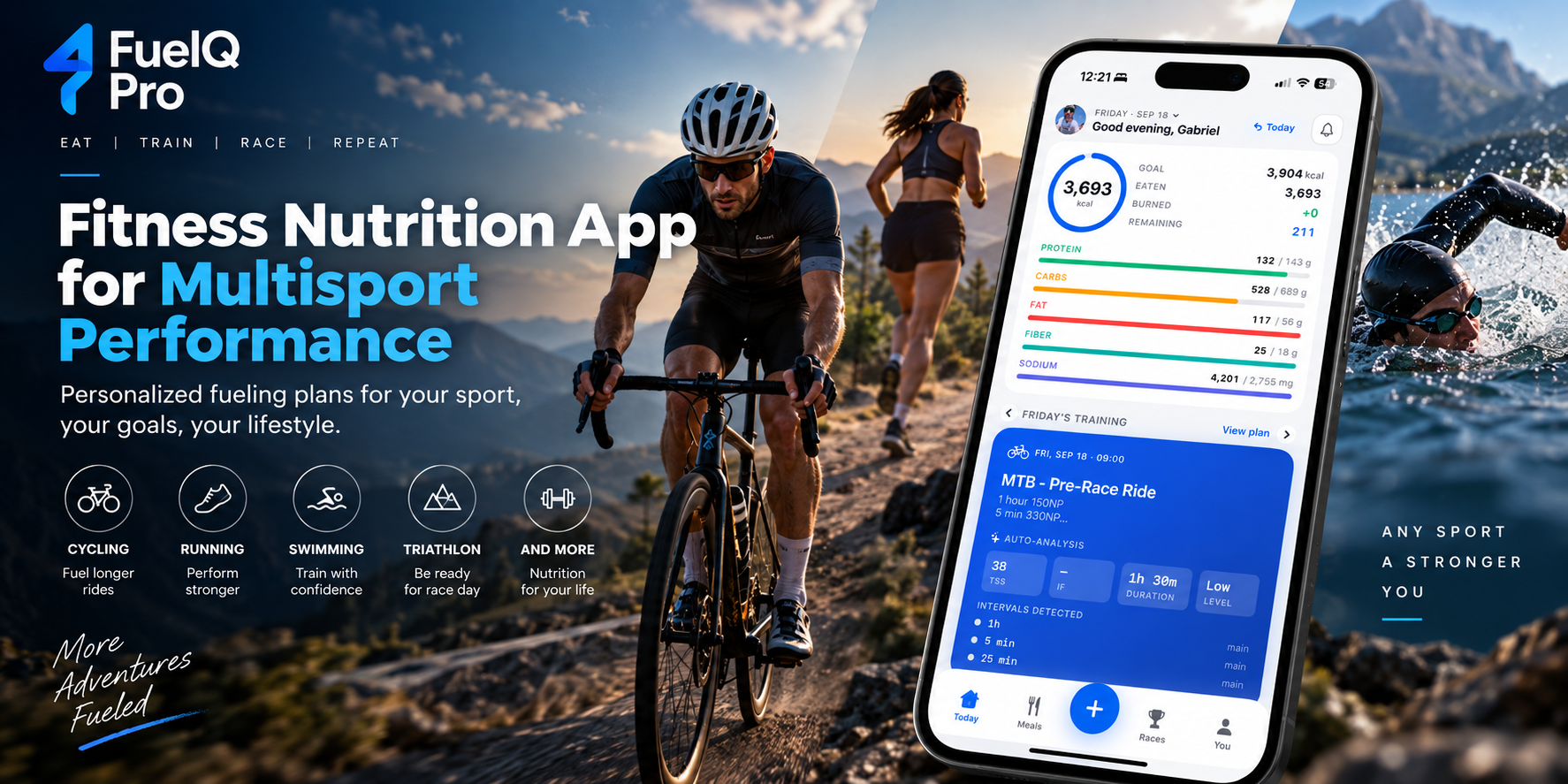
Ready to personalize? FuelQ Pro brings AI Meal Planning, Smart Hydration, Performance Tracking, Training Plan Analysis, Race Competition Planning, Women's Health, and GLP-1 support — built for endurance athletes.
Frequently asked questions
What is a fitness nutrition app?
A fitness nutrition app helps you plan, track, and adjust your eating and hydration to support training and recovery. It can log meals, analyze macros and micronutrients, align intake with workouts, and surface trends that affect performance.
How is this different from a calorie counter?
Calorie counters focus on totals. A fitness nutrition app emphasizes timing, composition, and context — fueling before, during, and after sessions; hydration strategy; and adapting plans to training load and goals.
Can it create personalized meal plans?
Many apps offer AI-assisted meal planning that adapts to preferences, allergies, and training demands. Treat outputs as educational guidance, not medical advice. For medical conditions or complex diets, consult a registered dietitian.
Does it help with hydration for workouts and races?
Yes. Advanced apps estimate sweat losses, electrolyte needs, and fluid targets based on conditions and intensity, then adjust plans as you log sessions. Always test your strategy in training.
Will it improve my performance?
It can support better decisions through data and structure, but results vary by consistency, training, sleep, and health status. No app can guarantee outcomes.
Can I track performance and recovery metrics?
Most integrate with wearables to bring in heart rate, pace, power, HRV, and sleep, helping connect nutrition and hydration choices to training response.
Is it suitable for GLP-1 users or women's health needs?
Look for apps with modules tailored to GLP-1 support and women's health. Education should be separated from prescription, and follow-up with a qualified clinician is recommended.
What data privacy should I expect?
Check for transparent policies, data export options, and control over third-party sharing. Choose platforms that protect sensitive health information.
How do I get started?
Set goals, connect your training platforms, log a baseline week, then iterate: fuel key sessions, monitor hydration, review trends weekly, and adjust.
What authoritative sources back common fueling and hydration targets in fitness nutrition apps?
Key guidelines come from peer-reviewed position stands: the ACSM/AND/DC Position Stand on Nutrition and Athletic Performance for energy, macronutrient, and hydration principles; Burke et al. and Jeukendrup for carbohydrate intake and multiple-transportable carbs; and ACSM hydration guidance (e.g., Sawka et al.) for sweat-rate assessment and sodium/fluid strategies. For broader sports nutrition frameworks, see ISSN position stands, and for women's iron screening and REDs considerations, consult ACOG/WHO and the IOC consensus on REDs.
Turn this strategy into a real plan.
FuelQ Pro builds personalized fueling for your training weeks, long sessions and races — plan, execute, review, improve.