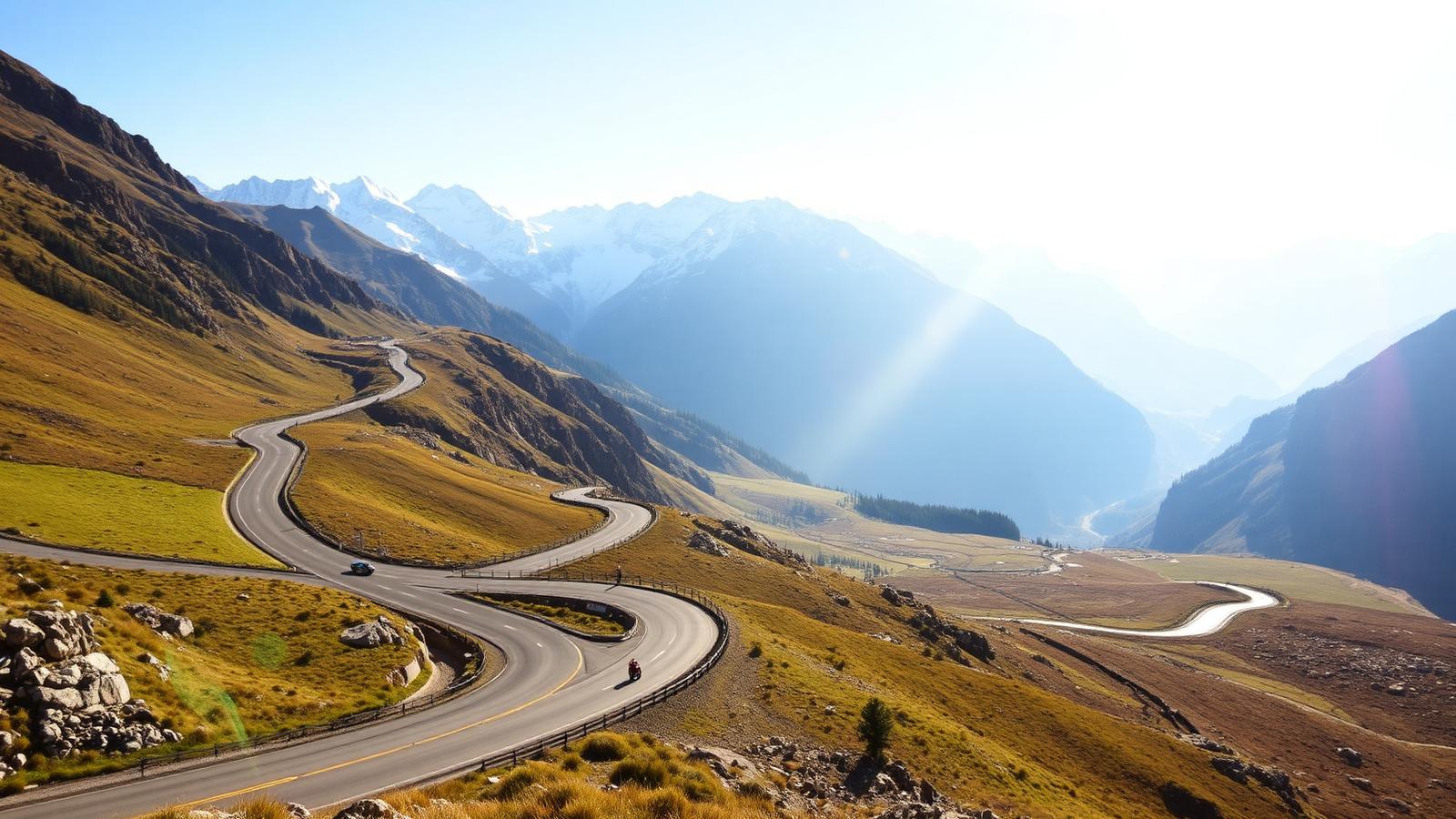
Weather & conditions at Ötztaler
Ötztaler Radmarathon runs in last sunday of august (2026: august 30) in Sölden, Ötztal Valley, Tyrol, Austria (start/finish at Freizeit Arena Sölden). Course conditions and weather variability directly change how much you need to drink, how much sodium you lose, and how well you can absorb carbohydrate on the bike.
Altitude on Timmelsjoch
The Timmelsjoch summit sits at 8,230 ft. Reduced oxygen availability slows gastric emptying, worsens GI tolerance in the closing hours and drops power by 5–10 % for the same perceived effort. Not a Leadville-level altitude problem, but pushing sea-level intake volumes above 7,220 ft frequently triggers nausea at hour ten.
Cold high-mountain descents
The Kühtai descent (6,630 ft → 2,300 ft), the Jaufenpass descent (6,860 ft → 3,120 ft) and the Timmelsjoch descent (8,230 ft → 4,520 ft Sölden) are each 12–16 mi of exposed downhill. Core temperature can drop 37–41 °F in the first 10 minutes; hypothermia has produced real DNFs, and cold suppresses fueling right when the next climb starts.
Highly variable weather
Late-August Tyrol swings from 77–86 °F in the Inn Valley to sub-41 °F snow flurries on Timmelsjoch. Recent editions have been shortened when the Timmelsjoch closed for snow. Layer strategy is not optional — it is race strategy.
Total duration
8–13 hours on the bike compounds small fueling errors into large late-race deficits. Cumulative sodium loss, glycogen depletion and cold exposure are all bigger factors than raw fitness by the time riders hit the base of the Timmelsjoch at hour six or seven.
Why generic fueling plans don't work for Ötztaler
Two riders on the same start line can need very different fueling. FTP, target finish time, body mass, sweat rate, temperature, altitude adaptation, nutrition products and race goals all change the answer. A generic 60 g/hr recommendation is a starting point, not a plan.
- FTP
- Finish time
- Body weight
- Sweat rate
- Weather
- Products
- Goals
- Course
Download the free printable race-day fueling checklist for Ötztaler Radmarathon
A practical race-week checklist: carbs, hydration, sodium, caffeine and race-day supplies — print it or keep it on your phone.
Frequently asked questions
Generic fueling plans don't work for Ötztaler.
Every athlete is different. FTP, finish time, body weight, sweat rate, weather, nutrition preferences and race goals all change what you should eat and drink.
FuelQ Pro builds a personalized race fueling strategy tuned to your ride — carbohydrate, hydration, sodium, caffeine and recovery, mapped to the course.
Start with the free checklist
A Race Fueling Plan gives you a personalized strategy for this event. The free checklist helps you prepare the basics first: race-week setup, 48-hour prep, race morning, hydration, sodium, caffeine, aid stations, and backup calories.
Related race guides
Maratona dles Dolomites
Alta Badia, Dolomites, Italy

L'Étape Campos do Jordão by Tour de France
Campos do Jordão, São Paulo, Brazil (Serra da Mantiqueira, ~1,600 m / 5,250 ft altitude)

GFNY Bento Gonçalves
Bento Gonçalves, Rio Grande do Sul, Brazil (Serra Gaúcha wine country, ~120 km northeast of Porto Alegre)