L'Étape Campos do Jordão by Tour de France 2026 Guide: Course, Training, Fueling & Altitude
The official Tour de France gran fondo in the Serra da Mantiqueira — long paved climbs, altitude and cold-morning starts in Brazil's 'Swiss' highlands.
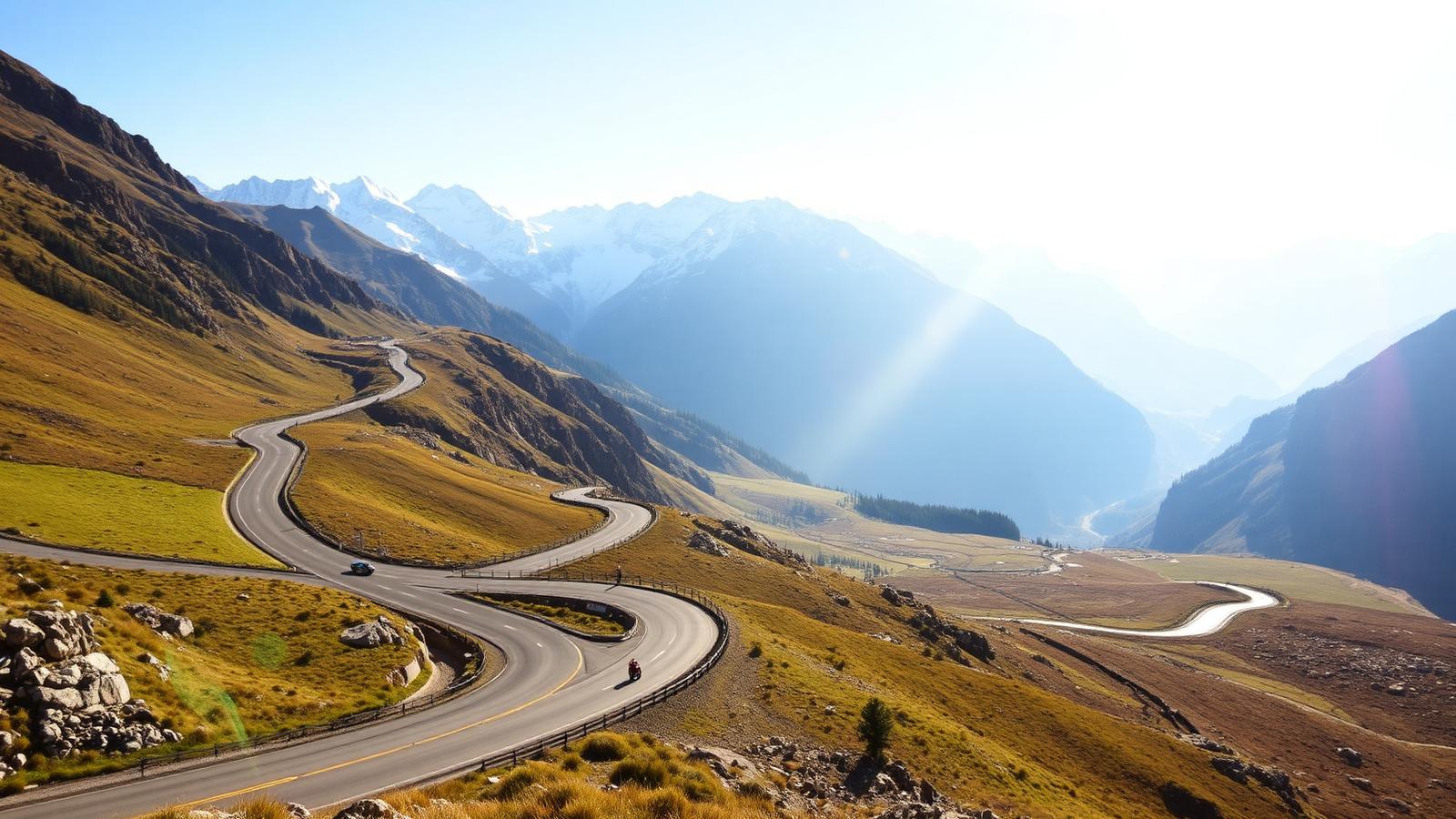
L'Étape Campos do Jordão by Tour de France is the marquee edition of the ASO L'Étape Brasil series, hosted at ~5,250 ft altitude in the Serra da Mantiqueira — the 'Brazilian Switzerland'. The long course is 66 mi with 7,545 ft of climbing; a 41 mi / 4,265 ft short course also starts the same morning. Cold, dry September mornings, a 6:00 am start and long paved climbs make this the most demanding L'Étape stop in Brazil and one of the toughest paid-entry road events in South America.
Distance
66 mi long course · 41 mi short course
Elevation
7,545 ft long · 4,265 ft short
Typical duration
4 – 7 hours for most amateur finishers on the long course
Location
Campos do Jordão, São Paulo, Brazil (Serra da Mantiqueira, ~1,600 m / 5,250 ft altitude)
Time of year
Late September (spring, dry season)
Terrain
Closed paved mountain roads, long sustained climbs and fast alpine descents
Course map & elevation profile
The official L'Étape Campos do Jordão course, elevation profile, and route reference. Use this to plan your pacing, aid-station strategy, and fueling touchpoints.
Official course map available on the race organizer's site.
Route year
2026
Elevation profile available on the race organizer's site.
Route details are based on the 2025 edition. The 2026 course, aid stations and cutoff times may change. Confirm the latest official race information with L'Étape Brasil (ASO) before race day.
Download the free printable race-day fueling checklist for L'Étape Campos do Jordão by Tour de France
A practical race-week checklist: carbs, hydration, sodium, caffeine and race-day supplies — print it or keep it on your phone.
Racing begins at ~5,250 ft with sub-50 °F morning temperatures. VO₂ max is modestly reduced (~4–6% at this elevation for unacclimated riders) and cold suppresses thirst and appetite in the first hour, exactly when fueling needs to start.
Long sustained Mantiqueira climbs
Multiple 20–45 minute climbs on the 66 mi course hold riders at steady tempo where carbohydrate demand peaks and eating gets uncomfortable. Sustained gradients of 6–9% with pitches over 12% are common.
Big diurnal swing
Mornings are cold and dry, but midday sun at altitude drives UV and sweat rates up quickly. Hydration that felt fine at km 30 (mile 19) is often 17 fl oz behind by km 70 (mile 43).
6:00 a.m. start logistics
The long course starts at 06:00. Pre-race breakfast has to happen at 3:00–4:00 a.m. — a window most riders under-rehearse. Cold hotel rooms and hard-to-find early food make the pre-race routine harder than it looks.
Fast descents into cold air
Long descents into shaded Mantiqueira valleys leave no bandwidth for eating and cool the core fast. Fueling must be planned for climbs and rolling sections, and cold-weather layering must survive an 50 mph (50 mph) descent.
Dry-air respiratory water loss
Cold dry mountain air more than doubles insensible respiratory water loss compared with sea-level conditions. Riders can lose 7–10 fl oz/hr through breathing alone before any sweat starts.
Course profile — segment by segment
A tactical breakdown of the L'Étape Campos do Jordão course. Use this to plan pacing, fueling touchpoints and where to conserve versus commit.
Segment
Mile
Elevation
Note
Start → first Mantiqueira climb
0 – 15 km (0 – 9 mi)
≈ 1,640 ft gain (1,640 ft)
Neutralized rollout through Campos do Jordão, then a warm-up climb out of town. Do not chase surges — you are 5,250 ft up and cold. Sit at 80–85% of your queen-climb wattage.Surface: Closed paved mountain road
Rolling plateau
15 – 40 km (9 – 25 mi)
Rolling with a net loss
The fastest section of the day. Get into a group, eat and drink hard. Enter the first aid fully committed to swapping bottles.Surface: Closed paved highway
Long descent into the valley
40 – 55 km (25 – 34 mi)
≈ 2,620 ft loss (2,625 ft)
10–15 minutes of dedicated descending into cold air. Do not eat here. Arm covers or vest stay on. Watch for damp tarmac in shaded corners.Surface: Fast paved descent
Valley rollers → queen climb base
55 – 70 km (34 – 43 mi)
Rolling, then climb starts
Force one full bottle and 60 g of carbs before the queen climb. Take the second caffeine dose at the base.Surface: Paved secondary road
Queen climb (Mantiqueira)
70 – 85 km (43 – 53 mi)
≈ 2,950 ft gain (2,950 ft)
The defining climb of the day. Steady effort, sip constantly, keep carbs flowing. Small gears above all — 34 × 32 or lower for most amateurs.Surface: Paved mountain road, 6–9% sustained
Ridge → final descent
85 – 95 km (53 – 59 mi)
Rolling with net loss
Recover, drink, eat one final gel. The last aid is here — take a bottle even if you feel fine.Surface: Paved mountain road
Final climb back into Campos do Jordão
95 – 107 km (59 – 66 mi)
≈ 1,310 ft gain (1,315 ft)
A false-flat drag home that ruins under-fueled riders. Pace by HR or power, not by feel. Save 30 seconds per km in the head.Surface: Closed paved road → town streets
Aid stations & crew strategy
Every aid station along the L'Étape Campos do Jordão course, with crew access, drop-bag rules and the fueling action to execute at each stop.
Aid 1 — early plateau
Mile ≈ km 35 (mile 22)· ≈ 4,590 ft
Quick bottle swap. One gel. You are still cold — sip warm sports drink if available.
Aid 2 — pre-descent
Mile ≈ km 55 (mile 34)· ≈ 3,940 ft
Two full bottles. Extra gels for the queen climb (add 20-minute buffer). Second caffeine dose staged in jersey pocket.
Aid 3 — queen climb base
Mile ≈ km 68 (mile 42)· ≈ 3,610 ft
Force one bottle and 60 g of carbs even if you feel full. This is the last real refuel before 45 minutes of sustained climbing.
Aid 4 — post-queen ridge
Mile ≈ km 90 (mile 56)· ≈ 5,415 ft
Final aid. One bottle, one gel, one caffeine top-up (50–100 mg). Do not skip — the final climb back into town is longer than it looks.
Fueling challenges & strategy
General, evidence-based guidance. Numbers should always be personalized to sweat rate, body mass, fitness and weather.
Carbohydrate strategy
70–100 g/hr of mixed-source carbohydrate (glucose : fructose ~1 : 0.8) for the 66 mi long course. Bias toward liquid and gel to sustain intake through the long Mantiqueira climbs. Trained guts can push toward 120 g/hr on the queen climb.
Hydration
17–27 fl oz/hr (17–27 fl oz/hr) on the long course. Dry mountain air makes sweat losses invisible — drink to the clock, not to thirst, especially in the first two cold hours when perceived need is lowest.
Sodium
500–800 mg of sodium per liter of fluid (600 mg/L is a good default). Cold-morning riders often under-salt; keep at least one bottle with sodium from the start. Salty sweaters should push toward 800–1,000 mg/L.
Caffeine
3–6 mg/kg body mass, split between pre-start (with breakfast) and the base of the biggest mid-race climb. A 154 lb (154 lb) rider targeting 5 mg/kg takes ~200 mg pre-race and 150 mg mid-race.
Aid station strategy
Treat each aid as a bottle swap first, calorie top-up second. Long-course aid stations are typically 18–25 mi apart, so plan bottle capacity for 90+ minutes between stops. Plan the last aid as your final chance — nothing before the finish.
Pre-race breakfast
1–4 g/kg carbohydrate 3–4 hours before the 06:00 start, from familiar low-fiber, low-fat foods. A 154 lb (154 lb) rider targets 140–280 g CHO. Rehearse the early-morning meal in training on 03:00 wake-ups at least twice.
During-race execution
Fuel by the clock from km 0 (mile 0). Cold and altitude suppress hunger, so a 15-minute alarm protects intake through the first climb. Chew when climbs allow, sip constantly on rolling sections, save the descents for holding position.
Recovery
1.0–1.2 g/kg carbohydrate and 0.3 g/kg protein within 60 minutes of finishing, plus 150% fluid replacement — critical after racing at altitude. Recovery nutrition at the finish tent shapes how much of your training you can do the following week.
Fueling timeline by phase
Grams and millilitres per hour for each phase of the race. Personalize to your sweat rate, body mass and conditions.
L'Étape Campos do Jordão long course (66 mi / 7,550 ft) — targets for a 4–7 hour finish
Phase 1 — Cold-morning rollout (Campos do Jordão)
0–9 mi·0:00–0:45
Carbs
60–80 g/hr (start eating from km 0 — cold suppresses appetite)
Fluids
14–20 fl oz/hr (drink to clock, not thirst)
Sodium
500–700 mg/hr
Caffeine: 150–200 mg with breakfast, 3–4 hours pre-start
Focus: Do NOT chase early moves. You are at 5,250 ft and cold. Sit at 80–85% of your queen-climb wattage. Lock in a 15-min intake alarm.
Phase 2 — Rolling plateau + first descent
9–34 mi·0:45–2:15
Carbs
80–100 g/hr (bank calories on the fast rolling section)
Fluids
17–27 fl oz/hr as sun climbs and layers come off
Sodium
600–800 mg/hr
Focus: Fastest section of the day. Get into a group, eat and drink hard. Enter aid 1 fully committed to swapping bottles.
Phase 3 — Valley + queen-climb base
34–43 mi·2:15–3:15
Carbs
80–100 g/hr (front-load before the queen)
Fluids
20–30 fl oz/hr as midday heat peaks
Sodium
700–900 mg/hr
Caffeine: 150 mg at the base of the queen climb (aid 3)
Focus: Force one full bottle and 60 g of carbs at aid 3. Take the second caffeine dose. This is the last real refuel before 45 minutes of sustained climbing.
Phase 4 — Queen climb (Mantiqueira)
43–53 mi·3:15–4:15
Carbs
90–100 g/hr (liquid + gel biased — chewing at threshold gets hard)
Fluids
17–24 fl oz/hr (sip constantly, small volumes)
Sodium
600–800 mg/hr
Focus: Fixed HR / RPE ceiling (75–82% of altitude-adjusted FTP). Small gears, steady cadence. Do not chase surges — they come back on the descent.
Phase 5 — Ridge, final aid + descent
53–59 mi·4:15–4:45
Carbs
60–80 g/hr (one final gel at aid 4)
Fluids
14–20 fl oz/hr
Sodium
500–700 mg/hr
Caffeine: 50–100 mg top-up at aid 4 if under daily cap
Focus: Aid 4 is the last real chance — take a bottle even if you feel fine. Layer up before dropping into the shaded valley descent.
Phase 6 — Final climb back into Campos do Jordão
59–66 mi·4:45–finish
Carbs
60–80 g/hr (save one gel for the last 30 min)
Fluids
14–20 fl oz/hr
Sodium
500–700 mg/hr
Focus: False-flat drag home that ruins under-fueled riders. Ride to power / HR, not to feel. Save 30 seconds per km in the head — the finish is closer than it feels.
Targets are for the 66 mi long course (4–7 hr finish). Short-course riders (41 mi / 4,270 ft in 2.5–4 hr) can scale carb targets to 60–80 g/hr and skip the mid-race caffeine dose. Individual sweat rate can shift fluid and sodium targets by ±30% — personalize with a pre-race sweat test.
Carbohydrate loading for L'Étape Campos do Jordão
A structured 48–72 hour carbohydrate-loading protocol tuned for a long day at altitude. Rehearse it before a training block, not for the first time on race week.
48–72 hours out
Target 8–10 g/kg body mass per day of carbohydrate from familiar low-fiber sources: rice, pasta, potato, bread, sports drinks, honey. A 154 lb (154 lb) rider aims for 560–700 g CHO/day. Reduce fat and fiber to protect the gut on race morning.
Protein & fat
Keep protein moderate (1.2–1.6 g/kg/day). Reduce fat to ~0.5–0.8 g/kg/day. Campos do Jordão fondue and heavy chocolate are cultural traps — enjoy after the race.
Hydration & sodium
Drink to pale-yellow urine, add 500–1,000 mg sodium per liter of fluid on the two days before the race. Plasma volume expansion supports thermoregulation at altitude.
Race morning
1–4 g/kg CHO 3–4 hours before the 06:00 gun, from foods rehearsed in training. Oatmeal + banana + honey, bread + jam, or a rice bowl are proven. Avoid anything new, greasy or high-fiber.
Sub-9 & sub-12 split targets
Aid-station splits for the two headline finish goals at L'Étape Campos do Jordão: the Big Buckle (sub-9) and the Silver Buckle (sub-12). Use as planning anchors, not as commitments — weather, altitude adaptation and pack dynamics all shift real splits.
Checkpoint
Sub-9 (Big Buckle)
Sub-12 (Silver Buckle)
Aid 1 ≈ km 35 (mile 22)
1h 10min – 1h 20min
1h 30min – 1h 45min
Aid 2 ≈ km 55 (mile 34)
1h 45min – 2h 00min
2h 20min – 2h 40min
Aid 3 ≈ km 68 (mile 42)
2h 15min – 2h 30min
3h 00min – 3h 25min
Queen climb top ≈ km 85 (mile 53)
3h 15min – 3h 35min
4h 20min – 4h 55min
Aid 4 ≈ km 90 (mile 56)
3h 30min – 3h 50min
4h 40min – 5h 15min
Finish (66 mi / 66 mi)
≤ 4h 00min (competitive)
≤ 5h 30min (target amateur)
Pacing strategy
First 60 minutes
Ride 10–15% below the effort you feel capable of. Cap at ~80% of altitude-adjusted FTP or high Zone 2 HR. Cold, altitude and adrenaline all conspire to burn matches early.
Rolling plateau (km 15–40)
Sit in a group. Save 30–50 W by drafting. Eat and drink harder than you think you need to.
Queen climb
Target 75–82% of altitude-adjusted FTP or the top of Zone 2 HR. Expect power to drop 4–8% at this elevation for the same perceived effort — that is normal.
Descents
Ride within your skills. A crash or flat costs 5–20 minutes; 30 seconds saved through a wet corner does not.
Final climb back to Campos do Jordão
Pace by HR or power to the finish — the false-flat looks flatter than it is. Save 30 seconds per km in the head and you save minutes on the clock.
Altitude sickness (AMS) — prevention & red flags
Evidence-based prevention and safety guidance for L'Étape Campos do Jordão. Not medical advice — discuss altitude medications and pre-existing conditions with a qualified physician.
What to expect at 5,250 ft
Full AMS is uncommon at ~5,250 ft, but modest performance loss and disturbed sleep in the first 24–48 hours are typical for sea-level riders. Riding higher on course (up to ~5,910 ft / 5,900 ft) amplifies this slightly.
Prevention timing
Two evidence-based strategies: arrive 3–5 days early to acclimatize, or arrive within 24 hours of the start so the acute response has not peaked. The 24–72 hour window is the least favorable.
Hydration & alcohol
Dry Mantiqueira air raises insensible fluid loss. Drink 101 fl oz (100 fl oz) per day of race week with sodium, and avoid alcohol for the final 48 hours. Alcohol worsens sleep and slows adaptation.
Iron status
Low ferritin (<40 ng/mL) blunts the altitude response. Test 10–12 weeks out so there is time to correct with diet or supplementation if needed.
Equipment & bike setup
Bike choice
A road bike with compact (50/34) chainrings, an 11-32 or 11-34 cassette, and disc brakes. Aero gains are minor here; climbing gears and descending confidence dominate.
Tires & pressure
28 mm tubeless is the modern default. Typical pressures for a 154–176 lb (154–176 lb) rider: 65–75 psi (4.5–5.2 bar) front, 70–80 psi (4.8–5.5 bar) rear. Drop 5 psi for cold or damp descents.
Gearing
50/34 with 11-32 or 11-34 for most amateurs. Riders under 3.5 W/kg on the flats should consider 11-36 for the steepest Mantiqueira pitches.
Brakes
Hydraulic disc brakes strongly preferred — the long descents get hot and wet. Fit fresh pads race week and bed them in on a short descent.
Hydration setup
Two large bottle cages. A third cage on the seat tube or in a jersey pocket helps between aid 2 and aid 3.
Clothing
Short-sleeve jersey + bibs + arm warmers + knee warmers + packable rain jacket + full-finger gloves + skull cap under helmet at the start. Most riders shed layers at aid 2 or the top of the queen climb.
Spares & repair kit
2× CO2 + inflator, tire plug kit, tubeless-ready spare tube, tire lever, chain quick link, multi-tool with chain breaker, spare derailleur hanger, small emergency cash for the mechanical you did not expect.
Training for L'Étape Campos do Jordão
Building your L'Étape Campos do Jordão 2026 training plan
A realistic L'Étape Campos do Jordão training plan runs 12–16 weeks and builds three things in parallel: aerobic volume, sustained climbing power and altitude readiness. Most amateurs who finish inside 5 hours arrive at race week with a 10–14 hour peak, a longest ride of 4–6 hours with 1,800–8,200 ft of climbing, and either 3–5 days of on-site altitude time or a fast-arrival strategy. The bullets below are what actually works.
Volume ramp
Build to 10–14 hours per week for 8–10 weeks before race week, with the final long ride 3 weeks out and a proper 2-week taper.
Long rides
Progress long rides toward 4–6 hours with 5,900–8,200 ft of climbing, ideally on similar sustained-climb terrain.
Threshold & VO₂
Weekly threshold intervals (2× 20 min or 4× 10 min at 90–100% FTP) and one VO₂ block (5–6× 3 min) for 6–8 weeks. Aerobic ceiling is what makes altitude survivable.
Climbing-specific work
Prescribe at least one sustained climb per week of 30–60 minutes at threshold. If you cannot find one, use a smart trainer with an incline profile at 6–9% gradient.
Altitude preparation
3–5 days at Mantiqueira-like altitude before the race is ideal. Alternatives: arrive within 24 hours of the start (minimize acute-response window) or use an altitude tent for 3–4 weeks pre-race.
Descending skills
Fast Mantiqueira descents at 70+ km/h (43+ mph) reward practiced line choice and braking. Dedicate one session every 2 weeks to fast paved descending on similar terrain.
Nutrition rehearsal
Hit 70–90 g/hr of carbohydrate on 4-hour rides and 90–120 g/hr on your longest rides to train the gut. Practice 03:00 wake-ups + pre-race breakfast at least twice.
Race-day morning timeline
T-4 h (≈ 02:00)
Wake, coffee, first breakfast (1–2 g/kg CHO): oatmeal, banana, honey. Hydrate 17 fl oz (17 fl oz) with sodium.
T-2 h (≈ 04:00)
Second small feed (~50 g CHO) — bread with jam, sports drink. Chamois cream, warm layers on.
T-90 min
Bike check — pressure, brakes, computer, lights (start is dark), bottles staged. Layer up for 41 °F.
T-45 min
Ride to corral or short spin. Sip 7–10 fl oz (7–10 fl oz) of sports drink. Restroom.
T-20 min
In corral. First caffeine dose (100–200 mg gel or gum). Final layering call.
T-5 min
Half a gel. Breathe. Confirm HR/power start plan with yourself.
T+0 (06:00)
Gun. Neutralized rollout — ride patiently to the first climb, do not chase surges.
Packing list
Bike
Race bike (fully serviced 2 weeks out)
Two large bottle cages
Computer + fresh mount
Front & rear lights for the dark 06:00 start
Fresh brake pads
Nutrition
Gels / chews / drink mix for 7 hours + 30% buffer
Two caffeine doses
Pre-race breakfast supplies (03:00 friendly)
Post-race recovery drink + real meal
Hydration
Two large bottles
Electrolyte mix rehearsed in training (600–800 mg Na/L)
Insulated bottle for the cold start (optional)
Clothing
Short-sleeve jersey + bibs
Arm warmers + knee warmers
Packable rain shell or vest
Full-finger gloves
Skull cap under helmet
Warm layer for finish
Weather gear
Sunscreen SPF 50+
Lip balm with SPF
Clear or photochromic glasses for the dark start
Tools & spares
2× CO2 + inflator
Mini pump
Tire plug kit
Spare tube
Multi-tool with chain breaker
Chain quick link
Spare derailleur hanger
Documents & logistics
Rider Manual printout
Race number + timing chip
Photo ID (RG or passport)
Hotel + parking address printed
Registration & lottery
Every entry route into the L'Étape Campos do Jordão, from the annual lottery to qualifier races, coaching-program slots and charity entries.
Online entry
Registration opens on camposdojordao.letapeseries.com in multiple waves. Early-bird waves are 30–40% cheaper than late waves; the event usually sells out weeks before race day.
Wave / corral placement
L'Étape uses corral-based wave starts based on submitted qualifying times from previous events or Strava. Faster corrals leave first; submit accurate times to be placed correctly.
Course choice
You select 66 mi or 41 mi at registration. Switching between courses closer to race day is usually possible but subject to availability.
Cancellation & transfer
Refund and transfer policies vary by wave — read the fine print at checkout. Insurance add-ons are typically available for medical cancellations.
Getting there, lodging & logistics
Airports, lodging, packet pickup, parking and crew access for the L'Étape Campos do Jordão.
Getting there
Fly into São Paulo (GRU international / CGH domestic) and drive ~112 mi / 2.5–3 hours via SP-070 and Rodovia Floriano Rodrigues Pinheiro. Rental car is the practical option; there is no reliable shuttle to Campos do Jordão.
Lodging in Campos do Jordão
Downtown Campos do Jordão has hotels, pousadas and short-term rentals within 5–10 minutes of the start. Book 3–6 months in advance — the event fills the town. Sleeping at 5,250 ft is a small acclimatization bonus.
Packet pickup & bike inspection
Held Friday and Saturday of race weekend at the L'Étape Village. Mandatory bib pickup with photo ID. Missing packet pickup invalidates your entry — plan to arrive by Friday afternoon.
Parking & start line
The start is on the main avenue near the L'Étape Village. Parking near the start fills by 04:30. Ride 10 minutes from your lodging if possible, or drop your rider and have crew park further out.
Finish line
Finish is in central Campos do Jordão with food, medical and recovery on-site. Massage tents are usually available for a small fee.
Weather contingency
The dry season makes rain rare, but cold and fog on the queen climb are always possible. Pack a warm layer for post-finish — you will be tired and 5,250 ft up.
What most riders get wrong
01
Waiting to feel warm before eating
Cold mornings delay appetite. Riders who wait to warm up are already 200–300 kcal down by the first big climb.
02
Under-drinking in dry mountain air
Low humidity hides sweat losses. Cognitive fog and cramps in the final 19 mi almost always trace back to under-drinking before km 50 (mile 31).
03
Copying flat-race intake
7,545 ft of climbing at altitude raises carbohydrate demand well above a rolling coastal gran fondo — the same 60 g/hr that felt fine at Rio Beach Cup will underfuel you here.
04
Trying to eat on the descents
Fast Mantiqueira descents into cold valleys leave no margin for one-handed riding. Time calories to the climbs and rolling sections.
05
New products on race day
Big-event nerves plus an unfamiliar gel is a reliable recipe for GI distress at altitude. Race what you have trained.
06
Skipping the last aid
The final climb back into Campos do Jordão is where under-fueled riders lose the most time. One bottle and one gel at the last aid is cheap insurance.
07
Under-dressing for the start
41 °F at 06:00 with a 25 mi descent in the first hour freezes hands and slows reaction time. Warm layers plus disposable arm covers are worth the weight.
08
Riding sea-level power on the queen climb
Sustained aerobic power drops ~4–8% at 5,250–5,900 ft for unacclimated riders. Pace by HR or RPE, not by lowland FTP.
09
Skipping the pre-race dinner carb load
Campos do Jordão restaurants close early and portions can be small. Book dinner by 19:00 or pre-buy carb-dense food to avoid a low-glycogen start.
10
No printed crew brief
If you have crew or a team car, the cold and altitude will fry your memory. Print a laminated card with bottle order, layers and caffeine timing.
Race history & culture
L'Étape by Tour de France series
L'Étape is Amaury Sport Organisation's official global gran fondo brand, using Tour de France race operations and branding for amateur events. The series runs in 20+ countries; Brazil is one of ASO's fastest-growing markets.
L'Étape Brasil
The Brazilian series expanded to multiple host cities (Rio de Janeiro, Balneário Camboriú and Campos do Jordão), with Campos do Jordão emerging as the most demanding stop because of its Mantiqueira climbs and 5,250 ft altitude.
Why Campos do Jordão
The 'Brazilian Switzerland' offers closed alpine roads, sustained climbs, cold-morning starts and a European-alpine feel that ASO leans into for the brand. The event has grown from a few hundred riders to several thousand across both course options.
Why generic fueling plans don't work for L'Étape Campos do Jordão
Two riders on the same start line can need very different fueling. FTP, target finish time, body mass, sweat rate, temperature, altitude adaptation, nutrition products and race goals all change the answer. A generic 60 g/hr recommendation is a starting point, not a plan.
FTP
Finish time
Body weight
Sweat rate
Weather
Products
Goals
Course
Related FuelQ resources
Free calculators, checklists and articles to help you personalize your L'Étape Campos do Jordão plan.
Generic fueling plans don't work for L'Étape Campos do Jordão.
Every athlete is different. FTP, finish time, body weight, sweat rate, weather, nutrition preferences and race goals all change what you should eat and drink.
FuelQ Pro builds a personalized race fueling strategy tuned to your ride — carbohydrate, hydration, sodium, caffeine and recovery, mapped to the course.
A Race Fueling Plan gives you a personalized strategy for this event. The free checklist helps you prepare the basics first: race-week setup, 48-hour prep, race morning, hydration, sodium, caffeine, aid stations, and backup calories.