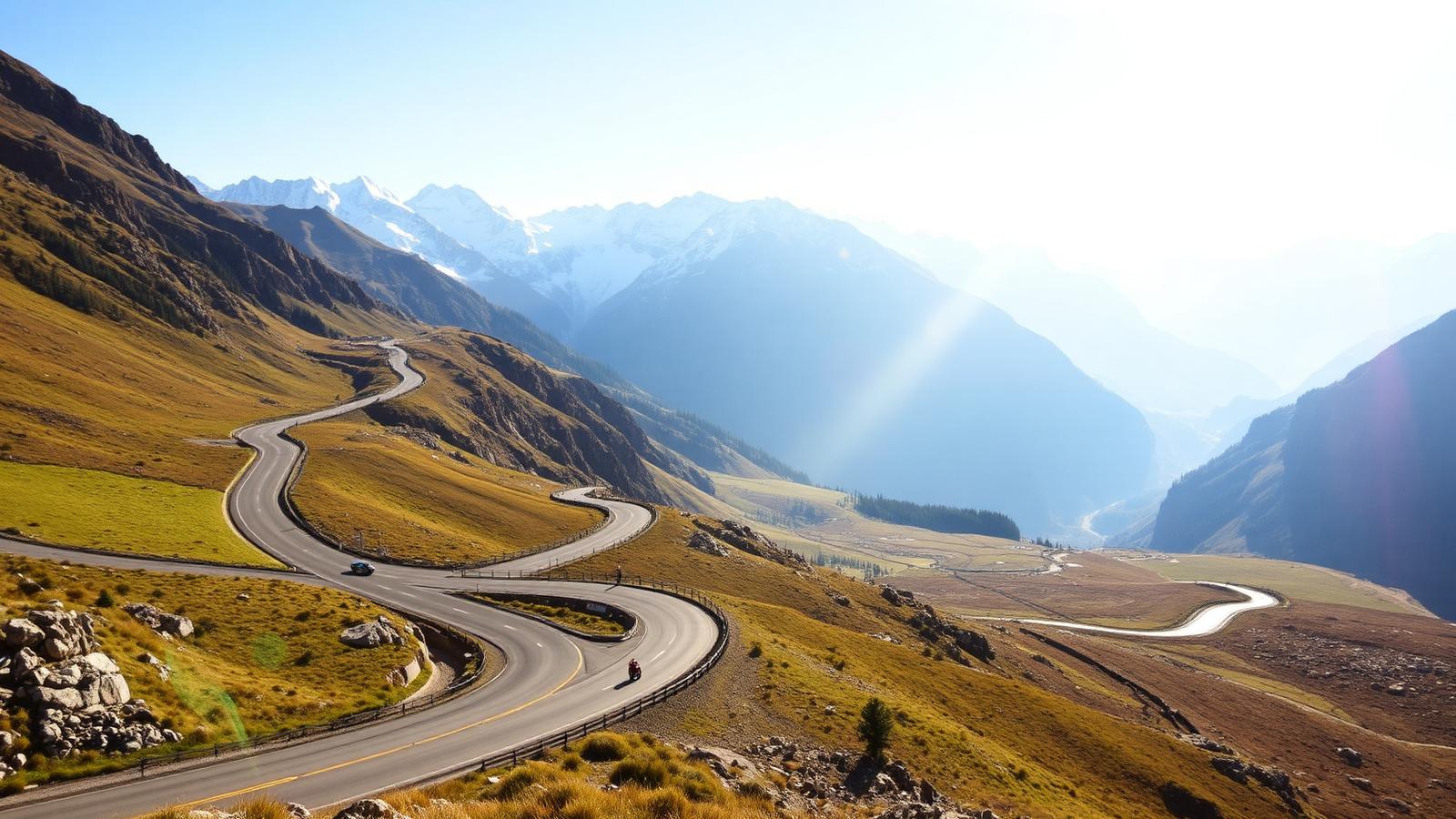
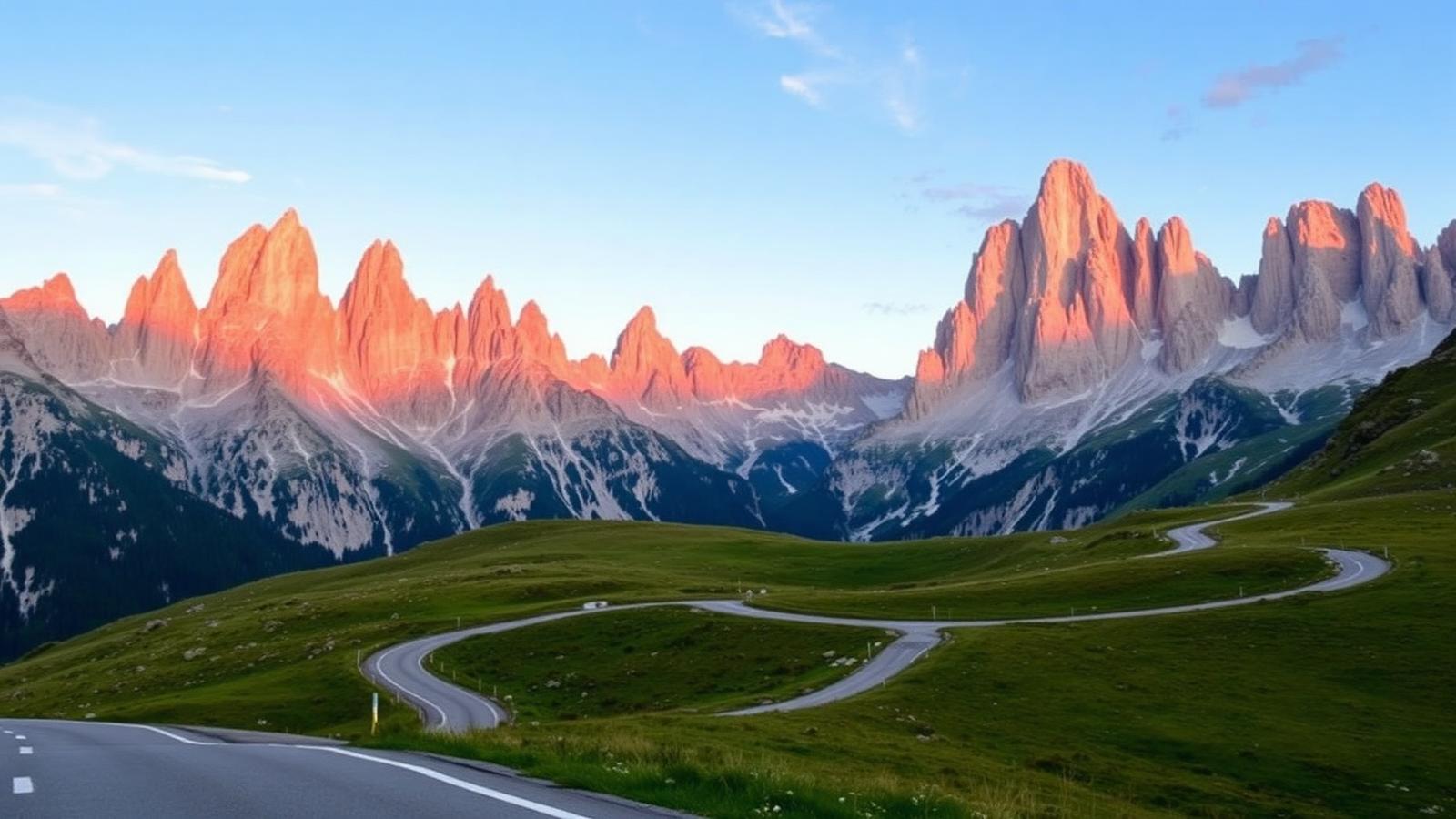
The Ötztaler Radmarathon is a single-day road gran fondo held every August in Sölden, Austria — widely regarded as the hardest amateur one-day road event in Europe. The 141–148 mi route (year to year) crosses four major Alpine passes: Kühtai (6,630 ft), Brenner Pass (4,510 ft), Jaufenpass / Passo Giovo (6,860 ft) and Timmelsjoch / Passo Rombo (8,230 ft). Roughly 18,040 ft of climbing, long high-altitude descents above 6,560 ft and variable Alpine weather force amateur riders to hold sustained tempo, execute cold-weather transitions and fuel by the clock across 8–13 hours on the bike.
Distance
≈ 141–148 mi (route-year dependent, ±6 mi)
Elevation
≈ 18,000 ft of climbing
Typical duration
8 – 13 hours for most amateur finishers; sharp end sub-8 hours
Location
Sölden, Ötztal Valley, Tyrol, Austria (start/finish at Freizeit Arena Sölden)
Time of year
Last Sunday of August (2026: August 30)
Terrain
Paved Alpine passes, long sustained climbs and long cold descents above 6,560 ft
Course map & elevation profile
The official Ötztaler course, elevation profile, and route reference. Use this to plan your pacing, aid-station strategy, and fueling touchpoints.
Official course map available on the race organizer's site.
Route year
2026
Elevation profile available on the race organizer's site.
Course details, aid stations, cutoff times and weather-based route modifications may change year to year. The organizer publishes the definitive current-year Athletes' Manual on oetztaler-radmarathon.com 6–8 weeks pre-race. Race-morning route decisions (weather closures) are communicated at the pre-race briefing. Third-party route summaries should not be treated as the official current-year route.
Download the free printable race-day fueling checklist for Ötztaler Radmarathon
A practical race-week checklist: carbs, hydration, sodium, caffeine and race-day supplies — print it or keep it on your phone.
Kühtai (11 mi, avg 8.5%), Brenner (over the Italian border, shorter but headwind-exposed), Jaufenpass (10 mi, avg 7.5%) and Timmelsjoch (17 mi from the Italian side, avg 7.5% with pitches to 12%). Each pass holds riders at sustained tempo for 45–120 minutes, where appetite is blunted and mistakes compound.
Altitude on Timmelsjoch
The Timmelsjoch summit sits at 8,230 ft. Reduced oxygen availability slows gastric emptying, worsens GI tolerance in the closing hours and drops power by 5–10 % for the same perceived effort. Not a Leadville-level altitude problem, but pushing sea-level intake volumes above 7,220 ft frequently triggers nausea at hour ten.
Cold high-mountain descents
The Kühtai descent (6,630 ft → 2,300 ft), the Jaufenpass descent (6,860 ft → 3,120 ft) and the Timmelsjoch descent (8,230 ft → 4,520 ft Sölden) are each 12–16 mi of exposed downhill. Core temperature can drop 37–41 °F in the first 10 minutes; hypothermia has produced real DNFs, and cold suppresses fueling right when the next climb starts.
Highly variable weather
Late-August Tyrol swings from 77–86 °F in the Inn Valley to sub-41 °F snow flurries on Timmelsjoch. Recent editions have been shortened when the Timmelsjoch closed for snow. Layer strategy is not optional — it is race strategy.
Total duration
8–13 hours on the bike compounds small fueling errors into large late-race deficits. Cumulative sodium loss, glycogen depletion and cold exposure are all bigger factors than raw fitness by the time riders hit the base of the Timmelsjoch at hour six or seven.
Cutoffs at every pass
The organizers enforce time cutoffs at each pass (typically Kühtai, Brenner turn-off, Sterzing, base of Timmelsjoch and summit). Riding too conservatively in the first hour can trigger a cutoff by mid-race — pacing is a strategic constraint, not an optional discipline.
Aid spacing
Aid points sit roughly 19–31 mi apart. Mid-pack riders typically see 45–75 minutes between stops and must plan bottle capacity around the Kühtai and Timmelsjoch climbs, where fluid demand is highest and refills are limited.
Course profile — segment by segment
A tactical breakdown of the Ötztaler course. Use this to plan pacing, fueling touchpoints and where to conserve versus commit.
Segment
Mile
Elevation
Note
Sölden rollout & valley descent
0 – 35 km
≈ 1,970 ft net loss
Neutral rollout from Freizeit Arena. Do not chase the front group — the pace down the valley is 40+ kph and unsustainable. Fuel from km 5.Surface: Paved valley road
Kühtai climb
35 – 53 km
≈ 4,270 ft gain to 6,630 ft
The first crux climb. Steady effort at 75–80 % of altitude-adjusted FTP. Do not race groups above your zone. Layer down at the top.Surface: Paved switchbacks, avg 8.5 %
Kühtai descent to Inn Valley
53 – 75 km
≈ 4,270 ft loss to ≈ 2,300 ft
Cold and long. Layer up at the summit before you drop in. Force one bottle down even if you don't feel thirsty. Ride within your handling skills — this is the first cold-descent test.Surface: Fast paved switchbacks
Inn Valley to Brenner Pass
75 – 115 km
≈ 2,300 ft gain to 4,510 ft
The fastest section of the day. Sit in groups, take pulls, eat aggressively. This is where you bank calories for Jaufenpass.Surface: Rolling paved road with a gradual climb
Brenner descent to Sterzing
115 – 135 km
≈ 1,390 ft loss to ≈ 3,120 ft
Sterzing (Vipiteno) is the mid-race aid stop. Hot food available. Plan a 4–8 minute stop: two full bottles, one hot item, layer decision.Surface: Fast paved descent into Italy
Jaufenpass / Passo Giovo climb
135 – 155 km
≈ 3,740 ft gain to 6,860 ft
Long grinder. Ride to power, not to feel — appetite drops sharply here. Save one caffeine dose for the base of Timmelsjoch.Surface: Paved switchbacks, avg 7.5 %
Jaufenpass descent to St. Leonhard
155 – 180 km
≈ 3,740 ft loss to ≈ 3,120 ft
The last aid at St. Leonhard is the base of Timmelsjoch. Do NOT skip it. Two full bottles, one solid item, layer plan for the summit staged.Surface: Fast paved switchbacks with several tunnels
Timmelsjoch / Passo Rombo climb
180 – 213 km
≈ 5,120 ft gain to 8,230 ft
The defining climb. Small gears, steady breathing, keep sipping. Above 7,220 ft drop intake to 60–80 g/hr — nausea is not fitness.Surface: Paved switchbacks, avg 7.5 %, pitches to 12 %
Timmelsjoch descent to Sölden
213 – 238 km
≈ 3,740 ft loss to Sölden 4,490 ft
The most dangerous section of the day. Full layers on at the summit, gloves changed to full-finger, one last gel before you drop in. Ride within your skills — a crash here after 10 hours is the classic Ötztaler DNF.Surface: Technical paved descent, cold and exposed
Aid stations & crew strategy
Every aid station along the Ötztaler course, with crew access, drop-bag rules and the fueling action to execute at each stop.
Aid 1 — Kühtai base (Ötz)
Mile ≈ 30 km· 2,690 ft
Quick bottle top-up and one gel. Do not linger — you have not yet climbed. Restart within 90 seconds.
Aid 2 — Inzing (post Kühtai descent)
Mile ≈ 75 km· ≈ 2,300 ft
Warm up if cold. One solid item, refill bottles, remove wet layers from the Kühtai descent. Confirm cutoff margin.
Aid 3 — Innsbruck / Brenner base
Mile ≈ 100 km· ≈ 2,300 ft
Quick bottle swap, one gel. The Brenner climb starts here — do not sit down. Group re-formation matters for the next 12 mi.
Aid 4 — Sterzing (mid-race)
Mile ≈ 135 km· 3,120 ftDrop bag
The most important stop of the day. Two full bottles, hot food (pasta, broth), second caffeine dose, drop-bag pickup if using. Layer decision for Jaufenpass. Plan a 4–8 minute stop.
Aid 5 — Jaufenpass summit
Mile ≈ 155 km· 6,860 ft
Neutral aid. Take water and one gel. Layer up for the descent. Do not stop long — you will cool rapidly at 6,560 ft.
Aid 6 — St. Leonhard (Timmelsjoch base)
Mile ≈ 180 km· 3,120 ft
The last real refuel before 17 mi of climbing. Force one solid item and two full bottles. Confirm cutoff margin. Stage the final caffeine dose.
Aid 7 — Timmelsjoch summit
Mile ≈ 213 km· 8,230 ft
Neutral aid at the summit. Take water and one gel. Full layers on: jacket, arm warmers, full-finger gloves, buff. Do not linger — you will chill fast.
Fueling challenges & strategy
General, evidence-based guidance. Numbers should always be personalized to sweat rate, body mass, fitness and weather.
Carbohydrate strategy
70–100 g/hr of mixed-source (glucose + fructose) carbohydrate for most trained road riders. Bias toward liquid and gel through the sustained climbs where solid food tolerance drops. On the Timmelsjoch, expect to reduce intake to 60–80 g/hr as altitude and fatigue compound gastric emptying delays.
Hydration
17–34 fl oz/hr adjusted for temperature and altitude. Cold-hour under-drinking is one of the classic Ötztaler failures — riders finish descents with two full bottles because they forgot to sip. Total intake over 10 hours typically runs 169–304 fl oz.
Sodium
500–1,000 mg/L of fluid. Long Alpine days can drive sodium losses higher than the moderate ambient temperature suggests — a rider producing 24 fl oz/hr of sweat over ten hours loses substantial sodium even at 59 °F. Salt caps in a jersey pocket let you dose independently of drink-mix flavour fatigue.
Caffeine
3–6 mg/kg body mass, split across pre-start (100–200 mg), the base of Jaufenpass (100 mg) and the base of Timmelsjoch (100–150 mg). A single early espresso wears off by hour four; split dosing protects late-race decision quality on the final climb and descent.
Aid station strategy
Every stop is a bottle swap first, calorie top-up second. Layer up at the base of long descents so cold does not suppress your fueling in the following hour. The mid-race aid in Sterzing (base of Jaufenpass) is a natural stop for a hot food item — expect longer queues and plan the time budget.
Pre-race breakfast
1–4 g/kg carbohydrate 2–4 hours pre-start, from familiar low-fibre, low-fat foods. Sölden hotels typically open breakfast at 4:00–4:30 AM for the 6:45 AM Sölden start. Bread + jam + banana + coffee is the safest option; avoid new foods and heavy pastries.
During-race execution
Fuel by the clock, not by feel. Cold, altitude and long climbs all suppress hunger; structure protects intake. Set a 20-minute alarm on the head unit for the whole race and log every intake to catch drift before it becomes deficit.
Recovery
1.0–1.2 g/kg carbohydrate plus 0.3 g/kg protein within 60 minutes, and 150 % fluid replacement. Sölden's post-race pasta party is the classic recovery meal — take it, add extra fluids with sodium, and prioritize sleep over a second beer.
Fueling timeline by phase
Grams and millilitres per hour for each phase of the race. Personalize to your sweat rate, body mass and conditions.
Ötztaler Radmarathon · phased for a 10-hour mid-pack finisher
Pre-race breakfast (T-3 h to T-30 min)
Sölden hotel·3 h before roll-out
Carbs
1–3 g/kg body mass (rehearsed foods only)
Fluids
17–27 fl oz with 500–800 mg sodium
Sodium
500–800 mg
Caffeine: 100–200 mg 20–30 min pre-start
Focus: Familiar breakfast at 4:00 AM: bread + jam + banana + coffee, or oatmeal + honey. Empty the bladder twice. Layer for a cool 46–54 °F start you can shed after Kühtai.
Phase 1 — Sölden → base of Kühtai (km 0–35)
0–22 mi·0:00 – 1:15
Carbs
80–100 g/hr (peak gut tolerance)
Fluids
17–24 fl oz/hr (cool early)
Sodium
500–700 mg/L
Focus: Neutral rollout down the valley. Do not chase the front group. Sit at high zone-2 heart rate. Fuel proactively — Kühtai will kill appetite fast.
Phase 2 — Kühtai climb & descent (km 35–75)
22–47 mi·1:15 – 3:00
Carbs
60–80 g/hr on the climb; 80–100 g/hr on the descent recovery
Fluids
20–27 fl oz/hr
Sodium
600–800 mg/L
Focus: 11 mi climb at 8.5 % avg. Cap effort at 75–80 % of altitude-adjusted FTP. On the descent to Inzing, layer up (arm warmers back on, vest zipped) and force one bottle down — cold suppresses thirst.
Phase 3 — Inn Valley to Brenner Pass (km 75–115)
47–71 mi·3:00 – 4:30
Carbs
80–100 g/hr (fastest section — protect it)
Fluids
24–30 fl oz/hr (warming up)
Sodium
700–900 mg/L
Caffeine: 100 mg mid-block
Focus: Rolling Inn Valley → Brenner is the fastest section of the race. Sit in groups, take pulls when it makes sense, and eat aggressively — this is your best window to bank calories before Jaufenpass.
Focus: Sterzing aid stop is the natural mid-race reset — hot food, extra bottles, layer decision for the Jaufen. The 10 mi climb at 7.5 % is deceptively long; ride to power, not to feel.
Focus: The signature climb. 17 mi from the Italian side with pitches to 12 %. Small gears, steady breathing, keep sipping. Above 7,220 ft expect intake to feel harder — do not fight nausea, back off to liquid calories.
Phase 6 — Timmelsjoch descent to Sölden finish (km 220–238)
137–148 mi·10:00 – 10:30
Carbs
60–80 g/hr (recover for the descent)
Fluids
17–24 fl oz/hr
Sodium
500–700 mg/L
Focus: The most dangerous descent of the day: 16 mi, cold, technical, fatigued. Full layers on at the summit, gloves changed to full-finger, one last gel before you drop in. Ride within your skills — a crash here after 10 hours is the classic Ötztaler DNF.
Recovery (T+0 to T+24 h)
Sölden finish·First 24 h after crossing the line
Carbs
1.0–1.2 g/kg within 60 min, then 8–10 g/kg over 24 h
Fluids
150 % of estimated body-mass loss with sodium
Sodium
3,000–5,000 mg cumulative day 1 post-race
Focus: Freizeit Arena pasta party first, then warm shower, warm clothes. Real Austrian food (Kaiserschmarrn, Wiener Schnitzel, Apfelstrudel) beats another gel. Ferritin, vitamin D and iron check 7–10 days after the race, not immediately.
Numbers assume a 10-hour finisher in typical late-August Tyrol conditions (46–54 °F start in Sölden, 68–82 °F in Inn Valley + Italian side, 36–46 °F on Timmelsjoch summit). Faster riders (sub-8 hours) compress phases and can hold 100+ g/hr through most of the race. Slower riders (11–13 hours) should bias to more real food and add a second caffeine window to protect late-race cognition. Individual sweat rate can shift fluid and sodium targets by ±30 % — personalize with a pre-race sweat test in similar mountain conditions.
Carbohydrate loading for Ötztaler
A structured 48–72 hour carbohydrate-loading protocol tuned for a long day at altitude. Rehearse it before a training block, not for the first time on race week.
48–72 hours out
Target 8–10 g/kg body mass per day of carbohydrate from familiar low-fibre sources: rice, pasta, potato, bread, sports drinks, honey. A 154 lb rider aims for 560–700 g CHO/day. Reduce fibre and fat to protect the gut on race morning.
Protein & fat
Keep protein moderate (1.2–1.6 g/kg/day). Reduce fat to ~0.5–0.8 g/kg/day. This is not the week for heavy Austrian food (Schweinshaxe, Kaiserschmarrn) — save those for the post-race meal.
Hydration & sodium
Drink to pale-yellow urine, add 500–1,000 mg sodium per litre of fluid on the two days before the race. Plasma volume expansion supports thermoregulation and altitude tolerance on Timmelsjoch.
Race morning
1–4 g/kg CHO 2–4 hours before the gun, from foods rehearsed in training. Oatmeal + honey + banana, bread + jam, or a rice bowl are proven. Avoid anything new, greasy or high-fibre. Sölden hotels typically open breakfast at 4:00–4:30 AM for the 6:45 AM start — confirm your hotel's timing at check-in.
Common carb-load mistakes
Doubling normal calories (you should mostly displace fat, not add on top), eating unfamiliar Austrian foods for the first time, over-drinking without sodium, or skipping carb load entirely because 'you feel heavy'. Rehearse the protocol on a long-ride weekend beforehand.
Sub-9 & sub-12 split targets
Aid-station splits for the two headline finish goals at Ötztaler: the Big Buckle (sub-9) and the Silver Buckle (sub-12). Use as planning anchors, not as commitments — weather, altitude adaptation and pack dynamics all shift real splits.
Checkpoint
Sub-9 (Big Buckle)
Sub-12 (Silver Buckle)
Kühtai summit ≈ km 53
1h 45min – 2h 00min
2h 15min – 2h 40min
Innsbruck / Brenner base ≈ km 100
3h 15min – 3h 30min
4h 10min – 4h 40min
Sterzing (mid-race) ≈ km 135
4h 15min – 4h 35min
5h 30min – 6h 10min
Jaufenpass summit ≈ km 155
5h 30min – 5h 55min
7h 00min – 7h 45min
St. Leonhard (Timmelsjoch base) ≈ km 180
6h 15min – 6h 40min
8h 00min – 8h 45min
Timmelsjoch summit ≈ km 213
8h 00min – 8h 25min
10h 30min – 11h 30min
Finish (Sölden ≈ 148 mi)
≤ 9h 00min (competitive amateur)
≤ 12h 00min (finisher target)
Pacing strategy
First 60 minutes (Sölden rollout to Kühtai base)
Ride 15–20 % below the effort you feel capable of. Cap at ~75 % of your target FTP or high zone-2 heart rate. The valley descent hides how hard everyone is going. Chasing the front group here is the #1 pacing mistake at the Ötztaler.
Kühtai climb
Target 75–80 % of altitude-adjusted FTP or the top of zone 2 HR. Above 5,910 ft expect power to drop 3–5 % for the same perceived effort. Steady effort — walking sections is not the answer here.
Inn Valley & Brenner
Sit in groups. Take pulls when it makes sense. Bank calories aggressively — this is your best fueling window before Jaufenpass.
Jaufenpass climb
Target 72–78 % of FTP. Long, sustained, mostly shaded. Ride to power, not to feel. If a group surges past you, let them go — you will see many of them again at Timmelsjoch base.
Timmelsjoch climb
Target 70–75 % of altitude-adjusted FTP or steady zone 2 HR. Above 7,220 ft expect power to drop 5–10 %. Small gears, steady breathing, keep sipping. Walking short 12 %+ pitches can be faster and cheaper than grinding at 40 rpm — but only if you have practised it.
Timmelsjoch descent to finish
Ride within your handling skills. The descent is 16 mi, technical, fatigued and cold. Grip loose, look further ahead, brake before corners. Save 30 seconds on a corner ≠ existence if you crash.
Altitude sickness (AMS) — prevention & red flags
Evidence-based prevention and safety guidance for Ötztaler. Not medical advice — discuss altitude medications and pre-existing conditions with a qualified physician.
Timmelsjoch altitude context
The Timmelsjoch summit at 8,230 ft is above the ~7,550 ft threshold where sea-level cyclists start to notice reduced oxygen availability. Power drops 5–10 % for the same perceived effort. Full AMS (Acute Mountain Sickness) is uncommon for a brief summit crossing — most riders spend only 10–20 minutes above 7,550 ft — but the physiological effect on late-race pacing and GI tolerance is real.
Cold + altitude compound risk
The bigger safety concern is cold-related — the Timmelsjoch summit + a 16 mi descent at sub-41 °F after 10 hours of racing produces mild hypothermia risk. Shivering costs 300–500 kcal/hr and worsens fine motor control on the descent. Full layers + eating one gel at the summit are basic hypothermia prevention.
Prevention timing
Sea-level riders benefit from a training-camp week in the Alps in the final 4–6 weeks — not for red-cell adaptation (too short) but for climbing rhythm, cold-descent skill and mental rehearsal. Arriving in Sölden 3–4 days before the race allows sleep adaptation to 4,490 ft without triggering the acute-response window.
Hydration & alcohol
Alpine dry air increases insensible fluid loss. Drink 101–135 fl oz per day of race week with sodium, and avoid alcohol entirely for the final 48 hours. The post-race Radler feels earned; earn it after the race, not the night before.
When to stop
Ataxia, confusion, unusual shortness of breath at rest or severe headache above 6,560 ft are red-flag symptoms. Descend immediately and seek medical evaluation. A finisher's medal is not worth pulmonary or cerebral edema — although at Ötztaler's altitude profile, cold-induced hypothermia is a far more likely emergency than AMS.
Equipment & bike setup
Bike choice
A modern lightweight road bike — endurance geometry or race — with a compact or subcompact crank. Aero benefits are marginal; climbing weight and descending comfort matter. Rim brakes are still race-legal but disc brakes give real advantages on the long cold descents (better modulation with wet hands and cold rims).
Wheels & tyres
Mid-depth (35–50 mm) aero wheels give a good compromise between climbing weight and descending stability. Wide 28–30 mm tubeless tyres on 21–25 mm internal rims improve comfort and cornering on the long descents. File-tread or fast-rolling road treads only — this is a paved race.
Tyre pressure
As a starting point for a 154–176 lb rider on 21 mm internal rims with 28 mm tubeless: 65–72 psi front, 68–75 psi rear. Cold tyre pressure at 39 °F summits rises 4–6 psi on hot valley sections — do not run the top of the range if you are heat-sensitive.
Gearing
A subcompact 48/32 (or 50/34) paired with an 11–34t cassette gives most amateurs a bail-out for Timmelsjoch. Elite riders often run 52/36 × 11–30. Do not run less than a 34t rear cog if you are targeting sub-11 hours — the Timmelsjoch pitches to 12 % after 10 hours in the saddle.
Brakes
Hydraulic disc brakes with 160 mm rotors front and rear are ideal for the four long descents. Fit fresh pads race week and bed them in on a training ride before the race. Descending 18,040 ft in dust, cold and heat wears pads fast — carry 1 spare pair in the repair kit.
Hydration setup
Two large bottle cages in the main triangle. A top-tube bag for gels and salt caps keeps intake automatic on the climbs. Some riders add a saddle-mounted bottle cage for the biggest aid gaps — a personal preference, not a requirement.
Layers & cold-weather kit
Mandatory: light rain jacket or wind vest, arm warmers, knee warmers, full-finger gloves, buff, cycling cap under the helmet. Sub-41 °F on Timmelsjoch summit is normal. A folded paper newspaper down the jersey front for descents is a mainstream Ötztaler tactic. Layer drops at aid stations are sometimes available — confirm current-year policy.
Spares & repair kit
Minimum: 2× tubes (or tubeless plug kit for tubeless setups), 2× CO2 + inflator, mini pump, multi-tool with chain breaker, chain quick link, spare derailleur hanger, 1 set spare brake pads, small tube of chain lube, zip ties + electrical tape. First-aid kit and space blanket in the saddle bag for the descents.
Training for Ötztaler
Building your Ötztaler training plan
A realistic Ötztaler training plan runs 20–28 weeks and builds five things in parallel: aerobic volume, threshold power, sustained climbing durability, long-ride depth, and descending skill. Most amateurs who finish arrive at race week with a 14–18 hour peak, a longest ride of 7–8 hours with 4,000+ m of climbing, and at least one training block that included back-to-back 200+ km days in the Alps or an equivalent mountain range.
Volume ramp
Build to 14–18 hours per week for 10–14 weeks before race week, with the final long ride 3 weeks out and a proper 2-week taper. Volume matters more than intensity for the Ötztaler — you cannot brute-force 10-hour fitness with intervals.
Sustained climbing work
Prescribe at least one sustained climb per week of 45–90 minutes at zone 2 heart rate or low tempo. Ötztaler climbing is long and steady, not short and explosive. If you cannot find a climb, use a smart trainer with an incline profile for 60–90 min.
Threshold & tempo
Weekly threshold intervals (2× 20 min or 4× 10 min at 90–100 % FTP) plus one tempo block (3× 20 min at 80–85 % FTP) for 8–10 weeks. Aerobic depth above threshold is what makes the Timmelsjoch survivable at hour nine.
Long back-to-back rides
Every 2–3 weeks in the final 12 weeks: a Saturday 5–7 hour ride at Ötztaler pace with 3,000+ m of climbing, sleep well, then a Sunday 3–4 hour ride at endurance pace. This teaches the body to fuel and recover between big efforts.
Descending skills
Long Alpine descents at 60+ kph fatigued and cold are a skill. Dedicate one session every 2 weeks to fast descending on real mountain terrain — cornering, braking, line choice. Book a training weekend in the Alps or Dolomites in the final 6–8 weeks if you live in flat terrain.
Gut training
Every long training ride is a fueling rehearsal. Progress from 50 g/hr in early build to 70–100 g/hr sustained on rides over 5 hours. On the longest training rides (7+ hours), practice the full Ötztaler fueling loop: alarm-based intake, aid-stop discipline, and real drink-mix concentrations.
Iron, ferritin & pre-race blood work
Test ferritin 10–14 weeks out — below ~40 ng/mL for women or ~50 for men blunts aerobic performance and altitude adaptation. Low iron is the most common under-diagnosed cause of underperformance at the Ötztaler. Correct with diet and (if a doctor confirms) supplementation in the 8–12 weeks before the race.
Race-day morning timeline
T-3 h (≈ 3:45 AM)
Wake, coffee, first breakfast (1–2 g/kg CHO): oatmeal + honey + banana, or bread + jam + coffee. Hydrate 17 fl oz with sodium.
T-2 h (≈ 4:45 AM)
Second small feed (~50 g CHO) — bagel, jam, sports drink. Chamois cream, sunscreen (yes even for Alpine August), kit on.
T-90 min
Bike check — tyre pressure, brakes, computer, bottles filled and iced. Layer up for a cool 46–54 °F start — you can shed layers after Kühtai.
T-60 min
Ride to the start corral or short spin. Sip 7–10 fl oz of sports drink. Restroom. Confirm bag drop is submitted if using layer drops.
T-20 min
In corral. First caffeine dose (100–200 mg gel or gum). Final layering call — arm warmers on, vest zipped, gloves in jersey pocket.
T-5 min
Half a gel. Breathe. Confirm HR/power start plan with yourself. Set the head unit alarm for 20-minute fueling reminders.
T+0 (6:45 AM)
Gun. Neutral rollout down the Ötz Valley. Do not touch a gel until km 10.
Folded paper newspaper (Ötztaler classic — down the jersey for descents)
Warm-weather layers
Short-sleeve jersey + bibs
Fingerless gloves for the valley sections
Sunscreen SPF 50+
Lip balm with SPF
Sunglasses (clear or photochromic for tunnels + cold summits)
Tools & spares
2× tubes or tubeless plug kit
2× CO2 + inflator
Mini pump
Multi-tool with chain breaker
Chain quick link
Spare derailleur hanger
1 set spare brake pads
Small first-aid kit + space blanket
Documents & logistics
Athletes' Manual printout
Race number + timing chip
Photo ID
Passport (Italian side of the course)
Hotel + rental car details for post-race logistics
Bag-drop tag if using layer drops
Registration & lottery
Every entry route into the Ötztaler, from the annual lottery to qualifier races, coaching-program slots and charity entries.
Lottery
The primary entry route. Applications typically open in early October and close in mid-November for the following year's edition; the draw runs in early December. Lottery odds run ~40–60 % depending on demand. Lottery losers are refunded the entry fee minus the application fee.
Guaranteed entries
Available for: previous finishers within the last 3 years (limited slots), professional teams and sponsor commitments, riders on the Ötztaler charity/donation programme, and select journalists and content creators. The organizer publishes the guaranteed-entry categories and criteria on oetztaler-radmarathon.com.
Entry fee
Recent editions have run approximately 145–165 EUR for the race entry, plus a non-refundable lottery application fee of ~15 EUR. Includes GPX release, aid stations, timing, Freizeit Arena finish services, pasta party and a rider goodie bag.
Deferral & transfer
Deferral and transfer policies are set year-by-year by the organizer. Historically a limited one-year deferral has been available for documented medical reasons requested by a published deadline. Late-request or informal deferrals are not granted. Confirm the current-year policy in the registration terms on oetztaler-radmarathon.com.
Getting there, lodging & logistics
Airports, lodging, packet pickup, parking and crew access for the Ötztaler.
Getting there
Innsbruck (INN) is the closest airport, ~90 min by car to Sölden. Munich (MUC) is 2h 45min by car with far more international flights and often cheaper bike-travel fees. Zurich (ZRH) is ~4 h by car. Rent a car — public transit from any airport to Sölden with a bike case is slow and stressful.
Lodging in Sölden
Sölden has 100+ hotels and short-term rentals within walking distance of the Freizeit Arena start/finish. Book 6–12 months ahead for race week — the town sells out entirely. Sölden itself is at 4,490 ft elevation; sleeping here aids acclimatization to the start altitude.
Lodging alternatives
Längenfeld (10 min down the valley, ~3,870 ft), Ötz (30 min, ~2,690 ft) and Innsbruck (60 min, ~1,890 ft) are common fall-backs when Sölden is full. Sleeping in Sölden or nearby high villages aids acclimatization; Innsbruck sacrifices some altitude gain but has more restaurant options and easier airport access.
Packet pickup & pre-race briefing
Held Friday and Saturday of race week at the Freizeit Arena in Sölden. Mandatory bike inspection and health declaration. Missing packet pickup can invalidate your entry — plan to arrive by Friday morning at the latest.
Parking & start line
The start is at the Freizeit Arena in Sölden at 6:45 AM. Neighbourhood parking fills by 5:30 AM; arrive early or ride from your hotel if within walking distance. The finish is at the same location — recovery meal, medical, and family reception all on-site.
Bag drop & mid-race support
The organizer sometimes offers layer-drop bags at aid stations (typically Sterzing and post-Kühtai). Confirm current-year policy in the Athletes' Manual. Personal crew support outside official checkpoints is prohibited and can result in disqualification.
What most riders get wrong
01
Chasing the front group off Sölden
The neutral rollout down the valley is 40+ kph. Sitting in the top 200 costs 30–40 W over your target power and burns the match you need for Timmelsjoch. Ride to HR or power, not to wheels around you.
02
Under-fueling the Kühtai climb
The first pass rewards riders who arrive with a full tank. Fueling in the first hour, not the third, decides how Kühtai feels. Do not wait for hunger — set an alarm from km 5.
03
Cold-descent under-drinking
High-mountain descents suppress thirst even as sweat losses remain meaningful. Structured intake matters more, not less. Force half a bottle down every descent even when you feel fine.
04
Under-layering at Timmelsjoch summit
Sub-41 °F at the summit + a 16 mi descent + 10 hours of fatigue = hypothermia risk. Full vest, full-finger gloves, arm warmers back on, and a paper newspaper down the jersey front are all mainstream Ötztaler tactics. This is not the moment to be minimalist.
05
Ignoring altitude gastric emptying
The Timmelsjoch above 7,220 ft slows gastric emptying by 15–25 %. Pushing sea-level intake volumes (100 g/hr) late in the race often triggers nausea. Drop to 60–80 g/hr from Sterzing onward — the total daily intake is what matters, not the peak hour.
06
New products on race day
Ötztaler nerves and 10+ hours on course amplify GI risk. Race only what you have trained on rides of 5+ hours in mountain conditions. Bring your own gels and drink mix — do not trust aid-station brand availability to match your gut.
07
No layer plan
Being cold on a descent burns glycogen (shivering costs 300–500 kcal/hr) and suppresses fueling. Pack real layers, not just an emergency vest — light jacket, arm/knee warmers, full-finger gloves, buff. Check your bag drop and know where you can layer up.
08
Skipping the last aid before Timmelsjoch
The aid at St. Leonhard (base of Timmelsjoch, km 210) is the last real refuel before 17 mi of climbing. Skipping it because you 'feel fine' is the classic mid-race Ötztaler mistake — the Timmelsjoch is where under-fueled riders lose 30–60 minutes.
09
Descending fatigued outside your skills
The Timmelsjoch descent after 10 hours of racing is the most dangerous section of the day. A crash here ends the race and can injure you seriously. Ride within your handling skills; the 30 seconds you save on a corner do not exist if you crash.
Race history & culture
Origin
The Ötztaler Radmarathon was founded in 1982 by a small group of Tyrolean cycling enthusiasts based in Sölden. It grew from a local one-day event to Europe's most iconic amateur one-day road race, with participation demand consistently exceeding available slots and driving the current lottery entry system.
Iconic moments
Course records are held by professionals who use the event as summer training; the current amateur benchmark is around 6h 45min for the men's fastest finishers and 7h 30min for women. The 2015 edition was shortened by the organizer when snow closed the Timmelsjoch pass — the decision was made race-morning and remains a reference case for weather-modified routing.
Course evolution
The classic four-pass loop (Kühtai → Brenner → Jaufenpass → Timmelsjoch) has been stable since the 1990s. Minor re-routes around road construction and weather-shortened editions (2015 and others) are the only significant deviations. The Timmelsjoch as the final climb is the defining feature that separates the Ötztaler from other Alpine gran fondos.
Cultural weight
Finishing the Ötztaler is a benchmark achievement in European amateur road cycling — comparable to finishing La Marmotte or the Étape du Tour, but consistently rated as the hardest of the trio by amateurs who have completed all three. The Sölden village, Freizeit Arena finish and post-race pasta party give the event a distinct Tyrolean character.
Why generic fueling plans don't work for Ötztaler
Two riders on the same start line can need very different fueling. FTP, target finish time, body mass, sweat rate, temperature, altitude adaptation, nutrition products and race goals all change the answer. A generic 60 g/hr recommendation is a starting point, not a plan.
FTP
Finish time
Body weight
Sweat rate
Weather
Products
Goals
Course
Related FuelQ resources
Free calculators, checklists and articles to help you personalize your Ötztaler plan.
Every athlete is different. FTP, finish time, body weight, sweat rate, weather, nutrition preferences and race goals all change what you should eat and drink.
FuelQ Pro builds a personalized race fueling strategy tuned to your ride — carbohydrate, hydration, sodium, caffeine and recovery, mapped to the course.
A Race Fueling Plan gives you a personalized strategy for this event. The free checklist helps you prepare the basics first: race-week setup, 48-hour prep, race morning, hydration, sodium, caffeine, aid stations, and backup calories.