Carbohydrate strategy
70–100 g/hr of mixed-source carbohydrate for most trained road riders, biased toward liquid and gel to sustain intake through sustained climbing.
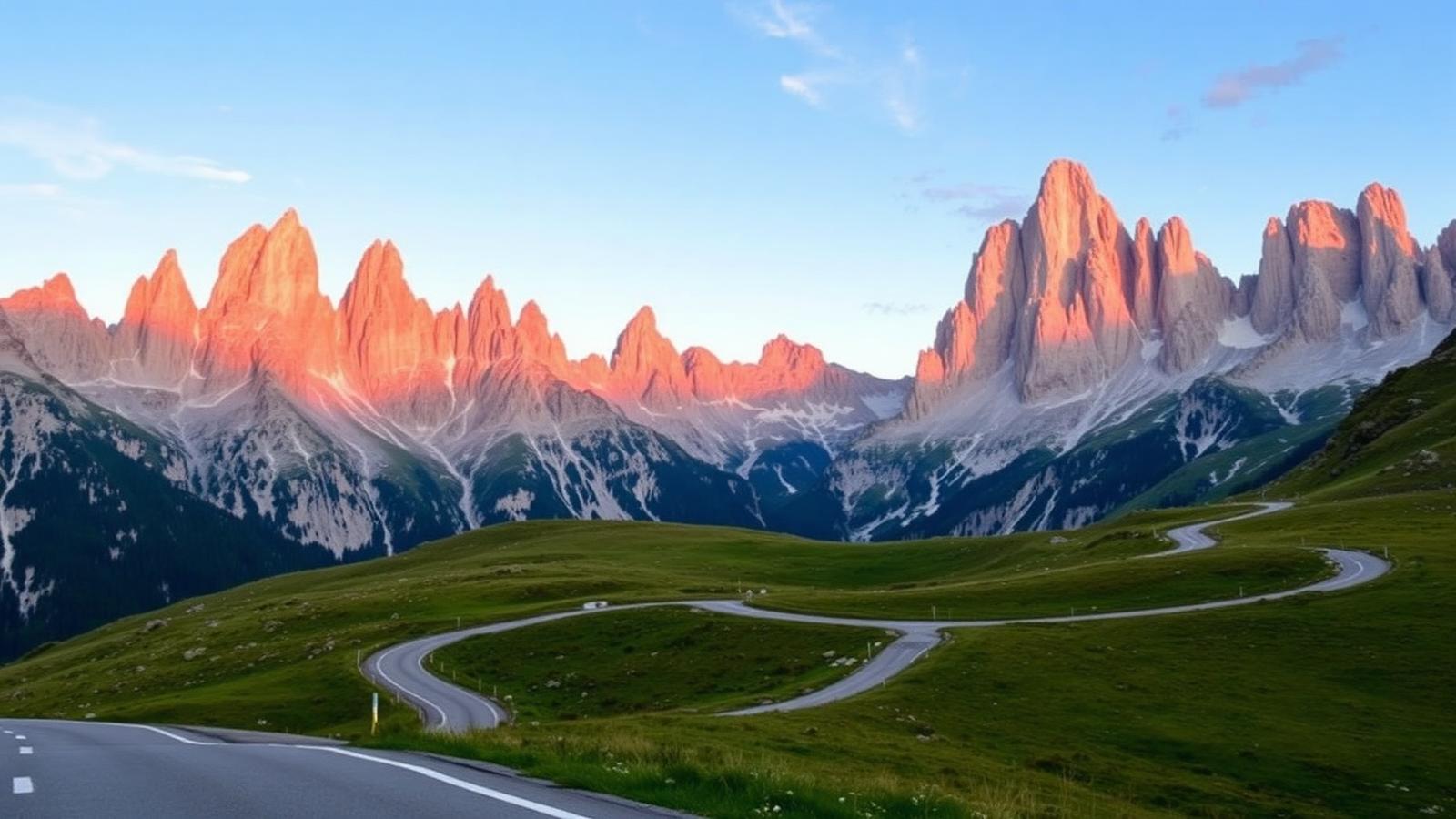
The iconic Dolomites gran fondo — seven passes, closed roads and pale-limestone alpenglow.
Build Your Personalized Race Fueling Plan — $19The Maratona dles Dolomites is Italy's most iconic gran fondo, held every summer in the Alta Badia region of the Dolomites. Its long route (86 mi) crosses seven mountain passes on fully closed roads, drawing tens of thousands of applicants for a limited field. Sustained climbing, exposure and cool morning starts define the fueling problem.
Distance
≈ 55 / 106 / 86 mi depending on route
Elevation
≈ 1,780 / 3,090 / 13,880 ft of climbing
Typical duration
4 – 10 hours depending on route
Location
Alta Badia, Dolomites, Italy
Time of year
Early July
Terrain
Paved Dolomite passes, sustained climbs and long descents
A practical race-week checklist: carbs, hydration, sodium, caffeine and race-day supplies — print it or keep it on your phone.
Passes like Passo Giau and Passo Pordoi hold riders at 45–75 minute steady efforts where appetite is blunted.
Dolomite starts can be near 41–50 °F, suppressing thirst and fueling in the first crucial hour.
Multiple passes exceed 6,560 ft. Reduced oxygen slows gastric emptying and increases perceived effort.
The full-closure format and huge field can pull riders above their sustainable pace early.
Aid points are typically 16–25 mi apart; plan bottle capacity for one long climb between stops.
General, evidence-based guidance. Numbers should always be personalized to sweat rate, body mass, fitness and weather.
70–100 g/hr of mixed-source carbohydrate for most trained road riders, biased toward liquid and gel to sustain intake through sustained climbing.
17–34 fl oz/hr adjusted for temperature. Cool-morning under-drinking is a classic Maratona mistake.
500–1000 mg/L of fluid, tuned to sweat testing. Long climbs can drive sodium losses higher than temperature suggests.
3–6 mg/kg body mass split across pre-start and the base of the biggest late-race climb.
Bottle swap first, calorie top-up second. Rehearse a 60–90 second stop in training.
1–4 g/kg carbohydrate 2–4 hours pre-start, from familiar low-fiber, low-fat foods.
Fuel by the clock. Group-ride adrenaline and cool morning air suppress hunger; structure protects intake.
1.0–1.2 g/kg carbohydrate plus 0.3 g/kg protein within 60 minutes, and 150% fluid replacement.
Passo Campolongo and Pordoi in the first hour reward riders who arrived with a full tank.
Alpine morning air suppresses thirst. Sweat losses on the climbs are already meaningful.
Passes above 6,560 ft slow gastric emptying. Pushing sea-level volumes late often triggers nausea.
Cold descents from Giau or Pordoi burn glycogen and suppress fueling. Layer up at the top.
Race-day nerves plus a new gel is a classic recipe for GI failure. Race what you have trained.
The final Passo Falzarego / Valparola / Giau block is where under-fueled riders lose most time.
Two riders on the same start line can need very different fueling. FTP, target finish time, body mass, sweat rate, temperature, altitude adaptation, nutrition products and race goals all change the answer. A generic 60 g/hr recommendation is a starting point, not a plan.
Free calculators, checklists and articles to help you personalize your Maratona plan.
A practical race-week checklist: carbs, hydration, sodium, caffeine and race-day supplies — print it or keep it on your phone.
Every athlete is different. FTP, finish time, body weight, sweat rate, weather, nutrition preferences and race goals all change what you should eat and drink.
FuelQ Pro builds a personalized race fueling strategy tuned to your ride — carbohydrate, hydration, sodium, caffeine and recovery, mapped to the course.
A Race Fueling Plan gives you a personalized strategy for this event. The free checklist helps you prepare the basics first: race-week setup, 48-hour prep, race morning, hydration, sodium, caffeine, aid stations, and backup calories.
Sölden, Ötztal Valley, Tyrol, Austria (start/finish at Freizeit Arena Sölden)

Bento Gonçalves, Rio Grande do Sul, Brazil (Serra Gaúcha wine country, ~120 km northeast of Porto Alegre)

Campos do Jordão, São Paulo, Brazil (Serra da Mantiqueira, ~1,600 m / 5,250 ft altitude)