First Road Race Mistakes: 7 Errors and Fixes
Gabriel Ricce
Lamorinda MBO Racing · USA Cycling Coach Level 3
First-time mistakes in road races usually aren't fitness problems — they're pacing, warm-up, fueling, hydration, gear, race-craft, and logistics problems. Fix these seven and you'll show up ready, spend fewer watts on avoidable errors, and arrive at the finale with matches left.
What first-timers get wrong in road races (and how to fix it)
Starting too fast: Adrenaline spikes effort in the first mile, burning glycogen early. Fix it by locking into a pace you can hold in the final third. Use a pacing band or watch alert and let packs go in the opening minutes.
Skipping warm-up: Cold legs waste the first mile. Do 8–12 minutes easy jog plus 4 short strides to raise heart rate and prime mechanics. For a more detailed approach, check out this warm-up routine.
Neglecting hydration and fueling: Going in "dry" or relying on one sip mid-race leads to fade and cramps. Arrive topped up: drink steadily the day before, a modest electrolyte drink 2–3 hours pre-start, and small sips at aid stations. For races ≥10K, consider a small carb gel around halfway if practiced. To create a personalized plan, use a hydration calculator.
New gear on race day: Unbroken shoes, different socks, or a fresh top cause blisters and chafing. Wear only what you've tested in training, including socks and anti-chafe.
Overthinking tangents and gadgets: Constant watch-checking and weaving adds stress and distance. Glance at splits, run relaxed lines when safe, and focus on effort cues — steady breathing, quick ground contact.
For a personalized race hydration and fueling plan, calculate your needs before race week.
Free: the Race Fueling Checklist
Turn this into a race-week plan: carbs, fluids, sodium, caffeine and aid-station prep in one free PDF you can print or keep on your phone.
Mistake #1: Fighting the wind and the pack
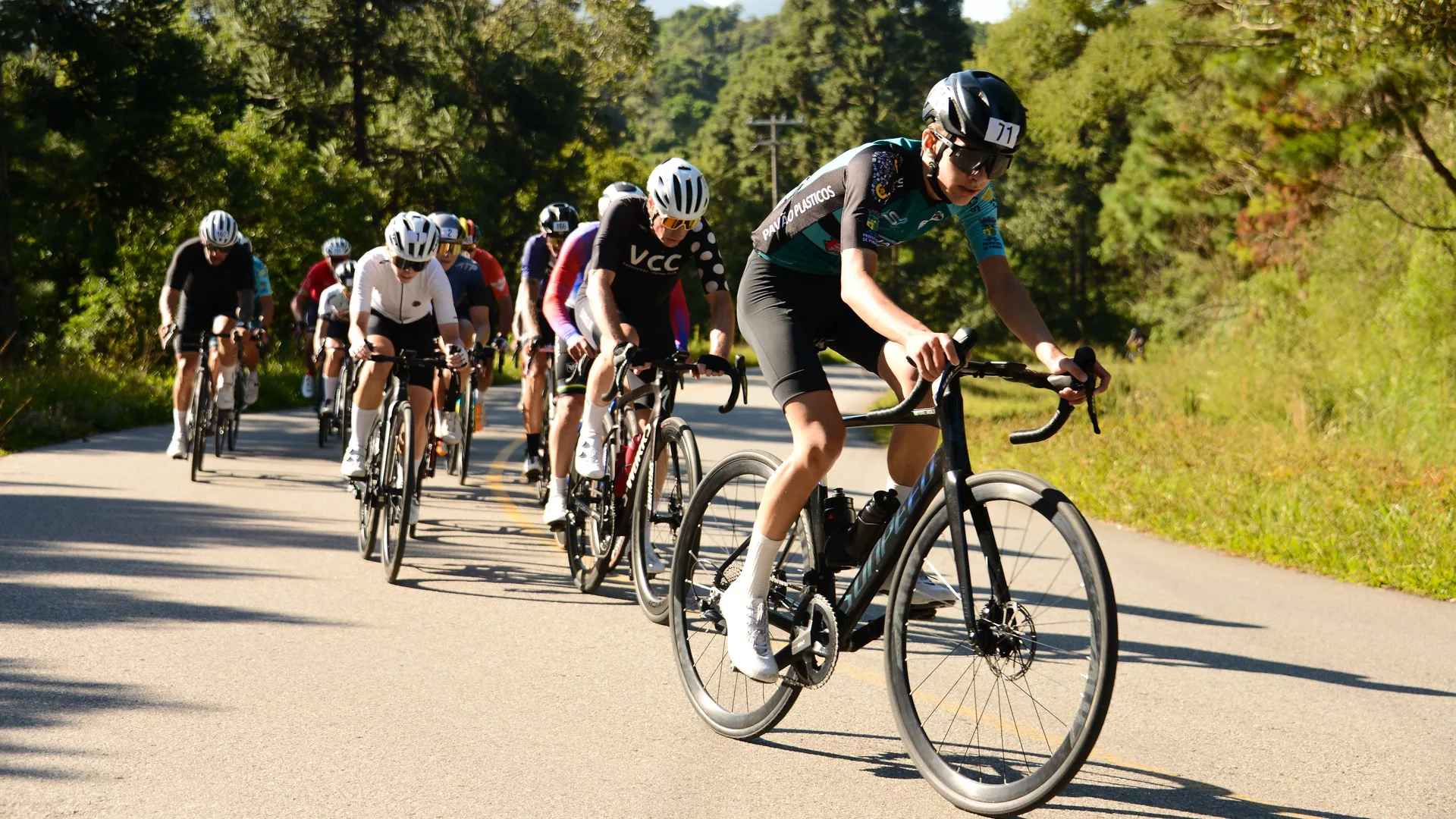
New racers often ride in the wind like it's a solo time trial. The cost is huge: every minute spent on the front drains energy you'll need for surges, climbs, and the finish. In a pack, air resistance is your biggest enemy — drafting can cut the effort dramatically. If you're always in the wind, you're paying everyone else's bill.
Position with intent. Aim to sit 10–20 riders back, near the front third — not boxed in, not tail-gunning. Too far forward and you become the default workhorse; too far back and you yo-yo through corners and burn matches re-accelerating. Hold your line, keep elbows soft, and look two or three wheels ahead so you can anticipate speed changes without braking hard.
Use wheels, not hero pulls. Take short, steady turns if the group is rotating, then peel off smoothly. If the pace is choppy, skip a turn rather than spiking your power. Wind direction matters: on crosswinds, the shelter sits diagonally behind the rider ahead. Slide to the protected side and overlap slightly (safely) so you're not sitting in turbulent air.
Corner smart to save matches. Enter near the front third, carry speed, and pedal out smoothly to avoid sprinting back onto the wheel. If gaps open, close them early and calmly — one or two strong but controlled seconds beats a panicked 10-second chase.
Manage nerves and space. Keep light pressure on the pedals, relax your grip, and breathe. Drifting in the draft is normal; fighting it wastes energy and makes your line unpredictable. Communicate: point out hazards, call "slowing," and avoid sudden moves.
Your goal isn't to prove strength — it's to spend the least to stay in the best position. Save your matches. Let the wind work on someone else until it's time to race for real.
Mistake #2: Blowing up early
Adrenaline at the start line is real. The problem: if you ride the surge, you burn your matches in the first third and spend the rest of the race in survival mode. Pacing errors compound, especially on rolling courses and in groups.
How it happens:
- You chase the fastest wheel out of the gate.
- You ignore your plan and ride by feel when the pack surges.
- You hammer every rise and close every gap solo.
How to avoid it:
- Set a ceiling. Know your sustainable power/effort (e.g., your all-day pace, a tempo/threshold cap, or RPE you can speak short sentences at). Early miles should feel almost too easy.
- Draft with intent. Sit in, save watts, and move up gradually on the sheltered side. If you're not racing for primes, don't contest them.
- Smooth the rollers. Maintain momentum over the crest and accelerate on the downhill — not halfway up where cost is highest.
- Choose your efforts. Spend for positioning before key sections (narrowings, climbs, crosswinds), not randomly.
- Use micro-checks. Every 5–10 minutes: breathing calm? Cadence steady? Can you back off 2–3% and still hold wheels?
If you do overcook it:
- Reset for two minutes: soft-pedal, deep nasal exhales, drink, and eat something simple if it's time.
- Find shelter. Slip back one or two wheels rather than drifting to the wind.
- Commit to the next wheel, not the next group. Stabilize before you bridge anything.
Remember: road races reward energy management, not hero moves in mile one. The goal is to arrive at the final selection with matches left. Start controlled, protect your position efficiently, and save your hardest efforts for decisive moments — not the neutral rollout. For more on pacing and energy management, see this fueling strategy.
Mistake #3: Under-fueling and poor hydration
You can train perfectly and still blow race day if you start under-fueled or mismanage fluids. Two common errors drive this: arriving at the start line with low glycogen, and taking in either too little or too much fluid and sodium once the gun goes off.
In the 24–48 hours before the race, shift to carb-focused meals you tolerate well, keep fiber and fat moderate, and salt food modestly — especially in warm conditions. Race morning, aim for a familiar, low-fiber, carb-rich breakfast 2–3 hours pre-start (for many, 1–4 g carbs/kg body weight is a workable range). Top off with a small carb snack or gel 10–15 minutes before the start if that fits your routine.
During the race, think carbs per hour, not gels-per-aid-station. For events over ~60–75 minutes, most athletes perform well with roughly 30–60 g carbs per hour, and experienced athletes may push higher when gut-trained. Pair fluids to thirst and conditions; hotter, more humid, and wind-sheltered courses push sweat rates up. Use sodium to replace what you're losing, not to chase a fixed number. Signs you're off plan include sloshing stomach, cramping, dizziness, hand swelling, or an urgent need for bathrooms.
Practice everything in training: your pre-race meal timing, gel flavors, drink mix concentration, and how your stomach tolerates taking fuel on climbs, at race pace, and under heat stress. Log outcomes so you can adjust. Bring redundancy — an extra gel, a small salt option, and a plan if you miss an aid station.
On course, keep decisions simple. Start sipping early, target steady intake, and use clocks or course markers to cue fueling rather than "how you feel." If the day turns hotter than expected, slow slightly, increase fluids and sodium modestly, and protect your gut by spacing sips.
Want a precise plan? FuelQ Pro builds personalized hydration and fueling strategies from your training, sweat patterns, and race profile so you can execute with confidence on race day. Try the hydration calculator to personalize your approach.
| Duration | Carbs/hour | Fluids/hour | Sodium/hour |
|---|---|---|---|
| < 60 min | Optional | 350–470 ml | Low priority |
| 60–120 min | 30–60 g | 470–650 ml | 300–500 mg |
| 2–3 h | 60–90 g | 590–830 ml | 400–700 mg |
| 3 h+ or heat | 70–90 g | 700–950 ml | 500–1,000 mg |
Mistake #4: Equipment and setup errors
Nothing derails a first race faster than gear issues you could've fixed at home. The biggest culprit: new shoes or last-minute changes. Break in race shoes over several easy runs, confirm they're laced how you like, and lock in your sock choice to prevent hot spots.
Dial the basics the night before. Pin your bib where it won't fold or chafe (front, flat, and visible). Pack throwaway layers if it's chilly at the start, and stash sunscreen, anti-chafe, and a small safety pin or two. If you're using a watch, fully charge it, turn off unnecessary sensors you won't use, and pre-load the race profile or auto-lap to match mile markers.
Hydration and fuel carry: test belts, vests, or handhelds during training. Bounce or rub is amplified on race day. If you rely on gels, confirm pocket access and practice opening them at pace. Pre-open tops slightly if that helps, but avoid sticky leaks.
Headphones and phone: verify allowed race rules. Pair devices, download your playlist offline, and set Do Not Disturb so notifications don't hijack your watch or music. Safety first: keep volume low enough to hear officials and runners.
Socks, layers, and weather: check the forecast and decide your start outfit with a 10–15°F "feels warmer when running" adjustment. Avoid cotton. If rain is likely, apply anti-chafe, choose grippy tread, and pack a dry top for the finish.
Finally, do a 60-second start corral check: laces secure, watch GPS locked, bib visible, gels accessible, headphones set, and any straps snug. Calm, quick, and no surprises. For a comprehensive race-day checklist, review your setup the night before.
Mistake #5: Ignoring rules and race craft
Blowing past the basics — centerline rules, yellow-line penalties, no-draft zones, or feed-zone etiquette — can wreck a debut race faster than fatigue. Read the race guide and start-line briefing like it's part of your warm-up. Know where neutral support sits, how penalties are issued, and what officials actually enforce on the day. If there's a wave start, seed yourself honestly; if there's a rolling neutral, don't sprint it. You can't win the race in the neutral, but you can sure get disqualified.
Race craft is the quiet edge. Hold your line, especially through corners and descents. Communicate: call "on your left," point out hazards, and avoid panic braking. Drafting is legal in road races — use it. Sit a few riders back to conserve energy, but never half-wheel the rider next to you, and don't surge unpredictably. In crosswinds, rotate smoothly; in tight packs, elbows in, eyes up, and keep your hands near the brakes.
Feed zones and aid stations are choreography. Move to the designated side early, hand signal, grab cleanly, and exit without swerving across wheels. If you drop a bottle, don't stop in the lane — clear it or leave it.
Finally, finish like a pro. Know where the sprint opens, respect barriers, and keep your line to the tape. After the line, keep rolling and communicate before pulling off. The athletes who respect rules and practice craft waste fewer watts, avoid chaos, and turn fitness into results.
Mistake #6: No plan for the finale
A lot of first-time racers treat the finish like it will sort itself out. It won't. The finale starts long before the final kilometer — how you position, fuel, and decide when to go all shape your result.
Know the course. Where does the road narrow? Where are the last turns, rollers, or crosswinds? Mark 5K, 2K, 1K, and 200 m to go on your head unit or cue card. If there's a late climb, decide whether you're following wheels or launching early. If it's flat, identify wind direction and which side of the road offers shelter.
Build a position plan. With 10K to go: move into the top 20, out of the wind. With 5K: top 10–15, avoid the gutters. With 2K: top 5–10, glued to a reliable wheel. With 500 m: commit to one line; no surfing across the road.
Decide your winning move. Are you a sprinter, rouleur, or puncher?
- Sprinter: hold wheels, launch from 2–3 back at 150–200 m.
- Rouleur: attack between 2–4K to go, hold threshold-plus to deny organization.
- Puncher: light it up on the final rise and go all-in over the top.
Fuel for the kick. Don't miss your last carb hit: take a small gel or sip between 10–20 minutes before the finish, and a final rinse if safe. Dry mouth? A quick water rinse can help perceived effort.
Have a bailout. If boxed in, brake lightly, slip back one wheel, and re-accelerate into a cleaner lane. If legs cramp, shift, stand briefly, and reset cadence — then commit to the best wheel you can hold. For more on fueling for the finale, see this fueling strategy.
Mistake #7: Botched logistics and mindset
Great training can't rescue a race day derailed by sloppy planning or a panicked headspace. Logistics and mindset are performance multipliers — treat them like part of your training.
Lock the basics early. Know bib pickup windows, start time, corral location, bag drop, porta-potty availability, and cutoff times. Save the race email with maps and road-closure notes. Set two alarms and plan your transport with a buffer (aim to arrive 60–75 minutes before the gun). Lay out kit, pin your bib, and pack extras: socks, safety pins, throwaway layer, gels, bottle, chafe lube, tissues. Eat your practiced pre-race meal on schedule — no new foods.
Warm-up with intent. For 5K–10K: 10–15 minutes easy jog + 4–6 strides + drills. For half marathon: 5–10 minutes easy jog + 3–4 strides; conserve energy. Marathon: prioritize gentle mobility, a short shuffle, and getting into the corral calm and fueled. Hit the restroom early, then again if you can. For more guidance, see this warm-up routine.
Pacing and position. Seed yourself honestly; starting too far forward invites surging, too far back causes weaving. First mile should feel controlled. Lock onto effort, not adrenaline.
Mindset matters. Expect crowds, minor delays, and imperfect weather. Decide in advance how you'll respond: slow your first kilometer if boxed in; reset after a bad split; fuel on the next marker if you miss one. Use a simple mantra ("Tall, calm, quick feet") and break the race into chunks: to 5K, to halfway, to last 3 miles. Focus on process goals — form, breathing, fueling — over the clock until the final stretch.
Post-finish plan. Move, sip fluids, grab carbs and protein, and have a meetup spot. Logistics done right gives your training room to show up.
Race-day checklist for first-timers
- Gear laid out the night before: bib pinned or belt ready, charged watch, socks you've trained in, shoes double-knotted, hat/sunglasses, throwaway layer if it's cold.
- Nutrition and hydration: familiar breakfast planned with timing (2–3 hours pre-start), gels/chews you've practiced with, electrolyte plan and bottle placement. Avoid trying anything new.
- Timing and logistics: confirm start time, corral, and route to the start. Set alarms, transit/parking plan, bag-drop window, and bathroom stop buffer.
- Warm-up script: 5–10 minutes easy jog or brisk walk, mobility for hips/ankles, a few short strides. Finish 5–10 minutes before the gun so you don't cool down.
- Pacing cues: first mile conservative, settle into goal effort, avoid surging on early downhills. Lock cadence, check splits sparingly, run your plan — not the crowd.
- Safety and comfort: anti-chafe on hotspots, bandaids/tape as needed, weather-appropriate layers, sunscreen, and any medical info/ID.
- Mindset prompts: one focus for start (relax shoulders), one for mid-race (steady breath), one for late race (form tall, drive knees). Control what you can.
- Post-finish plan: meet point with supporters, dry layer, sip fluids, easy snack you tolerate, gentle walk, and transport home.
Pro tip: Pack a small zip bag with bib clips, safety pins, anti-chafe, tape, gels, and a permanent marker — your mini race kit. For a full race-day checklist, review before race morning.
Next steps and resources
- Debrief your race within 48 hours: note pacing errors, nutrition, hydration, gear, and execution wins/misses. Turn each into one actionable tweak for your next event.
- Rebuild your baseline: one easy recovery week, then resume structured training with goal-pace segments and controlled starts (negative-split workouts help).
- Practice fueling and hydration on long runs and race-pace sessions. Simulate aid-station timing and test gels/drinks you plan to use. For more on fueling, see this fueling strategy.
- Calibrate effort: use recent race data to update threshold pace/HR and adjust workouts accordingly.
- Study the course: elevation, turns, wind exposure, and aid layout. Prepare pacing by segment, not average pace alone.
Resources:
- Local run club or coach for accountability and pacing feedback.
- Race organizer's athlete guide and course maps.
- FuelQ Pro: Smart Hydration and Race Fueling Plan to dial in fluids, sodium, and carbs for your next race.
Frequently asked questions
What should I eat before my first road race?
Aim for a familiar, carb-focused meal 2–3 hours prior (e.g., oatmeal with banana or toast with nut butter). Keep fiber, fat, and spice lower to reduce GI risk. Practice this in training.
How early should I arrive on race day?
Plan to be on-site 60–90 minutes before start. This covers bib pickup, restrooms, warm-up, and corrals without rushing.
Do I need a warm-up for a 5K or 10K?
Yes. 10–15 minutes easy jog plus 4–6 short strides preps your legs and opens breathing. For half and full marathons, keep it lighter (easy jog + dynamic drills).
How much should I drink?
Start the race hydrated. Sip 300–500 ml in the 2 hours before, then drink to thirst at aid stations. Avoid overdrinking. Practice your plan during training runs.
Should I try new gels or shoes on race day?
No. Nothing new. Use fueling, shoes, and socks you've tested on long or faster sessions.
How do I set a realistic pace?
Use recent training or tune-up race data. Start controlled for the first third, settle into goal pace, and leave room to finish strong. Avoid surging early.
What if I feel side stitches or cramps?
Slow slightly, exhale forcefully as the foot opposite the stitch lands, and relax the torso. For cramps, ease pace, take fluids/electrolytes you've practiced.
How do I handle post-finish recovery?
Keep moving 5–10 minutes, rehydrate, and eat a carb-protein snack within 30–60 minutes. Gentle mobility later in the day helps.
Is this article about road running or road cycling?
This guide blends first-race mistakes that apply to both road running and road cycling. Some sections lean cyclist (drafting, pack tactics, crosswinds), others lean runner (aid stations, stride mechanics, corrals). Use the parts that map to your discipline.
Turn this strategy into a real plan.
FuelQ Pro builds personalized fueling for your training weeks, long sessions and races — plan, execute, review, improve.