Carbohydrate strategy
60–90 g/hr of mixed carbohydrate for most riders. Because aid is spaced, plan calorie density carefully — every bottle needs to earn its place.
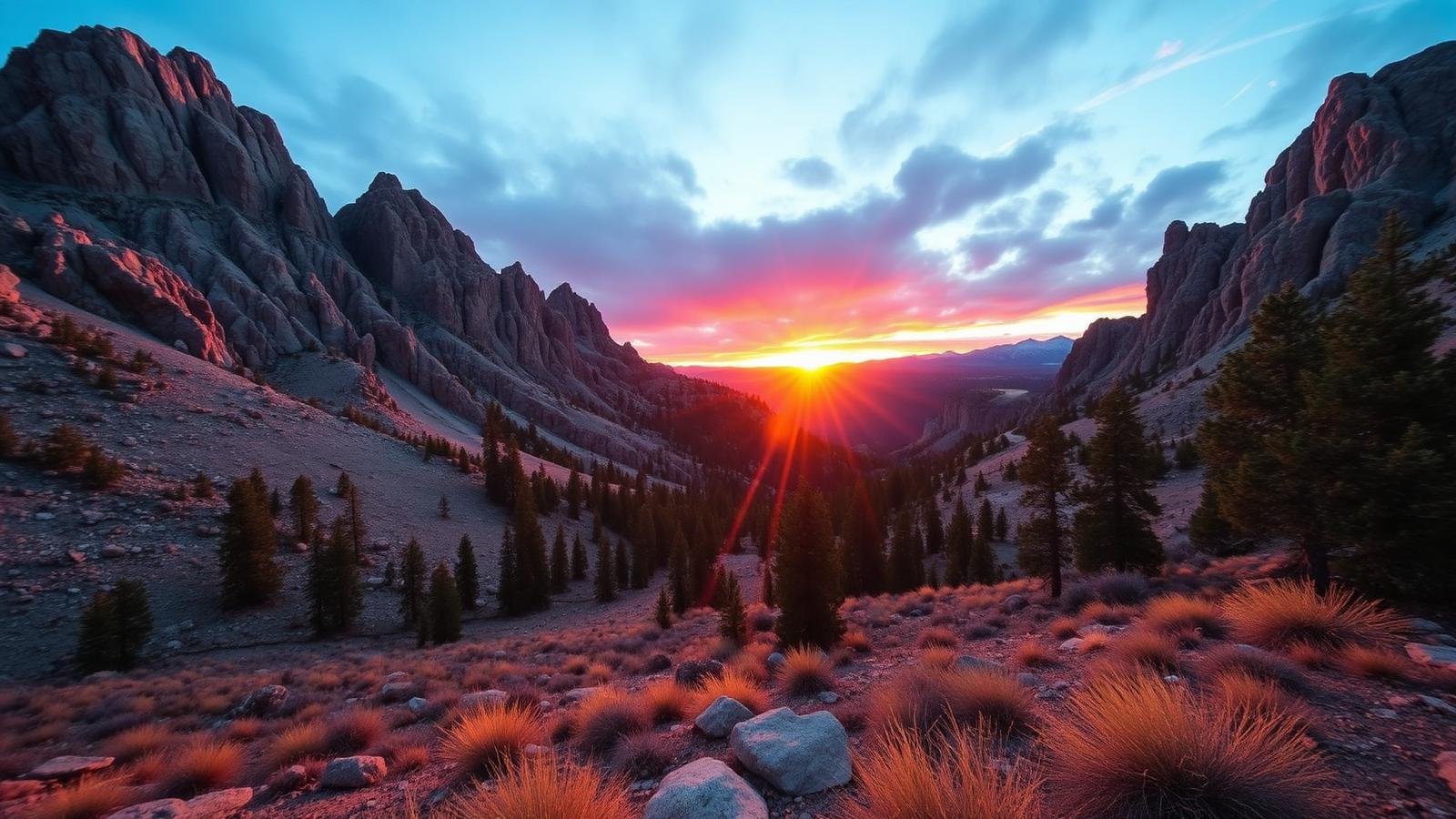
2026 UCI Gravel World Championship qualifier — a high-altitude Eastern Sierra gravel race across volcanic tuff, pumice and pine forest.
Build Your Personalized Race Fueling Plan — $19Mammoth TUFF is a self-supported gravel race in Mammoth Lakes, California, and an official UCI Gravel World Series qualifier for the 2026 UCI Gravel World Championships. Run over volcanic tuff and pumice roads at 7,000–9,000 ft, it combines altitude, remote terrain and long time-on-course, with UCI Age Group qualification on the line: top 3 in each official category and top 25% of each official category earn a qualification slot for the UCI Gravel World Championships.
Distance
TUFFEST 85–100 mi / 85–99 mi (Elite & 19–49) · TUFFER 60–75 mi / 60–75 mi (50–84) · Stout ~62 mi / 62 mi · Mini ~40 mi / 40 mi
Elevation
≈ 8,000 ft of climbing on the full TUFFEST route
Typical duration
7 – 11 hours for most amateur TUFFEST finishers
Location
Mammoth Lakes, California, USA
Time of year
Mid-September
Terrain
Volcanic tuff, pumice, forest gravel and short paved sections
The official Mammoth TUFF course, elevation profile, and route reference. Use this to plan your pacing, aid-station strategy, and fueling touchpoints.
Mammoth TUFF 2025 — RideWithGPS route
Open in RideWithGPSRoute year
2025
Highest point
≈ 9,000 ft (2,740 m)
Lowest point
≈ 7,000 ft (2,130 m)
Course change notice
This is the 2025 Mammoth TUFF route. Course details, aid stations and access rules may change year to year. Confirm the latest official route on the Mammoth TUFF website and current-year Athlete Guide before race day. The route link opens the RideWithGPS reference for planning only.Get a practical planning document with the course breakdown, aid-station strategy, fueling and hydration worksheets, race-morning timeline, equipment checklist, crew notes, and space for your own plan.
Sustained riding at 7,000–9,000 ft reduces oxygen availability and blunts appetite. Fueling discipline matters more than raw fitness.
Volcanic tuff and pumice dramatically increase rolling resistance. Expected power for a given speed is 15–25% higher than smooth gravel.
Mid-September in Mammoth Lakes swings from 32–42 °F at the 7 AM start to daytime highs commonly 68–80 °F, with recent seasons trending warmer — mid-80s °F (high 20s °C) is realistic during Eastern Sierra heat events. Riders need both cold-weather layering for the first hour and a real heat-management plan for the exposed midday sections.
Long gaps between aid mean bottle capacity and self-sufficiency, not just fueling rate, determine outcomes.
Humidity is typically 10–25%, so sweat evaporates on contact and riders 'don't feel hot' while sweat rates run high. Combined with mid-70s to mid-80s °F (75–86 °F) afternoons and altitude-elevated respiratory water loss, actual hydration needs are 20–40% higher than a sea-level ride at the same air temperature. Sweat-rate-based hydration and pre-race sodium loading matter more here than in humid gravel races.
Monsoonal moisture pushing into the Eastern Sierra can bring afternoon thunderstorms — dry lightning, brief hail or cold rain are all possible above 8,000 ft. Storm risk peaks between 1 and 5 PM, exactly when mid- and back-of-pack riders are on the exposed upper course.
A tactical breakdown of the Mammoth TUFF course. Use this to plan pacing, fueling touchpoints and where to conserve versus commit.
| Segment | Mile | Elevation | Note |
|---|---|---|---|
| Village start → Inyo Craters | 0 – 12 | ≈ 500 ft rolling | Neutral rollout out of the Village. Ride the wheel in front of you — do not chase the front group. Settle heart rate before the first climb.Surface: Pavement then packed dirt |
| Inyo Craters → Deadman Pass area | 12 – 30 | ≈ 2,000 ft gain | First real climbing at altitude. Cap effort at high Zone 2 HR. Loose pumice punishes hard efforts — spin, don't stomp.Surface: Forest dirt, pumice sections |
| Deadman → Bald Mountain / Aid 1 area | 30 – 55 | Rolling with sustained climbs | The heart of the volcanic tuff sections. Rolling resistance is highest here. Force calories at aid, top off both bottles even if not empty.Surface: Volcanic tuff, doubletrack |
| Mid-course rolling gravel | 55 – 80 | Rolling, net downhill | The fastest section. Riders under-fuel here because it feels easy — hold the 15-min alarm and eat regardless.Surface: Forest gravel, occasional pavement |
| Final climb back to Mammoth | 80 – 95 | ≈ 1,800 ft gain | The decisive climb. Under-fueled riders unravel between mile 75 and 90. Take your final caffeine dose at the base.Surface: Dirt road, some pumice |
| Descent → Village finish | 95 – 105 | Net descent | Recover, sip fluids, ride within your skills. The finish festival is on the Village plaza.Surface: Dirt then pavement |
Every aid station along the Mammoth TUFF course, with crew access, drop-bag rules and the fueling action to execute at each stop.
Neutral aid: water, electrolyte, basic snacks. Swap one bottle, take one gel, keep moving. You are still fresh.
The most important stop. Refill both bottles, top up carbs for the next 25 miles, take second caffeine dose, remove morning layers.
Force one full bottle and 60 g of carbs here even if you feel fine. This is where the race is won or lost.
Recovery drink within 30 minutes, real meal within 60. Compression, shade, and elevated legs at the festival.
General, evidence-based guidance. Numbers should always be personalized to sweat rate, body mass, fitness and weather.
60–90 g/hr of mixed carbohydrate for most riders. Because aid is spaced, plan calorie density carefully — every bottle needs to earn its place.
17–34 fl oz/hr baseline, adjusted for altitude and heat. Carry more than you think you need between aid points.
400–1000 mg/L of fluid, personalized to sweat testing. Riders with white salt streaks on kit almost always sit at the higher end.
3–6 mg/kg split across the race, with the largest dose held for the second half where mental fatigue costs the most watts.
Plan calories in and out of every aid: swap bottles first, eat second, and never linger. Rehearse this in training.
1–4 g/kg carbohydrate 2–4 hours pre-start, low fiber and low fat. Familiar foods only.
Set a 15- or 20-minute alarm. Fuel on schedule regardless of terrain, appetite or how the ride 'feels'.
1.0–1.2 g/kg carbohydrate plus 0.3 g/kg protein within 60 minutes; replace 150% of body-mass losses in fluid.
A structured 48–72 hour carbohydrate-loading protocol tuned for a long day at altitude. Rehearse it before a training block, not for the first time on race week.
Target 8–10 g/kg body mass per day of carbohydrate from familiar low-fiber sources: rice, pasta, potato, bread, sports drinks, honey. A 154 lb rider aims for 560–700 g CHO/day. Reduce fat and fiber to protect the gut on race morning.
Keep protein moderate (1.2–1.6 g/kg/day). Reduce fat to ~0.5–0.8 g/kg/day. This is not the week for heavy dressings or big cheese boards — they slow gastric emptying and displace glycogen.
Drink to pale-yellow urine, add 500–1000 mg sodium per liter of fluid on the two days before the race. Plasma volume expansion supports thermoregulation at altitude.
1–4 g/kg CHO 2–4 hours before the gun, from foods rehearsed in training. Oatmeal + banana + honey, bagel + jam, or a rice bowl are proven. Avoid anything new, greasy or high-fiber.
Doubling normal calories (you should mostly displace fat, not add on top), eating unfamiliar foods, over-drinking without sodium, or skipping carb load because 'you feel heavy'. Rehearse the protocol on a long-ride weekend beforehand.
Aid-station splits for the two headline finish goals at Mammoth TUFF: the Big Buckle (sub-9) and the Silver Buckle (sub-12). Use as planning anchors, not as commitments — weather, altitude adaptation and pack dynamics all shift real splits.
| Checkpoint | Sub-9 (Big Buckle) | Sub-12 (Silver Buckle) |
|---|---|---|
| Aid 1 ≈ mile 30 | 2h 05min – 2h 20min | 2h 45min – 3h 15min |
| Aid 2 ≈ mile 55 | 3h 50min – 4h 15min | 5h 00min – 5h 45min |
| Aid 3 ≈ mile 80 | 5h 40min – 6h 15min | 7h 20min – 8h 30min |
| Finish (105 miles) | ≤ 9h 00min (strong finish) | ≤ 12h 00min (target for most amateurs) |
Ride 10–15% below the effort you feel capable of. Cap at high Zone 2 HR or ~75% of altitude-adjusted FTP. Everyone starts too hard.
Steady tempo. If a group surges, let them go — you will see most of them again in the last 25 miles.
Target 75–82% of altitude-adjusted FTP. Expect power to drop 5–10% for the same perceived effort at 8,000+ ft — that is normal.
Ride within your skills. A crash or flat costs 5–20 minutes; 30 seconds saved through a rutted turn does not.
Evidence-based prevention and safety guidance for Mammoth TUFF. Not medical advice — discuss altitude medications and pre-existing conditions with a qualified physician.
Acute Mountain Sickness presents as headache, nausea, fatigue, disturbed sleep and loss of appetite above 8,000 ft. Most riders experience mild symptoms in the first 48 hours in Mammoth. Severe symptoms — confusion, ataxia, breathlessness at rest — require immediate descent and medical care.
Two evidence-based strategies work: arrive 7–14 days early and let your body adapt, OR arrive within 24 hours of the start so the acute response has not yet peaked. The 3–7 day window is the worst — you are past the honeymoon and not yet adapted.
Dry, thin air doubles insensible fluid loss. Drink 101–135 fl oz per day of race week with sodium, and avoid alcohol entirely for the final 72 hours. Alcohol worsens sleep, dehydrates, and slows adaptation.
A prescription carbonic-anhydrase inhibitor that speeds acclimatization. Typical protocol: 125 mg twice daily starting 24 hours before ascent and continuing 2–3 days at altitude. Discuss with a physician; side effects include tingling extremities and altered taste. Not a substitute for time at altitude.
Low ferritin (<40 ng/mL) blunts the altitude erythropoietic response. Test 10–12 weeks out so there is time to correct with diet or supplementation.
Ataxia, confusion, or breathlessness at rest are red-flag symptoms for HAPE/HACE. Descend immediately and seek medical evaluation. A finish is not worth pulmonary or cerebral edema.
A modern gravel bike with clearance for 45–50 mm tires is the fastest choice for most riders. Hardtail MTBs with fast-rolling tires work well for less confident descenders at a small speed cost on the smoother sections.
42–47 mm tubeless gravel tires with a reinforced casing and semi-aggressive tread. Volcanic pumice chews thin sidewalls — do not race with a lightweight casing you haven't tested.
Starting point for a 154–176 lb rider on 25 mm internal rims: 24–28 psi front, 26–30 psi rear. Add 1–2 psi for heavier riders. Test at altitude in training — the same setup feels different at 8,000 ft.
1x with a 38–42t chainring and a 10–46t or 10–52t cassette gives most riders a bail-out for the final climb. 2x drivetrains work but add weight and a shifting decision late in the race.
Two large bottle cages plus a 51–68 fl oz hydration pack is the common setup for the full TUFF. Bottles alone leave you exposed between aid stations.
Minimum: 2× CO2 + inflator, tire plug kit, mini pump, tubeless-ready spare tube, tire lever, chain quick link, multi-tool with chain breaker, spare derailleur hanger. Volcanic dust destroys drivetrains — pack chain lube for a mid-race top-up on very dry years.
Build to 10–14 hours per week for 8–12 weeks before race week, with the final long ride 3 weeks out and a proper 2-week taper.
Progress long rides toward 5–6 hours with 5,000–8,000 ft of climbing on gravel or dirt. In the final 6 weeks, do at least two rides at moderate altitude if possible.
Best case: 7–14 days in Mammoth or similar altitude before the race. Alternatives: an altitude tent, a training camp 4–6 weeks out, or arriving within 24 hours of the start.
Weekly threshold intervals (2× 20 min or 4× 10 min at 90–100% FTP) and one VO₂ block (5–6× 3 min) for 6–8 weeks. Aerobic depth is what makes altitude survivable.
Every long ride is a fueling rehearsal. Hit 60–90 g/hr on 4-hour rides and 90–120 g/hr on your longest rides to train the gut.
10–14 heat sessions late in the build expand plasma volume, which helps at altitude. Test ferritin 10–12 weeks out — below ~40 ng/mL blunts altitude adaptation.
| T-4 h (≈ 3:00 AM) | Wake, coffee, first breakfast (1–2 g/kg CHO): oatmeal, banana, honey. Hydrate 17 fl oz with sodium. |
|---|---|
| T-2 h (≈ 5:00 AM) | Second small feed (~50 g CHO) — bagel, jam, sports drink. Chamois cream, sunscreen, kit on. |
| T-90 min | Bike check — pressure, brakes, computer, bottles in car. Layer up for 35 °F start. |
| T-45 min | Ride to start or short spin. Sip 7–10 fl oz of sports drink. Restroom. |
| T-20 min | In corral. First caffeine dose (100–200 mg). Final layering call. |
| T-5 min | Half a gel. Breathe. Confirm HR/power start plan with yourself. |
| T+0 | Gun. Neutral rollout — ride patiently to the first climb. |
Every entry route into the Mammoth TUFF, from the annual lottery to qualifier races, coaching-program slots and charity entries.
Mammoth TUFF is an official UCI Gravel World Series qualifier for the 2026 UCI Gravel World Championships. Qualification slots are awarded to riders finishing in the top 3 of each official UCI category AND to the top 25% of each official category.
UCI qualifier categories are selected at registration. Age groups are defined by the rider's age on December 31, 2025. No UCI license is required for UCI Age Group categories — but riders who qualify and choose to race the UCI Gravel World Championships must hold a valid USA Cycling license for that race.
Elite riders must hold a UCI license and provide their UCI ID when registering. Elite fields ride the TUFFEST distance and race for both UCI Elite qualification and overall event honors.
Elite riders and younger age groups (19–49) ride the TUFFEST — 85–100 miles. Older age groups (50–84) ride the TUFFER — 60–75 miles. The Stout (~62 mi) and Mini (~40 mi) share the same festival for riders not chasing UCI qualification.
Registration typically opens in late fall or early winter on the official Mammoth TUFF website via BikeReg. The event has sold out in past years — register early.
Recent pricing: TUFFEST ~$225–$275, TUFFER / Stout ~$175–$225, Mini ~$125–$175 USD, plus platform fees. Prices tier up as the event fills. Confirm current pricing on the official registration page.
Transfer and deferral policies vary year to year. Read the current-year policy on the registration page before entering — most gravel events allow rider transfers up to a cutoff date but not entry-fee refunds.
Recent editions have offered junior pricing and a duo/relay category on select distances. Check the current-year Athlete Guide for eligibility.
Airports, lodging, packet pickup, parking and crew access for the Mammoth TUFF.
Mammoth Yosemite Airport (MMH) has seasonal service from LAX, SFO and DEN — 10 minutes from the Village. Reno-Tahoe (RNO) is ~3h north and often cheaper. LAX is ~5h 30min south via US-395. Rent a car — there is no shuttle.
Mammoth Lakes has abundant lodging in the Village, Old Mammoth and the North Village, most within 5–10 minutes of the start. All sit at 7,800–8,000 ft, which aids acclimatization. Book 3–6 months out for race weekend.
Held Friday of race weekend at the start/finish venue. Bring photo ID and confirmation email. Miss it and you may not be allowed to start — plan to arrive Thursday or early Friday.
Start is at the Village at Mammoth (or announced venue). Parking fills early — ride from your lodging if possible, or have crew drop you and park further out.
Finish returns to the same venue with a post-race festival: food, live music, sponsor village, awards. Recovery meal usually within 60 minutes of finishing.
Crew access is allowed at designated aid stations only (typically Aid 2, sometimes Aid 3). Confirm current-year access rules in the Athlete Guide. Print a crew brief with exact bottle/gel/layer handoffs.
The race runs in most weather; extreme snow or lightning has caused route modifications in past years. Pack a warm layer for crew — they wait outside for 4–8 hours between passes.
The gap to the next resupply is longer than it looks on the profile. Riders bonk because bottles run dry, not because they can't drink.
Rolling resistance is higher than road, so calorie demand for a given time-on-course is higher too.
Even one night at elevation is not acclimation. Fueling has to compensate for reduced oxygen and blunted appetite.
A single early espresso wears off by mile 60. Structured, split dosing sustains focus late.
Volcanic dust, altitude and long time-on-course amplify GI risk. Race what you've trained.
Cold shivering in the first hour burns glycogen you needed at mile 90.
Mammoth TUFF launched in 2019 as a new-generation gravel race built around Mammoth Lakes' volcanic terrain and the founders' vision of a rider-first, high-altitude adventure race with a real festival atmosphere.
The event grew quickly into one of the marquee gravel races on the U.S. West Coast, drawing elite Life Time Grand Prix and Unbound-caliber riders alongside a deep amateur field across three distances.
Unlike Kansas or Vermont gravel, Mammoth TUFF is defined by volcanic tuff and pumice — a chewy, high-resistance surface at altitude that punishes narrow tires and aggressive early efforts. The character has stayed consistent even as the exact route has evolved year to year.
The event has established a reputation for elite production, a rider-friendly ethos and a strong finisher culture — post-race festival, live music and community meals — that keep it near the top of most West Coast gravel bucket lists.
Mammoth TUFF is one of the North American races on the UCI Gravel World Series calendar and an official qualifier for the 2026 UCI Gravel World Championships. Top 3 in each official UCI Age Group category and the top 25% of each official category earn a qualification slot for the World Championships.
Two riders on the same start line can need very different fueling. FTP, target finish time, body mass, sweat rate, temperature, altitude adaptation, nutrition products and race goals all change the answer. A generic 60 g/hr recommendation is a starting point, not a plan.
Free calculators, checklists and articles to help you personalize your Mammoth TUFF plan.
Get a practical planning document with the course breakdown, aid-station strategy, fueling and hydration worksheets, race-morning timeline, equipment checklist, crew notes, and space for your own plan.
Every athlete is different. FTP, finish time, body weight, sweat rate, weather, nutrition preferences and race goals all change what you should eat and drink.
FuelQ Pro builds a personalized race fueling strategy tuned to your ride — carbohydrate, hydration, sodium, caffeine and recovery, mapped to the course.
A Race Fueling Plan gives you a personalized strategy for this event. The free checklist helps you prepare the basics first: race-week setup, 48-hour prep, race morning, hydration, sodium, caffeine, aid stations, and backup calories.